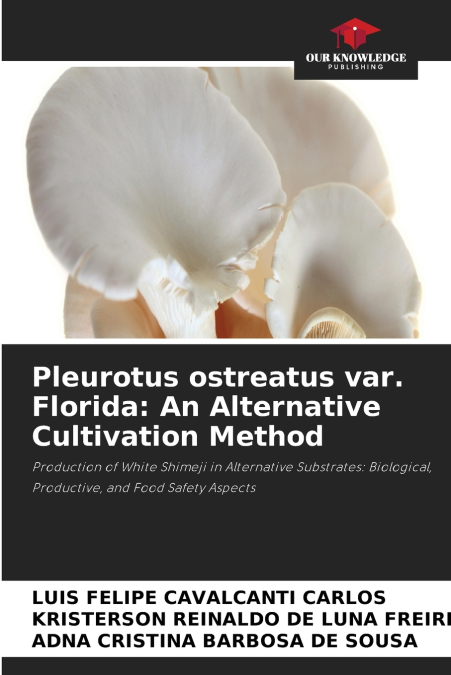
Adna Cristina Barbosa de Sousa / Kristerson Reinaldo de Luna Freire / Luis Felipe Cavalcanti Carlos
 Librería Samer Atenea
 Kálamo Books
 Librería Elías (Asturias)
 Librería Kolima (Madrid)
 Librería Proteo (Málaga)
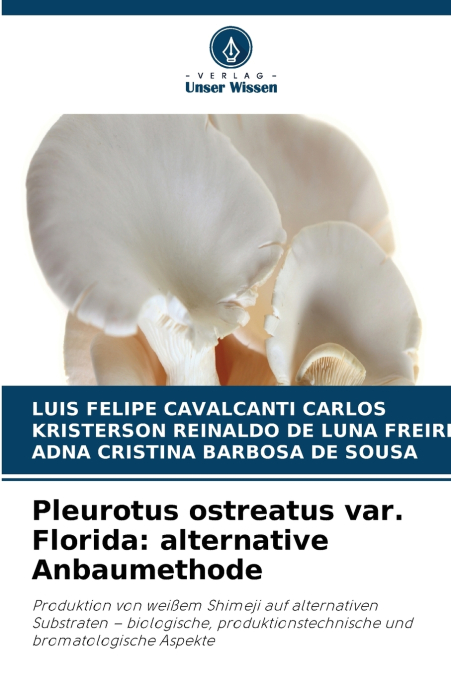
Pleurotus ostreatus var. florida (white shimeji) is an edible mushroom of high gastronomic value due to its nutritional properties. Furthermore, its cultivation is also feasible using various agroindustrial byproducts that are widely utilized throughout Brazil. From an ecological perspective, this strategy aimed to repurpose these byproducts-which would otherwise be discarded, into a biosustainable, economical, and healthy product: the mushroom. This mushroom is considered highly promising from a commercial standpoint, not only for its nutritional, organoleptic, and functional characteristics, but also for its ease of cultivation and adaptability to climatic conditions, as well as the relatively low cost of cultivation and its rapid development and growth. Accordingly, this study evaluated the productive and nutritional aspects of P. ostreatus var. florida cultivated in different formulations based on agro-industrial byproducts (malt bagasse and bean pods without beans).