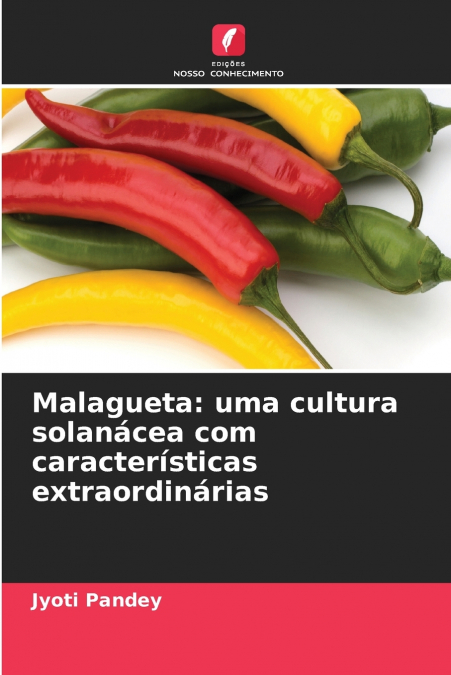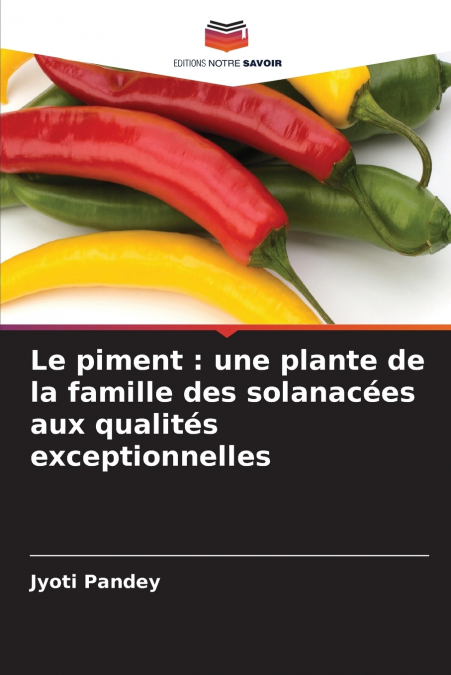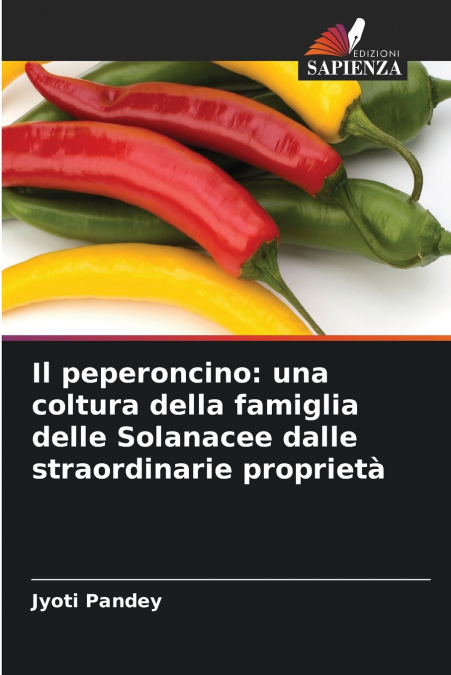

Il peperoncino

Il peperoncino

Jyoti Pandey

100,14 €
IVA incluido
Disponible
Editorial:
KS OmniScriptum Publishing
Año de edición:
2026
Materia
Botánica y ciencias de las plantas
ISBN:
9786630498363
100,14 €
IVA incluido
Disponible

Selecciona una librería:

  • Librería Samer Atenea
  • Kálamo Books
  • Librería Elías (Asturias)
  • Librería Kolima (Madrid)
  • Librería Proteo (Málaga)

Il peperoncino (Capsicum annuum L.) è una delle principali colture commerciali, coltivato sia come ortaggio che come spezia. Negli ultimi anni si è affermato anche come coltura industriale. Il colore rosso del peperoncino è dovuto principalmente all’oleoresina e fornisce sapore e colore alle industrie di trasformazione, coloranti naturali all’industria cosmetica e ingredienti farmaceutici all’industria medicinale. Oltre al colore, un’altra caratteristica qualitativa del frutto del peperoncino è la piccantezza. È la capsaicina a determinare la piccantezza. L’estratto di capsaicina è utilizzato principalmente come ingrediente principale nell’industria farmaceutica per la produzione di unguenti antidolorifici. Questo libro si concentra sulla selezione del germoplasma del peperoncino, delle linee inbred e degli ibridi basati su CMS (sviluppati e valutati) in base ai loro caratteri qualitativi e di resa, al fine di identificare le linee/gli ibridi con minore piccantezza e alto contenuto di colore e, viceversa, che possano essere direttamente utilizzati per valutare il loro potenziale per l’estrazione di capsaicina e oleoresina. La valutazione del germoplasma del peperoncino per l’acido ascorbico porta a futuri obiettivi di selezione finalizzati alla qualità. Questo libro è una fonte di informazioni per i test di ripristino della fertilità; alle linee inbred sono stati assegnati geni restauratori e mantentori.

Artículos relacionados

  • The Green Architecture
    Ali Mirshafieyan / Ghazal Yeganeh / Maryam Zamani Motlagh
    Protecting green energy as well as non-renewable energy, as well as their sustainable use, many advances in the technology of extracting oil products and other reserves under the ground have caused many improvements. In this regard, proposing the design of buildings in which the consumption of fossil fuels reaches its lowest level is considered one of the important solutions in...
    Disponible

    82,54 €

  • Responsible Use and Management of Agrochemicals
    Juan Carlos Nava
    Uso y manejo responsable de agroquímicos is a work product of the author’s experiences (undergraduate and graduate professor, with research and extension projects), aimed at producers, companies, professionals, students, advisors, researchers, among others.Due to its structure and content, it is expected to be a valuable aid to all people directly or indirectly involved in the ...
    Disponible

    49,45 €

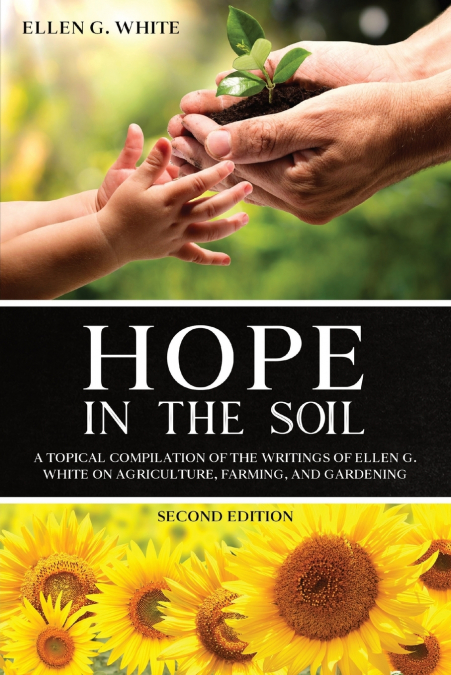
  • Hope in the Soil
    Ellen G White
    Before edible classrooms began 'sprouting' in elementary schools, before buzzwords like 'sustainable agriculture', 'organic,' or 'veganic' came into existence, an exceptional woman named Ellen G. White penned numerous letters and articles on the importance of farming, an outdoor life, and manual labor. Though often remembered for other things, Mrs. White was actively engaged in...
    Disponible

    18,38 €

  • The Green Revolution
    Binitha Sophine Emmanuel
    The Green Revolution, a transformative era in the annals of agriculture, emerged as a game-changing force during the mid-20th century, fundamentally reshaping the methodology of food production and steering the trajectory of global food security. Characterized by a sequence of technological breakthroughs, the Green Revolution aimed to substantially augment agricultural producti...
    Disponible

    53,23 €

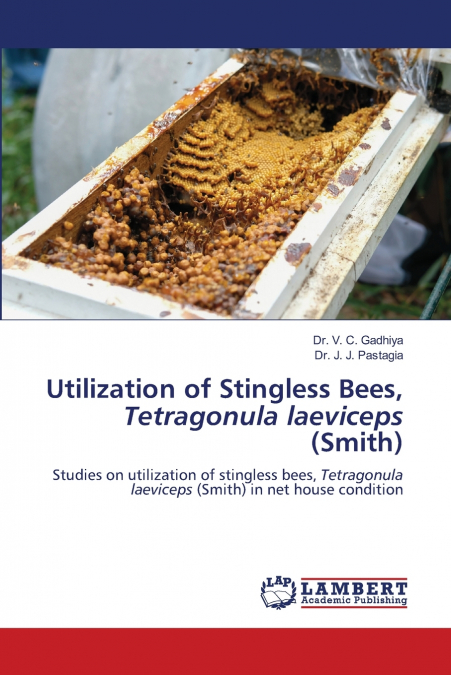
  • Utilization of Stingless Bees, Tetragonula laeviceps (Smith)
    Dr. J. J. Pastagia / Dr. V. C. Gadhiya
    The present investigations on utilization of stingless bees, T. laeviceps Smith in net house condition carried out with the broad aspects like flowers visited by stingless bees, T. laeviceps Smith, toxicity of insecticides to T. laeviceps Smith workers, floral biology of musk melon, foraging behavior of stingless bees, T. laeviceps Smith in net house condition, effect of pollin...
    Disponible

    84,80 €

  • La révolution verte
    Binitha Sophine Emmanuel
    La révolution verte, une ère transformatrice dans les annales de l’agriculture, est apparue comme une force qui a changé la donne au milieu du 20e siècle, remodelant fondamentalement la méthodologie de la production alimentaire et orientant la trajectoire de la sécurité alimentaire mondiale. Caractérisée par une série de percées technologiques, la révolution verte visait à augm...
    Disponible

    53,29 €

Otros libros del autor

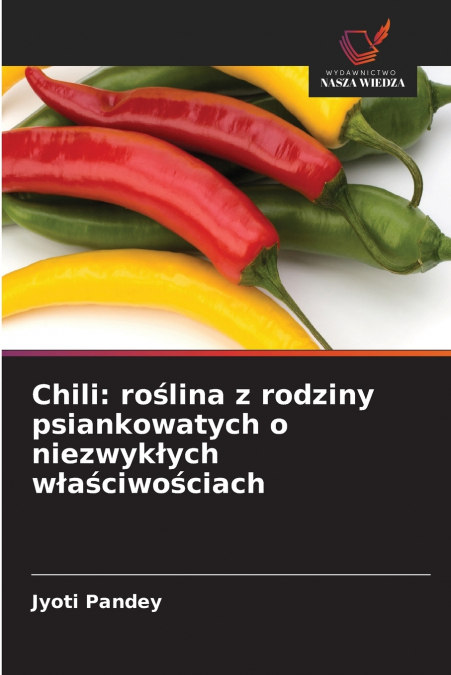
  • Chili
    Jyoti Pandey
    Papryczka chili (Capsicum annuum L.) jest jedną z głównych roślin uprawnych o znaczeniu handlowym, uprawianą zarówno jako warzywo, jak i przyprawa. W ostatnim czasie zyskała również znaczenie jako roślina przemysłowa. Czerwony kolor papryczki chili wynika głównie z obecności oleożywicy, która zapewnia smak i barwę w przemyśle przetwórczym, naturalny barwnik w przemyśle kosmetyc...
    Disponible

    100,13 €

  • Malagueta
    Jyoti Pandey
    A malagueta (Capsicum annuum L.) é uma das principais culturas comerciais, cultivada para consumo como vegetal e como especiaria. Nos últimos tempos, tem vindo a afirmar-se como cultura industrial. A cor vermelha da malagueta deve-se principalmente à oleorresina, que proporciona sabor e cor às indústrias de transformação, cor natural às indústrias cosméticas e ingredientes farm...
    Disponible

    100,13 €

  • Chili
    Jyoti Pandey
    Chili (Capsicum annuum L.) ist eine der wichtigsten kommerziellen Kulturpflanzen, die als Gemüse und Gewürz angebaut wird. In jüngster Zeit hat sie sich auch als Industriepflanze etabliert. Die rote Farbe der Chili ist hauptsächlich auf Oleoresin zurückzuführen und liefert Geschmack und Farbe für die verarbeitende Industrie, natürliche Farbstoffe für die Kosmetikindustrie sowie...
    Disponible

    113,19 €

  • Le piment
    Jyoti Pandey
    Le piment (Capsicum annuum L.) est l’une des principales cultures commerciales, cultivé à la fois comme légume et comme épice. Depuis quelques années, il s’est imposé comme une culture industrielle. La couleur rouge du piment est principalement due à la résine oléagineuse ; celle-ci apporte saveur et couleur aux industries de transformation, sert de colorant naturel à l’industr...
    Disponible

    113,17 €