
Inicio > Matemáticas y ciencia > Biologia, ciencias de la vida > Ciencias de la vida: cuestiones generales > Ecología, la biosfera > Zagrożenia dla różnorodności biologicznej terenów podmokłych i ich podstawowe przyczyny
Zagrożenia dla różnorodności biologicznej terenów podmokłych i ich podstawowe przyczyny

Zagrożenia dla różnorodności biologicznej terenów podmokłych i ich podstawowe przyczyny

Endalkachew Teshome

82,06 €
IVA incluido
Disponible
Editorial:
KS OmniScriptum Publishing
Año de edición:
2026
Materia
Ecología, la biosfera
ISBN:
9786630389050
82,06 €
IVA incluido
Disponible

Selecciona una librería:

  • Librería Samer Atenea

  • Kálamo Books
  • Librería Elías (Asturias)
  • Librería Kolima (Madrid)
  • Librería Proteo (Málaga)

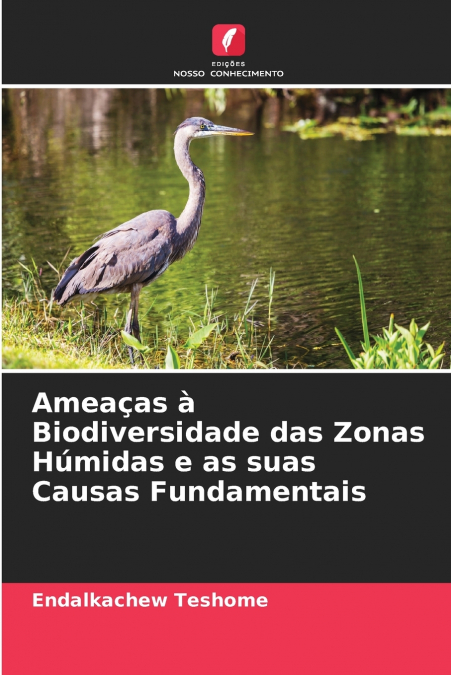
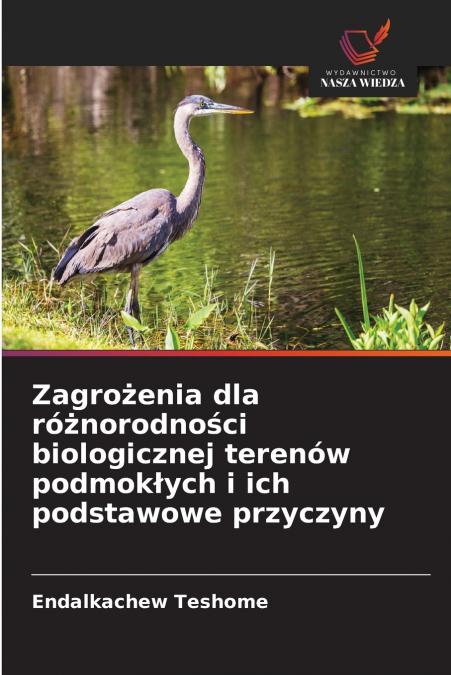
Tereny podmokłe stanowią ekosystemy przejściowe pomiędzy środowiskami lądowymi a wodnymi. Dostarczają one ludzkości zasobów naturalnych oraz usług, a ich produkty odgrywają istotną rolę w zapewnieniu bezpieczeństwa żywnościowego. Tereny podmokłe Dembia położone są na płaskowyżu bazaltowym w północno-zachodniej części obszaru jeziora Tana w Narodowym Regionie Amhara. Tereny te przynoszą korzyści, dostarczając ludziom wiele dóbr i usług. Dóbr i usług tych obejmują żywność, włókna, czystą wodę, kontrolę zanieczyszczeń, transport materii organicznej lub osadów, ochronę przed powodziami i burzami, zasilanie i odprowadzanie wód gruntowych, siedliska dla migrujących zwierząt i roślin oraz łączność krajobrazową i wodną. Rola terenów podmokłych w regulacji klimatu, adaptacji do zmian klimatu i łagodzeniu ich skutków jest również znacząca, ponieważ tereny te odgrywają ważną rolę w magazynowaniu węgla i azotu, a także stanowią naturalne źródła gazów cieplarnianych (GHG). Głównymi zagrożeniami dla terenów podmokłych Dembia były: ekspansja rolnictwa, intensywny wypas bydła, urbanizacja, inwazja gatunków inwazyjnych i chwastów, a także degradacja gleby, ryzyko eutrofizacji i zmiany klimatu.
Artículos relacionados

  • Water from a Transdisciplinary Perspective
    Ana Isabel Pereira Cardoso / Teresinha M. Gonçalves
    Life in cities has distanced human beings from nature and made it difficult to understand the ecology of life dependent on the environment. Urban water collection and distribution processes contribute significantly to the fragmentation of knowledge and the vital recognition of the water cycle. Without the effective participation of the subject in environmental actions, it is no...
    Disponible

    49,78 €

  • Modeling Populations of Adaptive Individuals
    Bret C. Harvey / Steven F. Railsback
    Ecologists now recognize that the dynamics of populations, communities, and ecosystems are strongly affected by adaptive individual behaviors. Yet until now, we have lacked effective and flexible methods for modeling such dynamics. Traditional ecological models become impractical with the inclusion of behavior, and the optimization approaches of behavioral ecology cannot be use...
    Disponible

    72,92 €

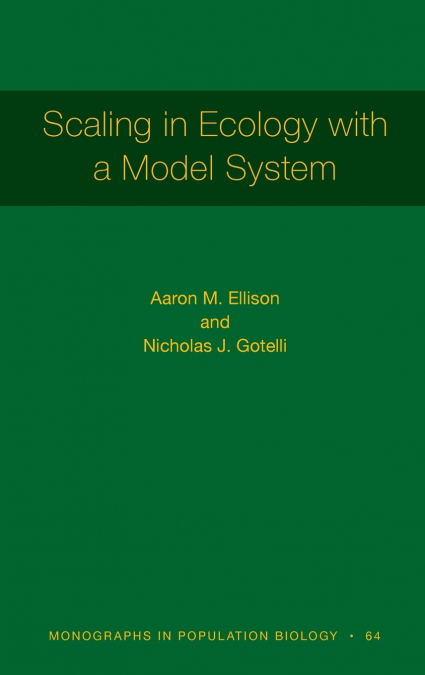
  • Scaling in Ecology with a Model System
    Aaron Ellison / Aaron M. Ellison / Nicholas J. Gotelli
    A groundbreaking approach to scale and scaling in ecological theory and practiceScale is one of the most important concepts in ecology, yet researchers often find it difficult to find ecological systems that lend themselves to its study. Scaling in Ecology with a Model System synthesizes nearly three decades of research on the ecology of Sarracenia purpurea-the northern pitcher...
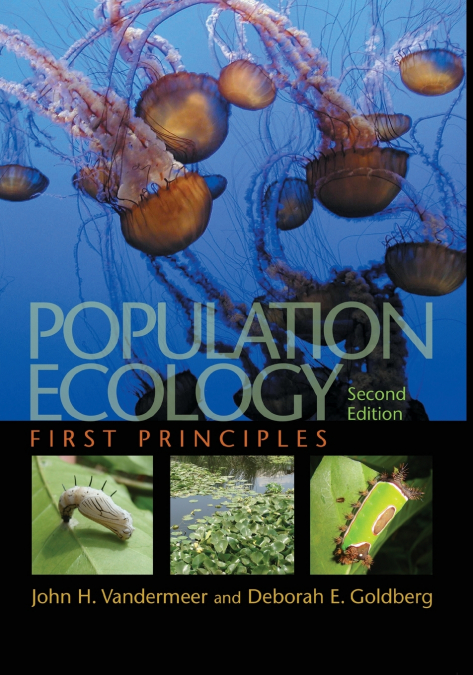
  • Population Ecology
    Deborah E. Goldberg / John H. Vandermeer
    The essential introduction to population ecology-now expanded and fully updatedEcology is capturing the popular imagination like never before, with issues such as climate change, species extinctions, and habitat destruction becoming ever more prominent. At the same time, the science of ecology has advanced dramatically, growing in mathematical and theoretical sophistication. He...
    Disponible

    132,64 €

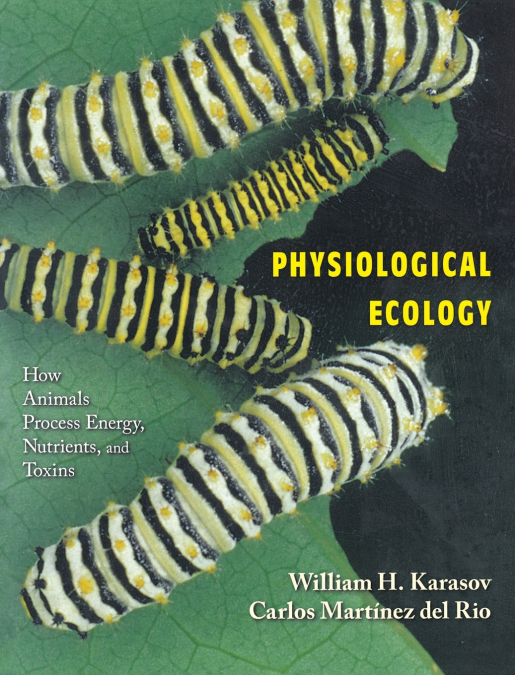
  • Physiological Ecology
    Carlos Martínez del Rio / William H. Karasov
    Unlocking the puzzle of how animals behave and how they interact with their environments is impossible without understanding the physiological processes that determine their use of food resources. But long overdue is a user-friendly introduction to the subject that systematically bridges the gap between physiology and ecology. Ecologists--for whom such knowledge can help clarif...
  • Critical Transitions in Nature and Society
    Marten Scheffer
    How do we explain the remarkably abrupt changes that sometimes occur in nature and society--and can we predict why and when they happen? This book offers a comprehensive introduction to critical transitions in complex systems--the radical changes that happen at tipping points when thresholds are passed. Marten Scheffer accessibly describes the dynamical systems theory behind cr...
    Disponible

    99,51 €

Otros libros del autor

  • Menaces pesant sur la biodiversité des zones humides et leurs causes profondes
    Endalkachew Teshome
    Les zones humides constituent des écosystèmes de transition entre les milieux terrestres et aquatiques. Elles fournissent à l’humanité des ressources naturelles et des services, et leurs produits jouent un rôle important pour la sécurité alimentaire. La zone humide de Dembia est située sur un plateau basaltique dans la partie nord-ouest du bassin du lac Tana, dans l’État région...
    Disponible

    82,06 €

  • Bedrohungen für die Artenvielfalt in Feuchtgebieten und ihre Ursachen
    Endalkachew Teshome
    Feuchtgebiete sind Übergangsökosysteme zwischen terrestrischen und aquatischen Systemen. Feuchtgebiete liefern der Menschheit natürliche Ressourcen und Ökosystemleistungen, wobei ihre Erzeugnisse eine wichtige Rolle für die Ernährungssicherheit spielen. Das Dembia-Feuchtgebiet liegt auf einem Basaltplateau im nordwestlichen Ausläufer des Tana-Sees im Nationalen Regionalstaat Am...
    Disponible

    82,06 €

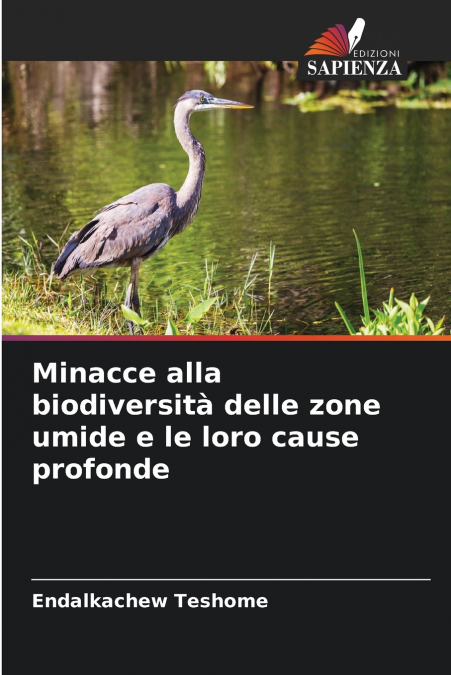
  • Minacce alla biodiversità delle zone umide e le loro cause profonde
    Endalkachew Teshome
    Le zone umide sono ecosistemi di transizione tra i sistemi terrestri e quelli acquatici. Le zone umide forniscono risorse naturali, prodotti e servizi all’umanità e i loro prodotti svolgono un ruolo importante per la sicurezza alimentare. La zona umida di Dembia è situata su un altopiano basaltico nella fascia nord-occidentale del Lago Tana, nello Stato regionale nazionale di A...
    Disponible

    81,99 €

  • Ameaças à Biodiversidade das Zonas Húmidas e as suas Causas Fundamentais
    Endalkachew Teshome
    As zonas húmidas são ecossistemas de transição entre os sistemas terrestres e aquáticos. As zonas húmidas fornecem produtos e serviços de recursos naturais à humanidade, e os seus produtos desempenham um papel importante na segurança alimentar. A zona húmida de Dembia está situada num planalto basáltico na cordilheira noroeste do Lago Tana, no Estado Regional Nacional de Amhara...
    Disponible

    82,06 €