Inicio > Matemáticas y ciencia > Biologia, ciencias de la vida > Ciencias de la vida: cuestiones generales > Ecología, la biosfera > Menaces pesant sur la biodiversité des zones humides et leurs causes profondes
Menaces pesant sur la biodiversité des zones humides et leurs causes profondes

Menaces pesant sur la biodiversité des zones humides et leurs causes profondes

Endalkachew Teshome

82,06 €
IVA incluido
Disponible
Editorial:
KS OmniScriptum Publishing
Año de edición:
2026
Materia
Ecología, la biosfera
ISBN:
9786630373691
82,06 €
IVA incluido
Disponible

Selecciona una librería:

  • Librería Samer Atenea

  • Kálamo Books
  • Librería Elías (Asturias)
  • Librería Kolima (Madrid)
  • Librería Proteo (Málaga)

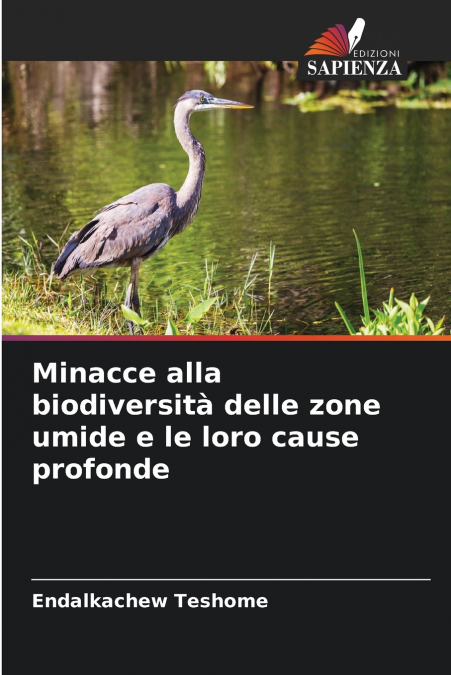
Les zones humides constituent des écosystèmes de transition entre les milieux terrestres et aquatiques. Elles fournissent à l’humanité des ressources naturelles et des services, et leurs produits jouent un rôle important pour la sécurité alimentaire. La zone humide de Dembia est située sur un plateau basaltique dans la partie nord-ouest du bassin du lac Tana, dans l’État régional national d’Amhara. Ces zones humides apportent de nombreux avantages aux populations en leur fournissant une multitude de biens et de services. Parmi ces biens et services figurent la nourriture, les fibres, l’eau potable, la lutte contre la pollution, l’exportation de matière organique ou de sédiments, la maîtrise des crues et des tempêtes, la recharge et l’écoulement des eaux souterraines, la fourniture d’habitats pour la migration animale et végétale, ainsi que la connectivité des paysages terrestres et aquatiques. Le rôle des zones humides dans la régulation, l’adaptation et l’atténuation des effets du changement climatique est également considérable, car elles jouent un rôle important dans le stockage du carbone et de l’azote, tout en constituant des sources naturelles de gaz à effet de serre (GES). Les principales menaces pesant sur les zones humides de Dembia sont l’empiétement agricole, le surpâturage, l’urbanisation, l’infestation par des espèces envahissantes et des mauvaises herbes, la dégradation des sols, le risque d’eutrophisation et le changement climatique.
Artículos relacionados

  • Water from a Transdisciplinary Perspective
    Ana Isabel Pereira Cardoso / Teresinha M. Gonçalves
    Life in cities has distanced human beings from nature and made it difficult to understand the ecology of life dependent on the environment. Urban water collection and distribution processes contribute significantly to the fragmentation of knowledge and the vital recognition of the water cycle. Without the effective participation of the subject in environmental actions, it is no...
    Disponible

    49,78 €

  • Modeling Populations of Adaptive Individuals
    Bret C. Harvey / Steven F. Railsback
    Ecologists now recognize that the dynamics of populations, communities, and ecosystems are strongly affected by adaptive individual behaviors. Yet until now, we have lacked effective and flexible methods for modeling such dynamics. Traditional ecological models become impractical with the inclusion of behavior, and the optimization approaches of behavioral ecology cannot be use...
    Disponible

    72,92 €

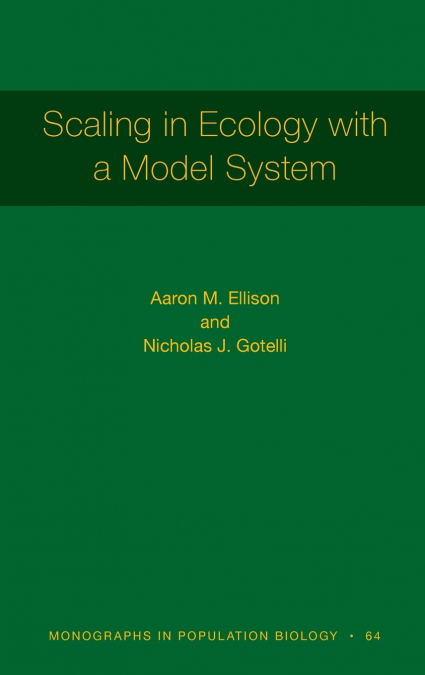
  • Scaling in Ecology with a Model System
    Aaron Ellison / Aaron M. Ellison / Nicholas J. Gotelli
    A groundbreaking approach to scale and scaling in ecological theory and practiceScale is one of the most important concepts in ecology, yet researchers often find it difficult to find ecological systems that lend themselves to its study. Scaling in Ecology with a Model System synthesizes nearly three decades of research on the ecology of Sarracenia purpurea-the northern pitcher...
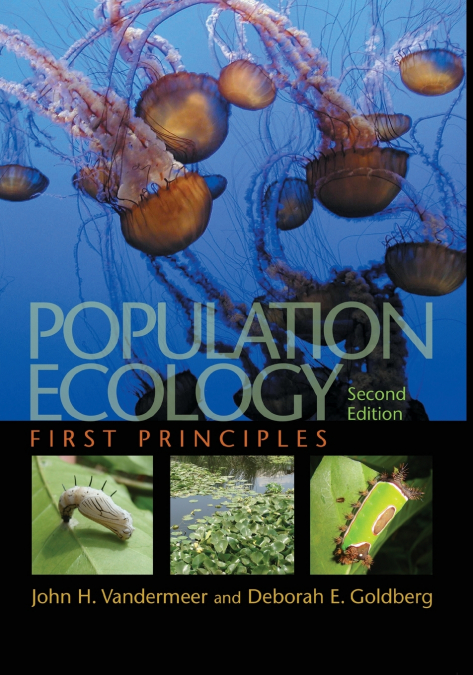
  • Population Ecology
    Deborah E. Goldberg / John H. Vandermeer
    The essential introduction to population ecology-now expanded and fully updatedEcology is capturing the popular imagination like never before, with issues such as climate change, species extinctions, and habitat destruction becoming ever more prominent. At the same time, the science of ecology has advanced dramatically, growing in mathematical and theoretical sophistication. He...
    Disponible

    132,64 €

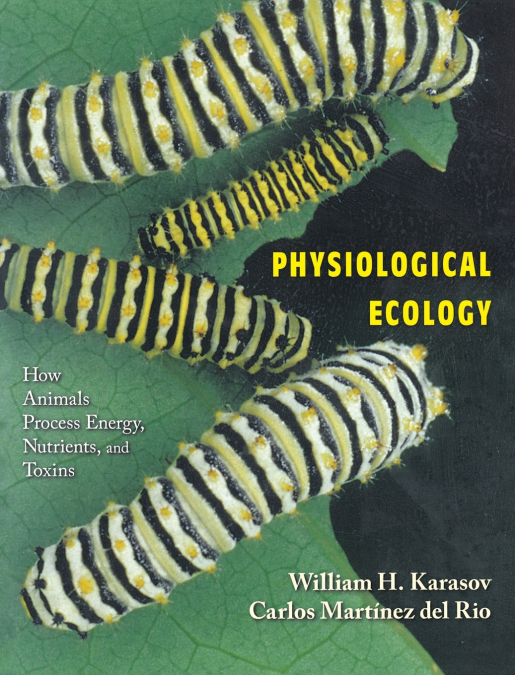
  • Physiological Ecology
    Carlos Martínez del Rio / William H. Karasov
    Unlocking the puzzle of how animals behave and how they interact with their environments is impossible without understanding the physiological processes that determine their use of food resources. But long overdue is a user-friendly introduction to the subject that systematically bridges the gap between physiology and ecology. Ecologists--for whom such knowledge can help clarif...
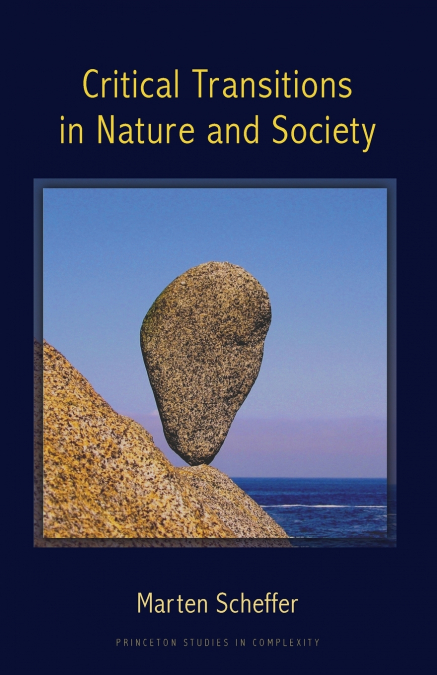
  • Critical Transitions in Nature and Society
    Marten Scheffer
    How do we explain the remarkably abrupt changes that sometimes occur in nature and society--and can we predict why and when they happen? This book offers a comprehensive introduction to critical transitions in complex systems--the radical changes that happen at tipping points when thresholds are passed. Marten Scheffer accessibly describes the dynamical systems theory behind cr...
    Disponible

    99,51 €

Otros libros del autor

  • Bedrohungen für die Artenvielfalt in Feuchtgebieten und ihre Ursachen
    Endalkachew Teshome
    Feuchtgebiete sind Übergangsökosysteme zwischen terrestrischen und aquatischen Systemen. Feuchtgebiete liefern der Menschheit natürliche Ressourcen und Ökosystemleistungen, wobei ihre Erzeugnisse eine wichtige Rolle für die Ernährungssicherheit spielen. Das Dembia-Feuchtgebiet liegt auf einem Basaltplateau im nordwestlichen Ausläufer des Tana-Sees im Nationalen Regionalstaat Am...
    Disponible

    82,06 €

  • Minacce alla biodiversità delle zone umide e le loro cause profonde
    Endalkachew Teshome
    Le zone umide sono ecosistemi di transizione tra i sistemi terrestri e quelli acquatici. Le zone umide forniscono risorse naturali, prodotti e servizi all’umanità e i loro prodotti svolgono un ruolo importante per la sicurezza alimentare. La zona umida di Dembia è situata su un altopiano basaltico nella fascia nord-occidentale del Lago Tana, nello Stato regionale nazionale di A...
    Disponible

    81,99 €

  • Zagrożenia dla różnorodności biologicznej terenów podmokłych i ich podstawowe przyczyny
    Endalkachew Teshome
    Tereny podmokłe stanowią ekosystemy przejściowe pomiędzy środowiskami lądowymi a wodnymi. Dostarczają one ludzkości zasobów naturalnych oraz usług, a ich produkty odgrywają istotną rolę w zapewnieniu bezpieczeństwa żywnościowego. Tereny podmokłe Dembia położone są na płaskowyżu bazaltowym w północno-zachodniej części obszaru jeziora Tana w Narodowym Regionie Amhara. Tereny te p...
    Disponible

    82,06 €

  • Ameaças à Biodiversidade das Zonas Húmidas e as suas Causas Fundamentais
    Endalkachew Teshome
    As zonas húmidas são ecossistemas de transição entre os sistemas terrestres e aquáticos. As zonas húmidas fornecem produtos e serviços de recursos naturais à humanidade, e os seus produtos desempenham um papel importante na segurança alimentar. A zona húmida de Dembia está situada num planalto basáltico na cordilheira noroeste do Lago Tana, no Estado Regional Nacional de Amhara...
    Disponible

    82,06 €