Fábio de Barros / Fernando A. Bataghin / José S. R. Pires
 Librería Samer Atenea
 Kálamo Books
 Librería Elías (Asturias)
 Librería Kolima (Madrid)
 Librería Proteo (Málaga)
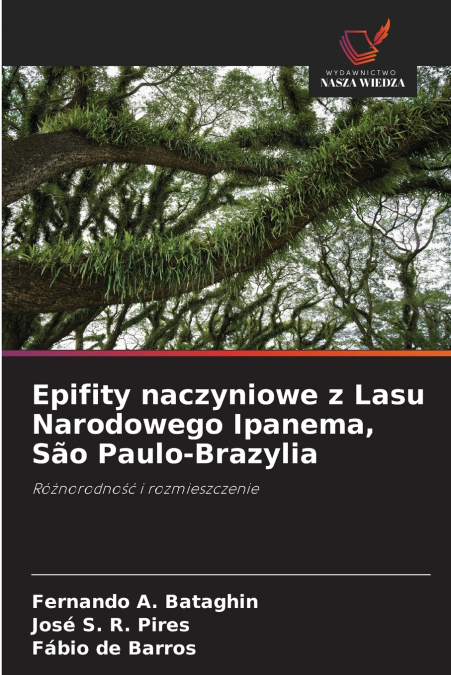
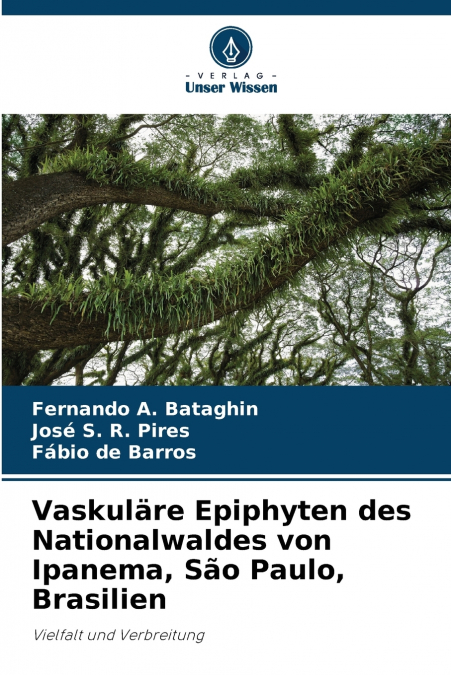
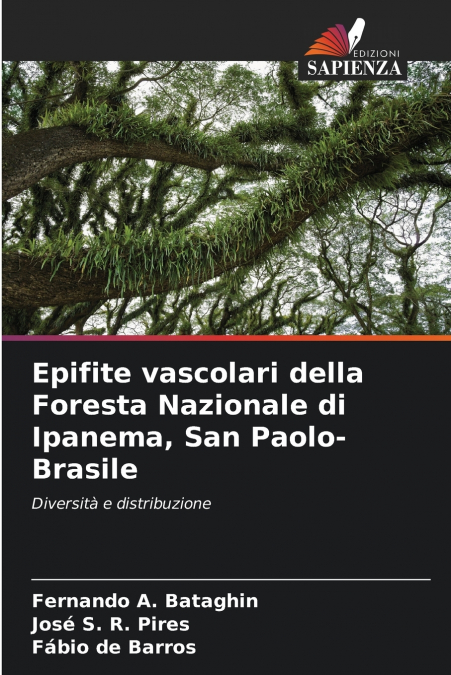
The Ipanema National Forest was created in 1992 to conserve one of the largest fragments of Atlantic Forest in the interior of the state of São Paulo, Brazil. Vascular epiphytes are plants that establish themselves directly on the trunk, branches, twigs, or leaves of trees, without emitting haustorial structures, and the plants that support them are called phorophytes. Due to their physiological and nutritional characteristics, vascular epiphytes play a fundamental role in studies on anthropic interference in the environment. They function as bioindicators of the forest’s successional stage and can reflect the degree of local preservation, since some groups are less tolerant to environmental variations. This publication describes the vascular epiphytic community of the Ipanema National Forest, analyzing its diversity and distribution in three different types of environments: an open area where phyllophytes are isolated, a forest edge area that exhibits the so-called 'edge effects,' and an interior forest area where the climatic gradient is more favorable to vascular epiphytism.