 Librería Samer Atenea
 Kálamo Books
 Librería Elías (Asturias)
 Librería Kolima (Madrid)
 Librería Proteo (Málaga)
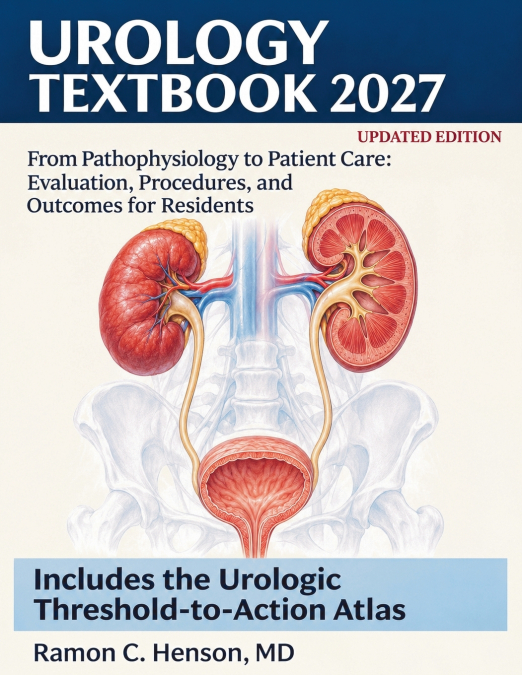
Connect Urologic Mechanisms to Safe Clinical Action Urology Textbook 2027 is a one-volume clinical reference for residents and clinicians who need to move from anatomy and pathophysiology to evaluation, procedural selection, and longitudinal care. Its 20 chapters integrate urinary drainage, bladder function, reconstruction, andrology, oncology, pediatric disease, trauma, transplantation, and geriatric care around the consequences that change management. At the point of care, the Urologic Threshold-to-Action Atlas makes each decision visible through the clinical signal, mechanism, intervention threshold, risk boundary, and next action. Build durable clinical judgment across the specialty: Renal, ureteral, bladder, prostate, urethral, and genital anatomy - localize symptoms and anticipate procedural risk Imaging, instrumentation, infection, stones, and obstruction - select tests, protect drainage, and recognize time-sensitive source control Lower urinary tract dysfunction, incontinence, pelvic pain, and reconstruction - distinguish storage, outlet, detrusor, neural, and structural mechanisms Sexual medicine and male infertility - connect vascular, endocrine, reproductive, and fertility-preservation decisions Prostate, bladder, renal, adrenal, upper-tract, testicular, and penile cancers - align staging, organ preservation, treatment, and surveillance Pediatric urology, trauma, and emergencies - act when growth, perfusion, infection, or organ viability narrows the treatment window Renal transplantation, frailty, medication burden, and quality systems - protect graft function, independence, and continuity of care Use this 2026-2027 edition to strengthen mechanism-based urologic decisions from first evaluation through procedure and follow-up.