 Librería Samer Atenea
 Kálamo Books
 Librería Elías (Asturias)
 Librería Kolima (Madrid)
 Librería Proteo (Málaga)
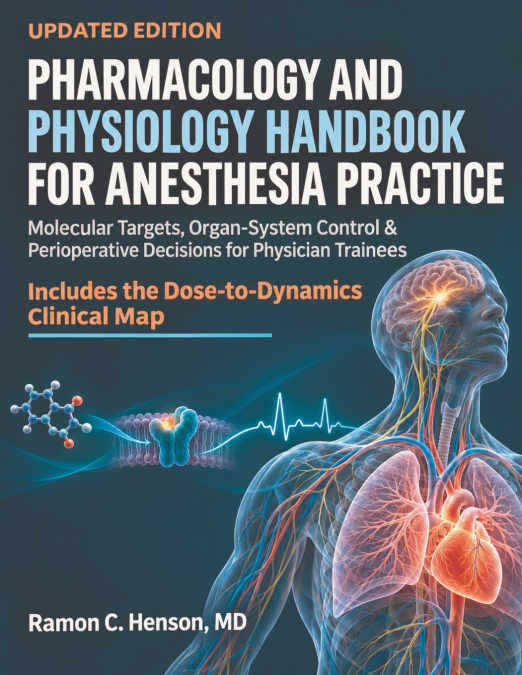
Connect Drug Action to the Physiology on the Monitor Anesthesia practice demands more than memorizing drug profiles or isolated physiologic facts. Clinicians must anticipate how molecular targets, dose timing, organ reserve, ventilation, circulation, and monitoring interact in the patient before them. This clinically organized handbook links those layers so physician trainees can move from mechanism to expected trajectory, recognize when the observed signal does not fit, and select a proportionate adjustment within a defined safety boundary. The recurring Dose-to-Dynamics Clinical Map turns core science into a five-part reasoning path: Clinical Target, Dose or Physiologic Driver, Monitor Pattern, Clinical Adjustment, and Safety Boundary. Inside, readers will find: Mechanistic coverage of receptors, pharmacokinetics, pharmacodynamics, variability, and clinically important drug interactions Integrated explanations of cardiovascular, respiratory, neurologic, renal, hepatic, endocrine, hematologic, maternal, pediatric, geriatric, and obesity-related physiology Focused chapters on intravenous and inhaled anesthetics, opioids, nonopioid analgesics, neuromuscular blockers, reversal agents, local anesthetics, and vasoactive drugs Monitor-centered interpretation of pressure, flow, ventilation, gas exchange, neuromuscular transmission, electrophysiology, temperature, and cerebral dynamics Native comparison tables and clinically placed visual prompts that clarify curves, loops, traces, anatomy, and delivery systems Chapter syntheses that consolidate drug targets, physiologic drivers, expected monitor patterns, clinical leverage, and failure boundaries A Dose-to-Dynamics Master Compendium for rapid retrieval of high-value perioperative relationships across organ systems Designed for anesthesiology residents, physician trainees, and clinicians who want a durable mechanism-first reference at the point where pharmacology becomes physiologic change, this updated 2026-2027 edition supports safer prediction, monitoring, titration, and rescue across perioperative care.