 Librería Samer Atenea
 Kálamo Books
 Librería Elías (Asturias)
 Librería Kolima (Madrid)
 Librería Proteo (Málaga)
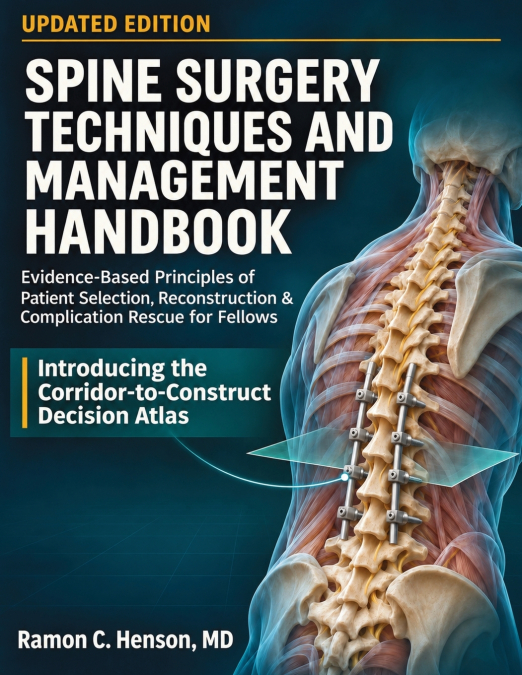
Plan the Corridor, Protect the Neural Target, Build a Durable Construct This operative reference connects spinal anatomy, biomechanics, imaging, neurologic localization, and reconstruction to the decisions made before, during, and after an intervention. Written for orthopaedic and neurosurgical fellows, residents, and early-career clinicians, its 20 chapters move from patient selection and positioning through cervical, thoracic, lumbar, deformity, trauma, tumor, infection, pediatric, and revision care. The Corridor-to-Construct Decision Atlas ties each procedure to a defined target, access route, reconstruction obligation, verification endpoint, and rescue pathway. Use the chapter-integrated decision maps, annotated imaging prompts, procedural illustrations, native comparison tables, and narrative cases to prepare a case and recognize when the operative course has left the safe plan. Clinical Capabilities Developed Across the Book Translate examination and imaging into a level-specific neural target - avoid treating incidental anatomy Select anterior, posterior, lateral, minimally invasive, or endoscopic corridors - match access to pathology and structures at risk Plan decompression, interbody support, pedicle fixation, pelvic anchoring, and fusion biology - restore stability after tissue removal Use standing alignment, flexibility studies, bone quality, and frailty - design deformity correction around patient-specific reserve Integrate fluoroscopy, intraoperative CT, navigation, robotics, and neuromonitoring - verify accuracy without surrendering manual rescue skills Manage trauma, tumor, infection, congenital disease, and acute neural compression - coordinate timing, source control, and reconstruction Recognize durotomy, neurologic change, vascular injury, pseudarthrosis, implant failure, and junctional breakdown - intervene before reversible failure becomes permanent Guide enhanced recovery, rehabilitation, return to activity, and outcome surveillance - connect the operation to durable function Carry a target-to-corridor-to-construct method into the next case and every decision that follows it.