
The Machine as Metaphor

The Machine as Metaphor

Gabriel W. Campbell

21,26 €
IVA incluido
Disponible
Editorial:
Colloquium
Año de edición:
2026
Materia
Historia general y mundial
ISBN:
9798235754393
21,26 €
IVA incluido
Disponible

Selecciona una librería:

  • Librería Samer Atenea

  • Kálamo Books
  • Librería Elías (Asturias)
  • Librería Kolima (Madrid)
  • Librería Proteo (Málaga)

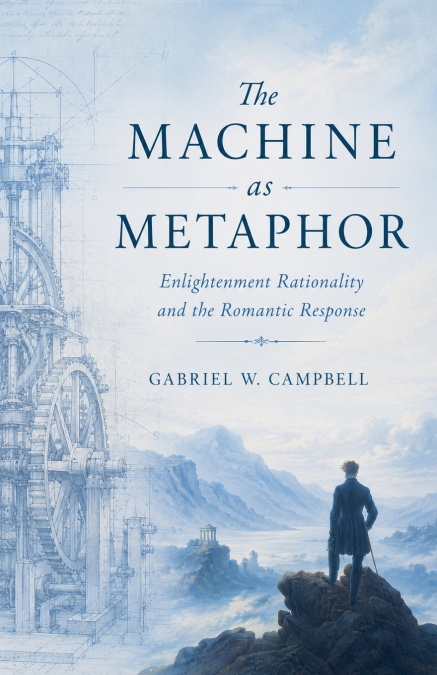
The history of ideas in the modern West can be read, in part, as a long meditation on the meaning of the machine. From the seventeenth century onward, the machine became more than a tool or a device; it became a conceptual instrument through which philosophers, scientists, political theorists, and artists sought to understand the world and humanity’s place within it. The machine offered a powerful metaphor for order, predictability, and rationality. It promised mastery over nature, clarity of explanation, and the possibility of constructing social institutions with the same precision and reliability as a well‑regulated mechanism. Yet this same metaphor provoked profound unease. As the eighteenth century gave way to the nineteenth, and as industrialization transformed landscapes and lives, the machine came to symbolize alienation, reductionism, and the loss of organic wholeness. Romantic thinkers, poets, and artists mounted a sustained critique of mechanistic rationality, arguing that the machine, as metaphor and as material reality, threatened to flatten the richness of human experience and the vitality of nature.
Artículos relacionados

  • The life of Sir Richard Fanshawe, 1608 - 1666
    H C Fanshawe
    Sir Richard Fanshawe (1608-1666), was a diplomat, poet and linguist. As Ambassador to Spain and Portugal he negotiated the marriage of Charles II and Catherine of Braganza. He was also acclaimed for his poetry and his translations of Latin and European works such as the Lusiads by Luis de Camoes and Il Pastor Fido (the Faithful Shepherd) by Giovanni Battista Guarini. Sir Richar...
    Disponible

    17,51 €

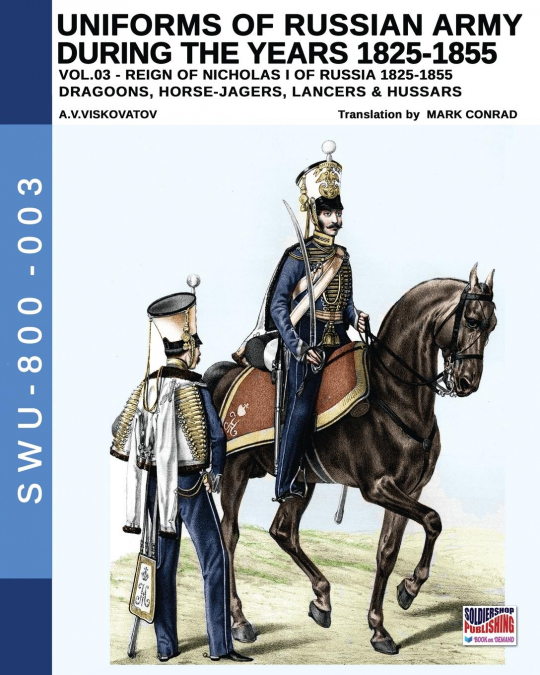
  • Uniforms of Russian Army during the years 1825-1855. Vol. 3
    Aleksandr Vasilevich Viskovatov / Mark Conrad
    This volume is related to the Russian Army during the zar Nicolas Ist era, and are about the uniforms cavalry in use from 1825 to 1855. Compiled at Saint Petersburg during the year from 1837 and 1851, the Historical Description of the Clothing and Arms of the Russian Army has had an enormous impact and great importance for the study on the history of Russian costume and uniform...
    Disponible

    52,04 €

  • Archaeology and Entomology in the Eastern Mediterranean
    Eva Panagiotakopulu
    ...
    Disponible

    74,97 €

  • Luoghi e Architetture della Transizione
    Maria Antonietta Breda
    I sistemi difensivi di confine e la protezione antiaerea nelle città. Storia conservazione riuso / Border defense system and air raid protection in the cities. History conservation reuseThis book collects the papers presented at the Second International Congress on Conoscenza e valorizzazione delle opere militari moderne - Knowledge and development of modern military structures...
    Disponible

    139,91 €

  • Le mura di Bergamo e l’esercito veneto fra 500 e 600
    Luca Stefano Cristini
    Correva l'Anno del Signore 1590. Così scriveva un soddisfatto e pago Alvise Grimani, l'allora comandante veneto della piazza di Bergamo, al termine dei lavori di realizzazione degli oltre cinque chilometri di mura porte e bastioni : 'La città è tutta serrata con baluardi e i suoi membri quasi tutti terrapienati, compite le piazze, i parapetti e le traverse per coprirsi ...
    Disponible

    36,31 €

  • Psychology of Revolution
    Gustave Lebon
    The present age is not merely an epoch of discovery; it is also a period of revision of the various elements of knowledge. Having recognised that there are no phenomena of which the first cause is still accessible, science has resumed the examination of her ancient certitudes, and has proved their fragility. To-day she sees her ancient principles vanishing one by one. ...

Otros libros del autor

  • The Septuagint in the Christian Scriptural Traditions
    Gabriel W. Campbell
    Among the many texts that have shaped the history of Judaism and Christianity, few have exercised an influence as profound and enduring as the Septuagint. Often designated by the Roman numeral LXX, in reference to the ancient tradition that seventy or seventy-two translators participated in its creation, the Septuagint represents the earliest substantial translation of Hebrew s...
    Disponible

    20,99 €

  • Translation as Cultural Mediation in the Middle Ages
    Gabriel W. Campbell
    For much of modern scholarship, translation has been understood primarily as the act of rendering a text from one language into another. Such a definition, while useful in its simplicity, proves inadequate when applied to the complex realities of the medieval world. Between the fifth and the fifteenth centuries, translation functioned not merely as a linguistic operation but as...
    Disponible

    20,90 €

  • History of the Sacred Texts Translations in Christian Traditions
    Gabriel W. Campbell
    The history of Christianity is inseparable from the history of translation. From its earliest centuries, the Christian faith developed as a multilingual movement that crossed ethnic, geographic, and cultural boundaries with remarkable speed. Unlike religious traditions that remained closely tied to a single sacred language, Christianity emerged at the intersection of several li...
    Disponible

    21,00 €

  • The Medieval Courtly Love as Philosophical Discourse
    Gabriel W. Campbell
    For more than two centuries, scholars have debated the nature and significance of medieval courtly love. Was it merely a literary convention developed for aristocratic entertainment? Was it a social code governing relations between noble men and women? Was it an elaborate poetic fiction, detached from lived experience? Or did it embody a deeper intellectual project, one that so...
    Disponible

    21,03 €

  • Medieval Catalan Literature Between Beauty and Wisdom
    Gabriel W. Campbell
    The literature produced in the territories of the medieval Crown of Aragon occupies a singular position within the cultural history of Europe. Situated at the crossroads of Latin Christendom, the Islamic Mediterranean, and the Jewish intellectual world, medieval Catalan literature emerged from a dynamic environment in which political expansion, commercial activity, religious di...
    Disponible

    21,00 €

  • The Lady as Moral Authority in the Middle Ages
    Gabriel W. Campbell
    The history of authority in medieval Europe has often been written in the language of offices, institutions, jurisdictions, and legally recognized powers. Kings ruled kingdoms, bishops governed dioceses, lords exercised jurisdiction over lands and dependents, and clerics occupied positions within an ecclesiastical hierarchy that generally excluded women from sacramental office....
    Disponible

    22,96 €