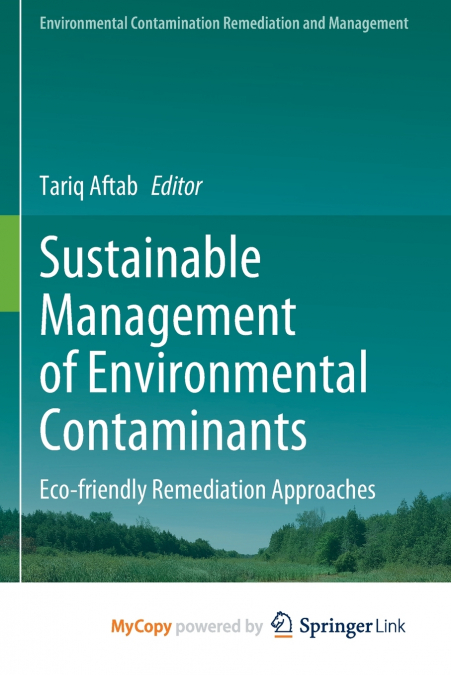

Sustainable Management of Environmental Contaminants

Sustainable Management of Environmental Contaminants

Tariq Aftab

46,54 €
IVA incluido
Disponible
Editorial:
Springer Nature B.V.
Año de edición:
2022
Materia
Ecología, la biosfera
ISBN:
9783031084478
46,54 €
IVA incluido
Disponible

Selecciona una librería:

  • Librería Samer Atenea
  • Librería Aciertas (Toledo)
  • Kálamo Books
  • Librería Perelló (Valencia)
  • Librería Elías (Asturias)
  • Donde los libros
  • Librería Kolima (Madrid)
  • Librería Proteo (Málaga)

Environmental contaminants are chemicals that accidentally or deliberately enter the environment, often, but not always, as a result of human activities. Some of these contaminants may have been manufactured for industrial use, and because they are very stable, they do not break down easily. If released to the environment, these contaminants may enter the food chain. Other environmental contaminants are naturally occurring chemicals, but industrial activity may increase their mobility or increase the amount available to circulate in the environment, allowing them to enter the food chain at higher levels than would otherwise occur. Environmental contaminants influence the physiological cell reactions at different and heterogeneous basics and lead to altering in normal cell function primarily at the molecular and biochemical level. Molecular responses to such common environmental stresses have been studied intensively over the last few years, in which there is an intricate network of signaling pathways controlling perception of these environmental stress signals, the generation of second messengers and signal transduction. Recent advances in many areas of plant and microbial research, including genotyping, make scientists optimistic that valuable solutions will be found to allow deployment/commercialization of strategies better able to tolerate these environmental stresses.Environmental remediation was historically viewed as an inherently sustainable activity, as it restores contamination; however, researchers and practitioners are increasingly recognizing that there can be substantial environmental footprints and socioeconomic costs associated with remediation. Sustainability is an imperative in the emerging green and sustainable remediation movement, which is reshaping the entire remediation industry.Understanding the significant roles of sustainable or eco-friendly approaches in mitigating environmental contaminants, the current subject has recently attracted the attention of scientists from across the globe. This comprehensive volume 'Sustainable Management of Environmental Contaminants: Eco-friendly Remediation Approaches' highlights the various prospects involved in current scenario. The current volume comprises the chapters from diverse areas dealing with biotechnology, microbial technology, nanotechnology, molecular biology, green and sustainable remediation, etc. I am hopeful that this volume will furnish the requisite of all those who are working or have interest in the current topic.
Artículos relacionados

  • Water from a Transdisciplinary Perspective
    Ana Isabel Pereira Cardoso / Teresinha M. Gonçalves
    Life in cities has distanced human beings from nature and made it difficult to understand the ecology of life dependent on the environment. Urban water collection and distribution processes contribute significantly to the fragmentation of knowledge and the vital recognition of the water cycle. Without the effective participation of the subject in environmental actions, it is no...
    Disponible

    43,82 €

  • Modeling Populations of Adaptive Individuals
    Bret C. Harvey / Steven F. Railsback
    Ecologists now recognize that the dynamics of populations, communities, and ecosystems are strongly affected by adaptive individual behaviors. Yet until now, we have lacked effective and flexible methods for modeling such dynamics. Traditional ecological models become impractical with the inclusion of behavior, and the optimization approaches of behavioral ecology cannot be use...
    Disponible

    65,53 €

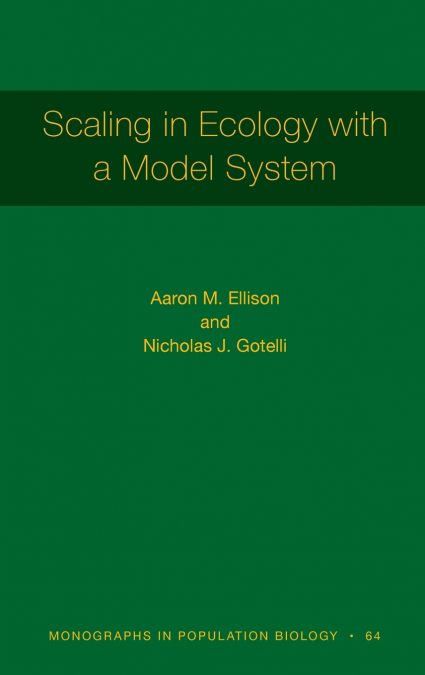
  • Scaling in Ecology with a Model System
    Aaron Ellison / Aaron M. Ellison / Nicholas J. Gotelli
    A groundbreaking approach to scale and scaling in ecological theory and practiceScale is one of the most important concepts in ecology, yet researchers often find it difficult to find ecological systems that lend themselves to its study. Scaling in Ecology with a Model System synthesizes nearly three decades of research on the ecology of Sarracenia purpurea-the northern pitcher...
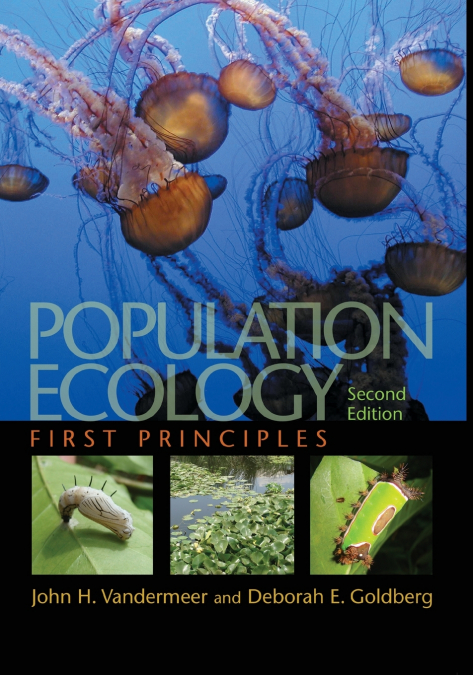
  • Population Ecology
    Deborah E. Goldberg / John H. Vandermeer
    The essential introduction to population ecology-now expanded and fully updatedEcology is capturing the popular imagination like never before, with issues such as climate change, species extinctions, and habitat destruction becoming ever more prominent. At the same time, the science of ecology has advanced dramatically, growing in mathematical and theoretical sophistication. He...
    Disponible

    124,92 €

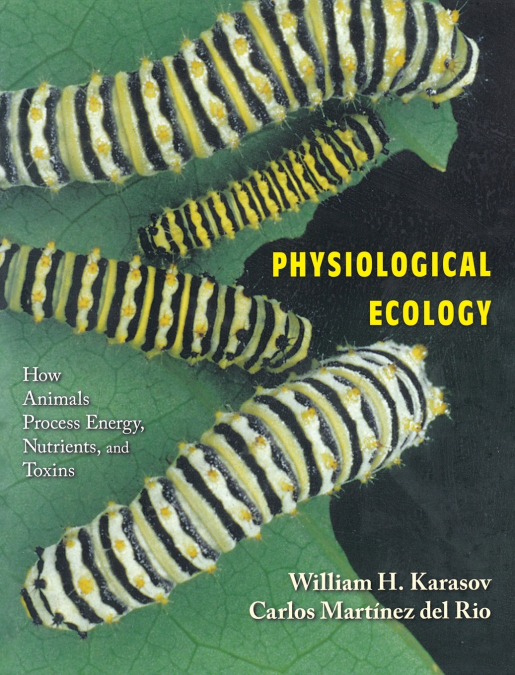
  • Physiological Ecology
    Carlos Martínez del Rio / William H. Karasov
    Unlocking the puzzle of how animals behave and how they interact with their environments is impossible without understanding the physiological processes that determine their use of food resources. But long overdue is a user-friendly introduction to the subject that systematically bridges the gap between physiology and ecology. Ecologists--for whom such knowledge can help clarif...
  • Critical Transitions in Nature and Society
    Marten Scheffer
    How do we explain the remarkably abrupt changes that sometimes occur in nature and society--and can we predict why and when they happen? This book offers a comprehensive introduction to critical transitions in complex systems--the radical changes that happen at tipping points when thresholds are passed. Marten Scheffer accessibly describes the dynamical systems theory behind cr...
    Disponible

    89,46 €

Otros libros del autor

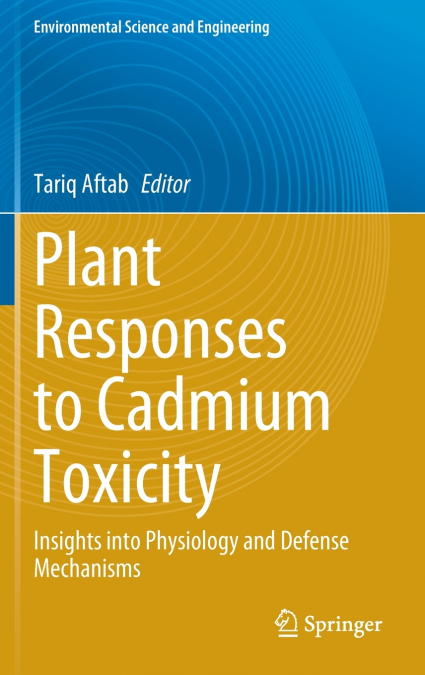
  • Plant Responses to Cadmium Toxicity
    Tariq Aftab
    This book offers an exploration of how plants respond to the presence of cadmium, shedding light on both the physiological and molecular mechanismsIn an era of growing environmental concern, this edited book serves as an invaluable resource, shedding light on the intricate interplay between plants and cadmium, a menacing environmental pollutant. Cadmium’s pervasive presence in ...
  • Metals and Metalloids in Plant Signaling
    Tariq Aftab
    In many parts of the world, soil and water are slightly to moderately contaminated with metals and metalloids such as Cd, Cu, Zn, Ni, Co, Cr, Pb, Si, B and As. This could be due to long-term use of phosphatic fertilizers, sewage sludge application, dust from smelters, industrial waste and bad watering practices in agricultural lands. Beside natural factors, human activities hav...
  • Auxins, Cytokinins and Gibberellins Signaling in Plants
    Tariq Aftab
    Plant hormones have pivotal roles in the regulation of plant growth, development, and reproduction. Their signaling pathways are interconnected in a complex network, which provides plants with an enormous regulatory potential to rapidly adapt to their environment and to utilize their limited resources for growth and survival in a cost-efficient manner. Auxin is a hormone molecu...
    Disponible

    308,73 €

  • Environmental Challenges and Medicinal Plants
    Tariq Aftab
    Medicinal plants supply the ever-growing needs of humankind for natural chemicals, such as pharmaceuticals, nutraceuticals, agrochemicals, and chemical additives. These plants contain bioactive secondary metabolites, which possess antimalarial, anthelminthic, anti-inflammatory, analgesic, antimicrobial, antiarthritic, antioxidant, antidiabetic, antihypertensive, anticancer, ant...
    Disponible

    247,73 €

  • Emerging Contaminants and Plants
    Tariq Aftab
    Emerging contaminants (ECs) are predominantly unregulated anthropogenic chemicals that occur in air, soil, water, food, and plant/animal tissues in trace concentrations. ECs are persistent in the environment, capable of perturbing the physiology of target receptors and, therefore, are increasingly regarded as a subject of concern. This volume aims to enhance understanding of em...
  • Emerging Contaminants and Plants
    Tariq Aftab
    Emerging contaminants (ECs) are predominantly unregulated anthropogenic chemicals that occur in air, soil, water, food, and plant/animal tissues in trace concentrations. ECs are persistent in the environment, capable of perturbing the physiology of target receptors and, therefore, are increasingly regarded as a subject of concern. This volume aims to enhance understanding of em...
    Disponible

    47,50 €