 Librería Samer Atenea
 Kálamo Books
 Librería Elías (Asturias)
 Librería Kolima (Madrid)
 Librería Proteo (Málaga)
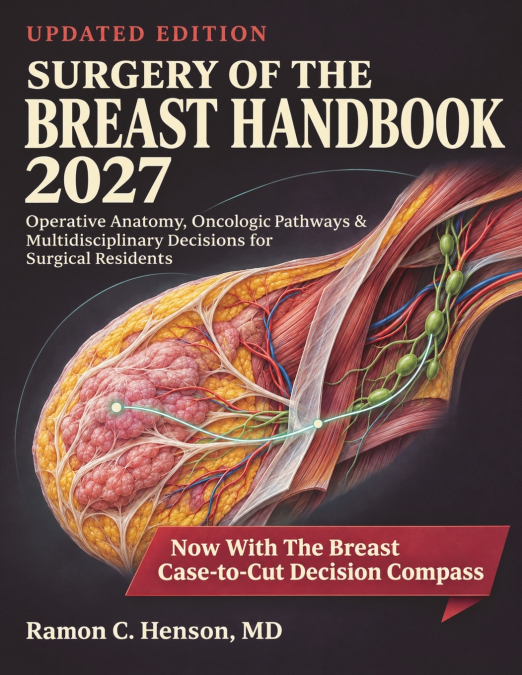
Turn Breast Findings into Bounded, Defensible Operations Breast surgery demands more than technical familiarity: every incision must reconcile examination, imaging, pathology, tumor biology, systemic treatment, radiation, reconstruction, and the patient’s priorities. Written for surgical residents, breast surgical-oncology fellows, and practicing clinicians, this handbook follows that chain from triple assessment through benign disease, high-risk care, carcinoma, breast conservation, mastectomy, axillary management, complications, rehabilitation, and survivorship. The Breast Case-to-Cut Decision Compass links each clinical constellation to an operative choice, a margin or axillary boundary, and a recovery safeguard. Use mechanism-based chapters, narrative cases, current de-escalation pathways, and 66 specialty-specific figure prompts to prepare for clinic, conference, and the operating room. Capabilities You Can Carry into Breast Practice Reconcile clinical, mammographic, sonographic, magnetic-resonance, and tissue findings - detect discordance before it becomes the wrong operation. Plan localization, specimen orientation, cavity marking, and margin management - preserve the meaning of the resection for pathology and radiation. Perform breast conservation, oncoplastic rearrangement, and mastectomy with anatomy-driven control - protect oncologic boundaries, perfusion, contour, and sensation. Select sentinel, targeted, or complete axillary surgery - apply modern omission pathways without extending trial evidence beyond its proper setting. Sequence operations around neoadjuvant therapy, response, reconstruction, and postmastectomy radiation - keep future options open across disciplines. Recognize hematoma, seroma, infection, flap ischemia, chronic pain, and lymphatic injury - escalate early enough to protect recovery and adjuvant treatment. Manage rare histologies, inflammatory disease, recurrence, pregnancy-associated disease, and gender-diverse care - adapt the plan without abandoning core oncologic principles. Bring a mechanism-based operative reference to every breast clinic, multidisciplinary conference, and surgical planning session.