Piante delle zone umide

Piante delle zone umide

M. Muni Singh / Prabhat Kumar Rai

67,24 €
IVA incluido
Disponible
Editorial:
KS OmniScriptum Publishing
Año de edición:
2026
Materia
Ecología, la biosfera
ISBN:
9786209630712
67,24 €
IVA incluido
Disponible

Selecciona una librería:

  • Librería Samer Atenea
  • Kálamo Books
  • Librería Elías (Asturias)
  • Librería Kolima (Madrid)
  • Librería Proteo (Málaga)

Le zone umide nell’attuale Antropocene stanno affrontando un grave deterioramento della qualità dell’acqua causato dalla rapida industrializzazione e urbanizzazione. I metalli pesanti provenienti da diverse fonti naturali e antropiche sono le sostanze più pericolose e tossiche che possono perturbare l’intero ecosistema delle zone umide e influire sulla salute umana. Diverse limitazioni esistenti nelle tecnologie chimiche hanno aperto la strada all’utilizzo delle piante delle zone umide come risorse biologiche attraverso il meccanismo di fitorimedio come tecnologia economica, ecologica e sostenibile per la rimozione dei metalli pesanti. Il presente libro tratta i meccanismi multifattoriali, l’utilità e le questioni relative all’utilizzo delle piante delle zone umide e alla loro applicazione nel fitorimedio per la rimozione dei metalli pesanti dalle zone umide naturali e artificiali. L’applicazione della tecnologia del fitorimedio nelle zone umide artificiali viene eseguita con successo per la bonifica delle acque contaminate attraverso l’uso di piante delle zone umide appropriate. Le piante delle zone umide, insieme ai microbi ad esse associati, possono essere utilizzate per il trattamento adeguato dei contaminanti, in particolare dei metalli pesanti.
Artículos relacionados

  • Water from a Transdisciplinary Perspective
    Ana Isabel Pereira Cardoso / Teresinha M. Gonçalves
    Life in cities has distanced human beings from nature and made it difficult to understand the ecology of life dependent on the environment. Urban water collection and distribution processes contribute significantly to the fragmentation of knowledge and the vital recognition of the water cycle. Without the effective participation of the subject in environmental actions, it is no...
    Disponible

    43,82 €

  • Modeling Populations of Adaptive Individuals
    Bret C. Harvey / Steven F. Railsback
    Ecologists now recognize that the dynamics of populations, communities, and ecosystems are strongly affected by adaptive individual behaviors. Yet until now, we have lacked effective and flexible methods for modeling such dynamics. Traditional ecological models become impractical with the inclusion of behavior, and the optimization approaches of behavioral ecology cannot be use...
    Disponible

    64,30 €

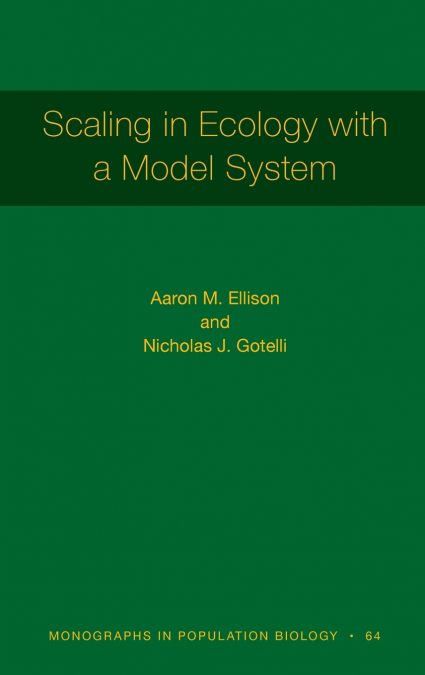
  • Scaling in Ecology with a Model System
    Aaron Ellison / Aaron M. Ellison / Nicholas J. Gotelli
    A groundbreaking approach to scale and scaling in ecological theory and practiceScale is one of the most important concepts in ecology, yet researchers often find it difficult to find ecological systems that lend themselves to its study. Scaling in Ecology with a Model System synthesizes nearly three decades of research on the ecology of Sarracenia purpurea-the northern pitcher...
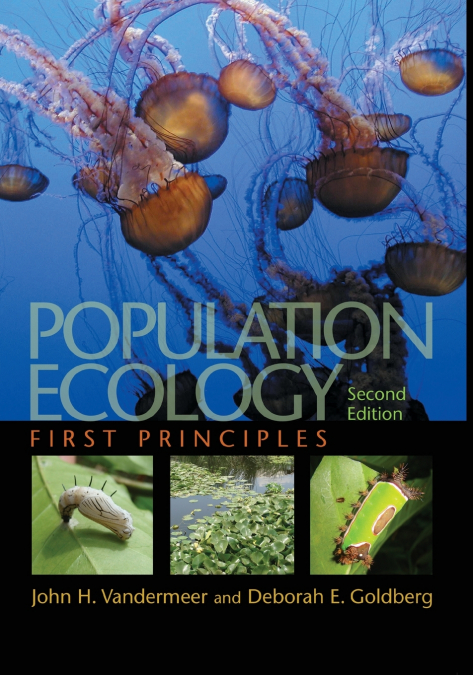
  • Population Ecology
    Deborah E. Goldberg / John H. Vandermeer
    The essential introduction to population ecology-now expanded and fully updatedEcology is capturing the popular imagination like never before, with issues such as climate change, species extinctions, and habitat destruction becoming ever more prominent. At the same time, the science of ecology has advanced dramatically, growing in mathematical and theoretical sophistication. He...
    Disponible

    117,24 €

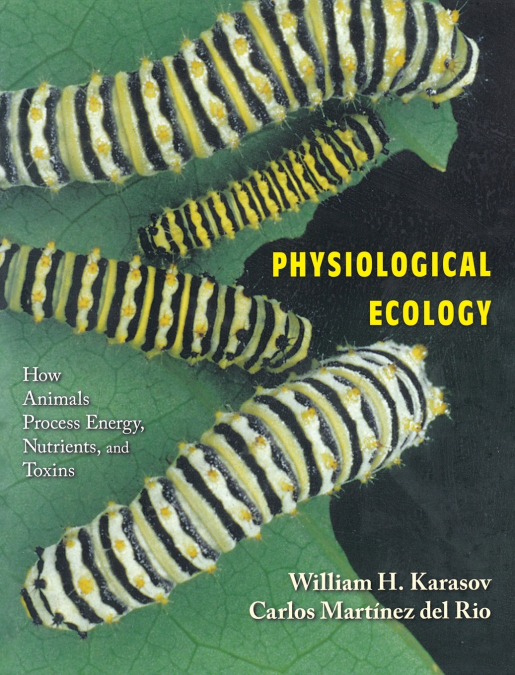
  • Physiological Ecology
    Carlos Martínez del Rio / William H. Karasov
    Unlocking the puzzle of how animals behave and how they interact with their environments is impossible without understanding the physiological processes that determine their use of food resources. But long overdue is a user-friendly introduction to the subject that systematically bridges the gap between physiology and ecology. Ecologists--for whom such knowledge can help clarif...
  • Critical Transitions in Nature and Society
    Marten Scheffer
    How do we explain the remarkably abrupt changes that sometimes occur in nature and society--and can we predict why and when they happen? This book offers a comprehensive introduction to critical transitions in complex systems--the radical changes that happen at tipping points when thresholds are passed. Marten Scheffer accessibly describes the dynamical systems theory behind cr...
    Disponible

    87,92 €

Otros libros del autor

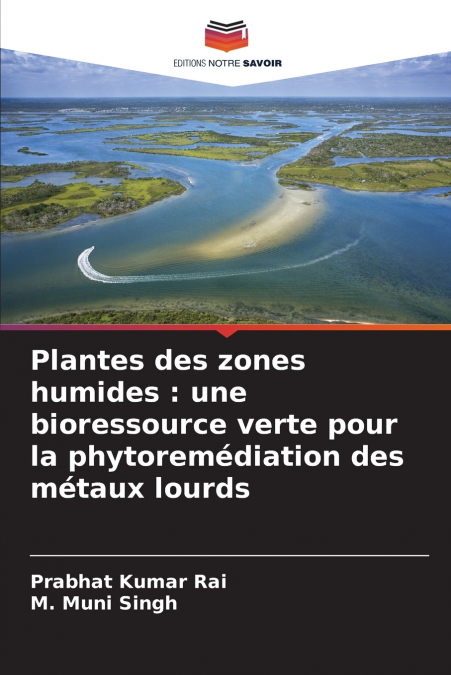
  • Plantes des zones humides
    M. Muni Singh / Prabhat Kumar Rai
    Dans l’Anthropocène actuel, les zones humides sont confrontées à une grave détérioration de la qualité de l’eau résultant de l’industrialisation et de l’urbanisation rapides. Les métaux lourds provenant de diverses sources naturelles et anthropiques sont les substances les plus dangereuses et toxiques qui peuvent perturber l’ensemble de l’écosystème des zones humides et affecte...
    Disponible

    93,36 €

  • Rośliny bagienne
    M. Muni Singh / Prabhat Kumar Rai
    W obecnej epoce antropocenu tereny podmokłe borykają się z poważnym pogorszeniem jakości wody wynikającym z szybkiej industrializacji i urbanizacji. Metale ciężkie pochodzące z różnych źródeł naturalnych i antropogenicznych są najbardziej niebezpiecznymi i toksycznymi substancjami, które mogą zaburzać cały ekosystem terenów podmokłych, a tym samym wpływać na zdrowie ludzi. Kilk...
    Disponible

    67,24 €

  • Feuchtgebietspflanzen
    M. Muni Singh / Prabhat Kumar Rai
    Feuchtgebiete sind im aktuellen Anthropozän aufgrund der raschen Industrialisierung und Urbanisierung mit einer starken Verschlechterung der Wasserqualität konfrontiert. Schwermetalle aus verschiedenen natürlichen und anthropogenen Quellen sind die gefährlichsten und giftigsten Substanzen, die das gesamte Feuchtgebietsökosystem stören und gleichzeitig die menschliche Gesundheit...
    Disponible

    93,43 €

  • Plantas de zonas húmidas
    M. Muni Singh / Prabhat Kumar Rai
    As zonas húmidas no atual Antropoceno enfrentam uma grave deterioração da qualidade da água, resultante da rápida industrialização e urbanização. Os metais pesados provenientes de diversas fontes naturais e antropogénicas são as substâncias mais perigosas e tóxicas, podendo perturbar todo o ecossistema das zonas húmidas e, concomitantemente, afetar a saúde humana. Várias limita...
    Disponible

    67,24 €