 Librería Samer Atenea
 Kálamo Books
 Librería Elías (Asturias)
 Librería Kolima (Madrid)
 Librería Proteo (Málaga)
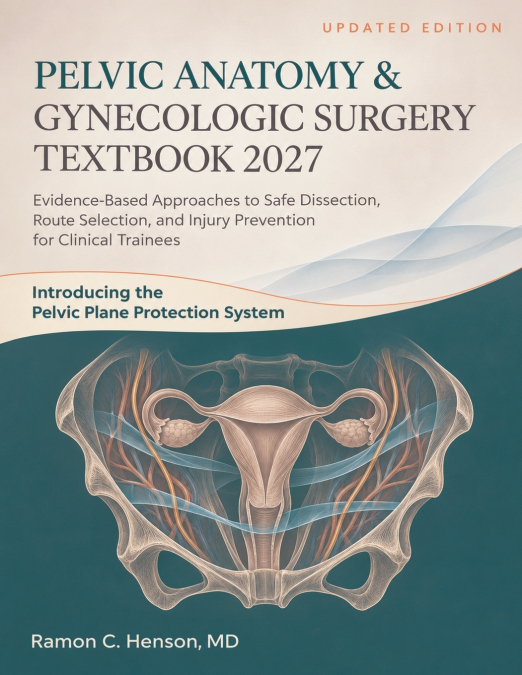
See the Plane, Protect the Structure, Complete the Operation Built for obstetrics and gynecology residents, surgical fellows, educators, and practicing clinicians, this reference connects three-dimensional female pelvic anatomy to the decisions that govern safe gynecologic operations. It moves from bony boundaries, fascial spaces, vessels, ureters, pelvic nerves, and floor support into abdominal, laparoscopic, robotic, vaginal, and hysteroscopic procedures, then extends that anatomy through oncology, reconstruction, complication repair, and reoperation. The Pelvic Plane Protection System converts each difficult field into a repeatable sequence of orientation landmark, plane entry, structure at risk, protection move, and safety boundary. Use the Operative Map to Recover pelvic orientation - translate the same ureteral, vascular, fascial, and neural relationships across open, minimally invasive, vaginal, and endoluminal views Enter retroperitoneal spaces safely - distinguish paravesical, pararectal, presacral, obturator, and ovarian-fossa corridors before scar or hemorrhage erases the field Protect urinary and neural function - trace ureteric tunnels, bladder planes, hypogastric nerves, pelvic splanchnic fibers, and somatic nerve danger zones Perform route-specific operations - apply tissue-plane reasoning to adnexal surgery, myomectomy, hysterectomy, prolapse repair, continence procedures, and endometriosis excision Control vascular risk - map ovarian, uterine, iliac, obturator, and presacral sources with exposure-first hemorrhage rescue Plan radical and lymphatic dissection - preserve oncologic orientation through parametrial, sentinel-node, pelvic, para-aortic, and exenterative procedures Recognize and repair complications - match urinary, bowel, vascular, neural, and positioning injuries to mechanism-specific reconstruction and surveillance Use the Master Atlas at the point of care - cross-reference spaces, routes, structures, procedures, and rescue maneuvers before and after surgery Bring a disciplined pelvic map to the next operation and preserve the safest remaining option at every boundary.