
Inicio > Matemáticas y ciencia > Biologia, ciencias de la vida > Ciencias de la vida: cuestiones generales > Neurociencias > Neural Substrates of Memory, Affective Functions, and Conscious Experience
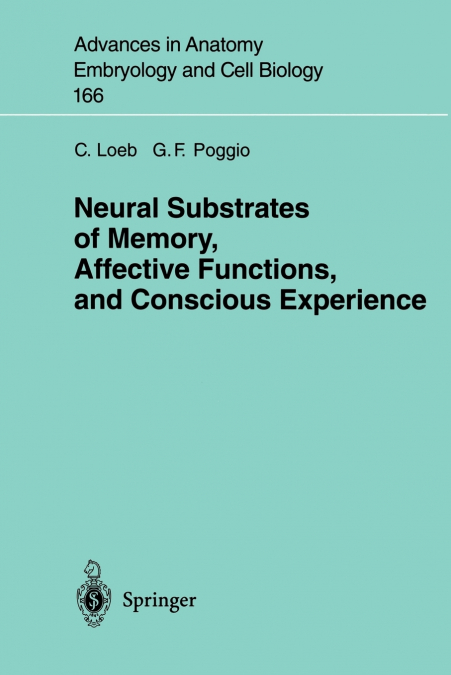
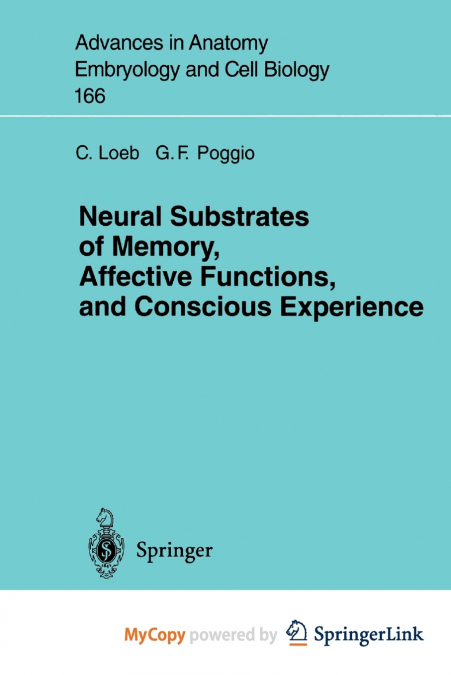
Neural Substrates of Memory, Affective Functions, and Conscious Experience

Neural Substrates of Memory, Affective Functions, and Conscious Experience

C. Loeb / G. F. Poggio

48,65 €
IVA incluido
Disponible
Editorial:
Springer Nature B.V.
Año de edición:
2014
Materia
Neurociencias
ISBN:
9783642594335
48,65 €
IVA incluido
Disponible

Selecciona una librería:

  • Librería Samer Atenea
  • Librería Aciertas (Toledo)
  • Kálamo Books
  • Librería Perelló (Valencia)
  • Librería Elías (Asturias)
  • Donde los libros
  • Librería Kolima (Madrid)
  • Librería Proteo (Málaga)

It is important, indeed necessary, we believe, that the study of the higher brain func­ tions be introduced by a brief account of the evolution of the philosophical thinking and scientific researches on cognition. The intuition that sensations and intelligence reside in the brain goes back to the Egyptians, in particular the Edwin Smith papyrus, probably dated between 2500 and 3000 b. c. , where the term 'brain' appears for the first time and where there is a description of its coverings (meninges) and circumvolutions (Walsh 1994). The philosophical debate on brain and mind made its appearance in ancient l Greece and in subsequent centuries developed among the philosophers. The flow of sensations, the process of thinking, and the site of reason were localized in the brain, according to Alcmaeon of Croton (sixth to fifth centuries b. c. ) and subsequently Lattanzio, Alexander of Tralles, Democritus, Anaxagoras, and particularly Hip­ pocrates (460-377 b. c. ), who placed the soul, envisaged as a mental function, in the brain. Plato (427-347 b. c. ) believed that the brain provided the sensory experiences (hearing, sight, smell) and that from these were generated thinking and memory, and the act of thinking produced the truth or 'episteme. ' The formulation of the problem changes radically with Aristotle (384-322 b. c. ), who believed that the heart, and not the brain, was the site of passions, feelings, intelligence, and thought (Gross 1995).
Artículos relacionados

  • Do Zombies Dream of Undead Sheep?
    Bradley Voytek / Timothy Verstynen
    A look at the true nature of the zombie brainEven if you’ve never seen a zombie movie or television show, you could identify an undead ghoul if you saw one. With their endless wandering, lumbering gait, insatiable hunger, antisocial behavior, and apparently memory-less existence, zombies are the walking nightmares of our deepest fears. What do these characteristic behaviors rev...
    Disponible

    21,02 €

  • Hard to Break
    Russell Poldrack
    The neuroscience of why bad habits are so hard to break-and how evidence-based strategies can help us change our behavior more effectivelyWe all have habits we’d like to break, but for many of us it can be nearly impossible to do so. There is a good reason for this: the brain is a habit-building machine. In Hard to Break, leading neuroscientist Russell Poldrack provides an enga...
    Disponible

    25,32 €

  • Neuro
    Joelle M. Abi-Rached / Nikolas Rose
    How the new brain sciences are transforming our understanding of what it means to be humanThe brain sciences are influencing our understanding of human behavior as never before, from neuropsychiatry and neuroeconomics to neurotheology and neuroaesthetics. Many now believe that the brain is what makes us human, and it seems that neuroscientists are poised to become the new exper...
    Disponible

    42,88 €

  • Hipnotismo
    Equipo de expertos Osiris
    Gracias al hipnotismo usted puede potenciar al máximo su propia capacidad mental, su voluntad y el alcance de cuanto su mente es capaz de llevar a cabo. Gracias a este libro conocerá cómo se desarrolla una sesión hipnótica, qué es realmente el hipnotismo parapsicológico, cuáles son los principales ejercicios preparatorios o en qué consiste el método de la autohipnosis. Una obra...
    Disponible

    20,75 €

  • TOWARDS HUMAN BRAIN INSPIRED LIFELONG LEARNING
    LI XIAOLI / SAVITHA RAMASAMY ARULMURUGAN XIAOLI LI
    Over the past few decades, the field of machine learning has made remarkable strides, surpassing human performance in tasks like voice and object recognition, as well as mastering various complex games. Despite these accomplishments, a critical challenge remains: the absence of general intelligence. Achieving artificial general intelligence (AGI) requires the development of lea...
  • Hypnosis, Psychosis and the Consciousness Conundrum
    Peter Naish
    Have you ever wondered how your brain works, how it makes sense of what you hear and see? Many people do, but then shrug their shoulders and simply get on with using their brain. That’s sad; they are missing such a lot! This book is full of fascinating facts and details about the senses, and also covers what happens when things ’go wrong’, such as when someone hypnotised sees t...
    Disponible

    22,71 €

Otros libros del autor

  • Neural Substrates of Memory, Affective Functions, and Conscious Experience
    C. Loeb / G. F. Poggio
    It is important, indeed necessary, we believe, that the study of the higher brain func­ tions be introduced by a brief account of the evolution of the philosophical thinking and scientific researches on cognition. The intuition that sensations and intelligence reside in the brain goes back to the Egyptians, in particular the Edwin Smith papyrus, proba...
    Disponible

    134,73 €