
Inicio > Medicina > Medicina clínica e interna > Neurología y neurofisiología clínicas > Neural Substrates of Memory, Affective Functions, and Conscious Experience
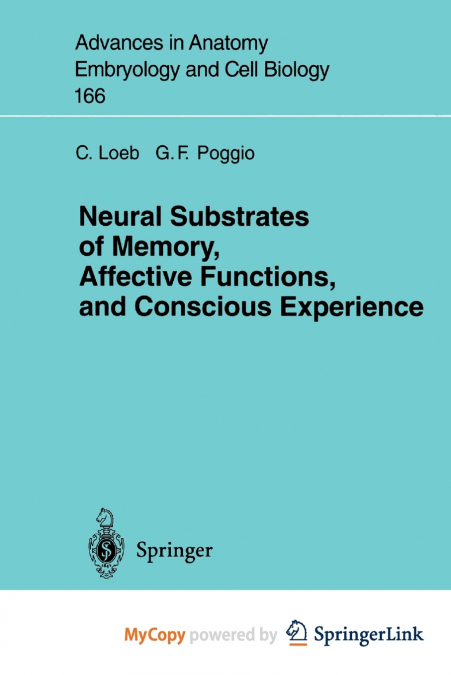
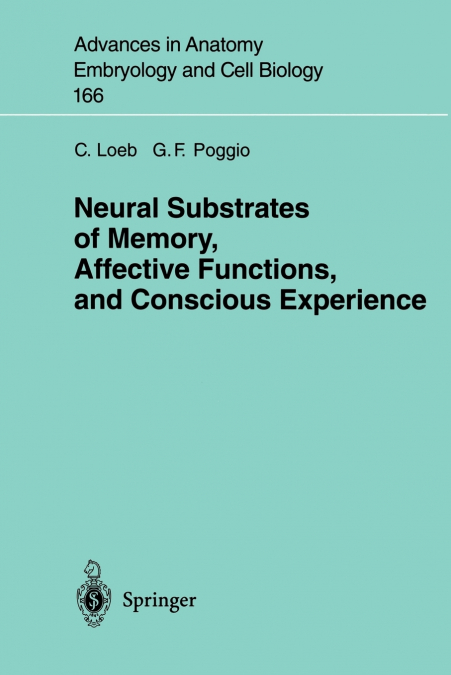
Neural Substrates of Memory, Affective Functions, and Conscious Experience

Neural Substrates of Memory, Affective Functions, and Conscious Experience

C. Loeb / G. F. Poggio

134,73 €
IVA incluido
Disponible
Editorial:
Springer Nature B.V.
Año de edición:
2002
Materia
Neurología y neurofisiología clínicas
ISBN:
9783540436676
134,73 €
IVA incluido
Disponible

Selecciona una librería:

  • Librería Samer Atenea
  • Librería Aciertas (Toledo)
  • Kálamo Books
  • Librería Perelló (Valencia)
  • Librería Elías (Asturias)
  • Donde los libros
  • Librería Kolima (Madrid)
  • Librería Proteo (Málaga)

It is important, indeed necessary, we believe, that the study of the higher brain func­ tions be introduced by a brief account of the evolution of the philosophical thinking and scientific researches on cognition. The intuition that sensations and intelligence reside in the brain goes back to the Egyptians, in particular the Edwin Smith papyrus, probably dated between 2500 and 3000 b. c. , where the term 'brain' appears for the first time and where there is a description of its coverings (meninges) and circumvolutions (Walsh 1994). The philosophical debate on brain and mind made its appearance in ancient l Greece and in subsequent centuries developed among the philosophers. The flow of sensations, the process of thinking, and the site of reason were localized in the brain, according to Alcmaeon of Croton (sixth to fifth centuries b. c. ) and subsequently Lattanzio, Alexander of Tralles, Democritus, Anaxagoras, and particularly Hip­ pocrates (460-377 b. c. ), who placed the soul, envisaged as a mental function, in the brain. Plato (427-347 b. c. ) believed that the brain provided the sensory experiences (hearing, sight, smell) and that from these were generated thinking and memory, and the act of thinking produced the truth or 'episteme. ' The formulation of the problem changes radically with Aristotle (384-322 b. c. ), who believed that the heart, and not the brain, was the site of passions, feelings, intelligence, and thought (Gross 1995).
Artículos relacionados

  • Handbook of Research on Innovations in the Diagnosis and Treatment of Dementia
    Ionnis Tarnanas / Leontios Hadjileontiadis / Panagiotis D Bamidis
    Technology is playing an increasing role in the lives of the elderly. One of the most prevalent developments for the aging population is the use of technological innovations for intervention and treatment of individuals with mental impairments. The Handbook of Research on Innovations in the Diagnosis and Treatment of Dementia offers empirical research and theoretical analyses o...
  • Biomedical Engineering and Cognitive Neuroscience for Healthcare
    Jinglong Wu
    New developments in medical technology have paved the way for the ongoing studies of cognitive neuroscience and biomedical engineering for healthcare. Their different but interconnected aspects of science and technology seek to provide new solutions for difficult healthcare problems and impact the future of the quality of life. Biomedical Engineering and Cognitive Neuroscience ...
  • Handbook of Functional MRI Data Analysis
    Jeanette A. Mumford / Russell A. Poldrack / Thomas E. Nichols
    ...
    Disponible

    63,88 €

  • How Do You Feel?
    A. D. Craig
    A book that fundamentally changes how neuroscientists and psychologists categorize sensations and understand the origins and significance of human feelingsHow Do You Feel? brings together startling evidence from neuroscience, psychology, and psychiatry to present revolutionary new insights into how our brains enable us to experience the range of sensations and mental states kno...
    Disponible

    47,73 €

  • Deep Learning Approaches for Early Diagnosis of Neurodegenerative Diseases
    Within the context of global health challenges posed by intractable neurodegenerative diseases like Alzheimer’s and Parkinson’s, the significance of early diagnosis is critical for effective intervention, and scientists continue to discover new methods of detection. However, actual diagnosis goes beyond detection to include a significant analysis of combined data for many cases...
  • Ignite Global Change
    Alessandro Crimi
    Your essential guide to global entrepreneurship and activism. From Accra and Mumbai to Milan and New York, a vibrant new generation of activist entrepreneurs turn visionary ideas into impactful realities. Ignite Global Change offers a roadmap for crafting wealth from minimal resources, from ideation to implementation. Its practical, real-world approach provides strategies that ...
    Disponible

    23,34 €

Otros libros del autor

  • Neural Substrates of Memory, Affective Functions, and Conscious Experience
    C. Loeb / G. F. Poggio
    It is important, indeed necessary, we believe, that the study of the higher brain func­ tions be introduced by a brief account of the evolution of the philosophical thinking and scientific researches on cognition. The intuition that sensations and intelligence reside in the brain goes back to the Egyptians, in particular the Edwin Smith papyrus, probably dated between 2500 and ...
    Disponible

    48,65 €