Mutualisms and Insect Conservation

Mutualisms and Insect Conservation

Tim R. New

207,91 €
IVA incluido
Disponible
Editorial:
Springer Nature B.V.
Año de edición:
2018
Materia
Ecología, la biosfera
ISBN:
9783319863672
207,91 €
IVA incluido
Disponible

Selecciona una librería:

  • Librería Samer Atenea
  • Librería Aciertas (Toledo)
  • Kálamo Books
  • Librería Perelló (Valencia)
  • Librería Elías (Asturias)
  • Donde los libros
  • Librería Kolima (Madrid)
  • Librería Proteo (Málaga)

Documenting and understanding intricate ecological interactions involving insects is a central need in conservation, and the specialised and specific nature of many such associations is displayed in this book.  Their importance is exemplified in a broad global overview of a major category of interactions, mutualisms, in which the interdependence of species is essential for their mutual wellbeing. The subtleties that sustain many mutualistic relationships are still poorly understood by ecologists and conservation managers alike. Examples from many parts of the world and ecological regimes demonstrate the variety of mutualisms between insect taxa, and between insects and plants, in particular, and their significance in planning and undertaking insect conservation - of both individual species and the wider contexts on which they depend.  Several taxonomic groups, notably ants, lycaenid butterflies and sucking bugs, help to demonstrate the evolution and flexibility of mutualistic interactions, whilst fundamental processes such as pollination emphasise the central roles of, often, highly specific partnerships. This compilation brings together a wide range of relevant cases and contexts, with implications for practical insect conservation and increasing awareness of the roles of co-adaptations of behaviour and ecology as adjuncts to designing optimal conservation plans. The three major themes deal with the meanings and mechanisms of mutualisms, the classic mutualisms that involve insect partners, and the environmental and conservation lessons that flow from these and have potential to facilitate and improve insect conservation practice. The broader ecological perspective advances the transition from primary focus on single species toward consequently enhancing wider ecological contexts in which insect diversity can thrive.
Artículos relacionados

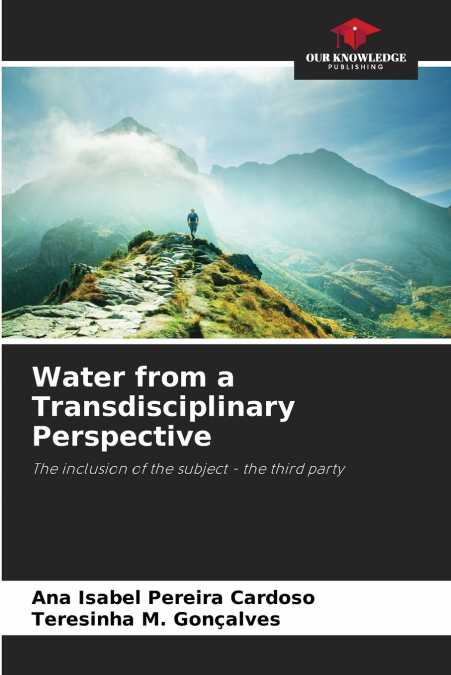
  • Water from a Transdisciplinary Perspective
    Ana Isabel Pereira Cardoso / Teresinha M. Gonçalves
    Life in cities has distanced human beings from nature and made it difficult to understand the ecology of life dependent on the environment. Urban water collection and distribution processes contribute significantly to the fragmentation of knowledge and the vital recognition of the water cycle. Without the effective participation of the subject in environmental actions, it is no...
    Disponible

    43,82 €

  • Modeling Populations of Adaptive Individuals
    Bret C. Harvey / Steven F. Railsback
    Ecologists now recognize that the dynamics of populations, communities, and ecosystems are strongly affected by adaptive individual behaviors. Yet until now, we have lacked effective and flexible methods for modeling such dynamics. Traditional ecological models become impractical with the inclusion of behavior, and the optimization approaches of behavioral ecology cannot be use...
    Disponible

    65,53 €

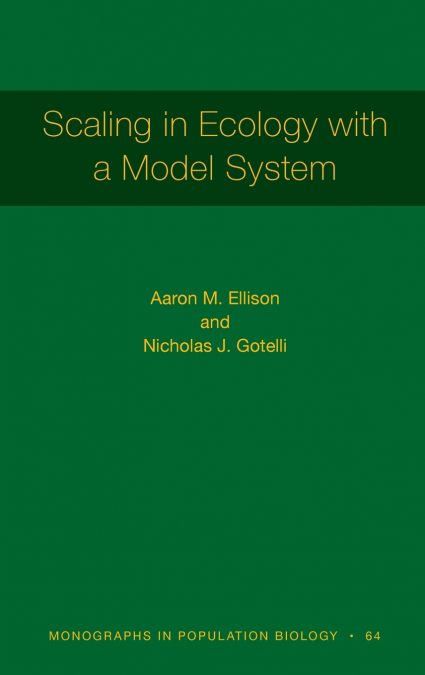
  • Scaling in Ecology with a Model System
    Aaron Ellison / Aaron M. Ellison / Nicholas J. Gotelli
    A groundbreaking approach to scale and scaling in ecological theory and practiceScale is one of the most important concepts in ecology, yet researchers often find it difficult to find ecological systems that lend themselves to its study. Scaling in Ecology with a Model System synthesizes nearly three decades of research on the ecology of Sarracenia purpurea-the northern pitcher...
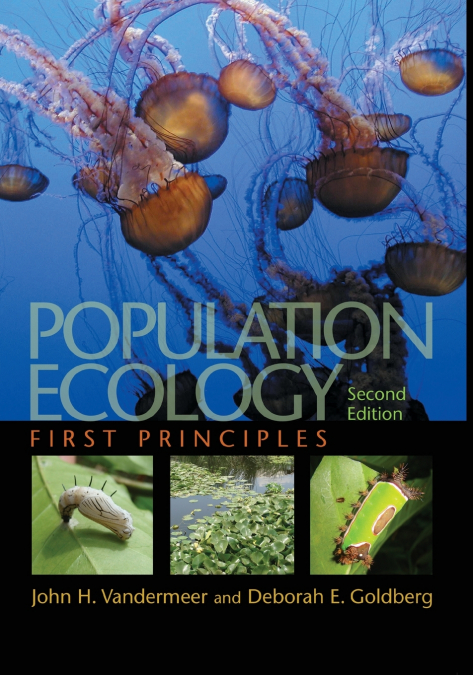
  • Population Ecology
    Deborah E. Goldberg / John H. Vandermeer
    The essential introduction to population ecology-now expanded and fully updatedEcology is capturing the popular imagination like never before, with issues such as climate change, species extinctions, and habitat destruction becoming ever more prominent. At the same time, the science of ecology has advanced dramatically, growing in mathematical and theoretical sophistication. He...
    Disponible

    124,92 €

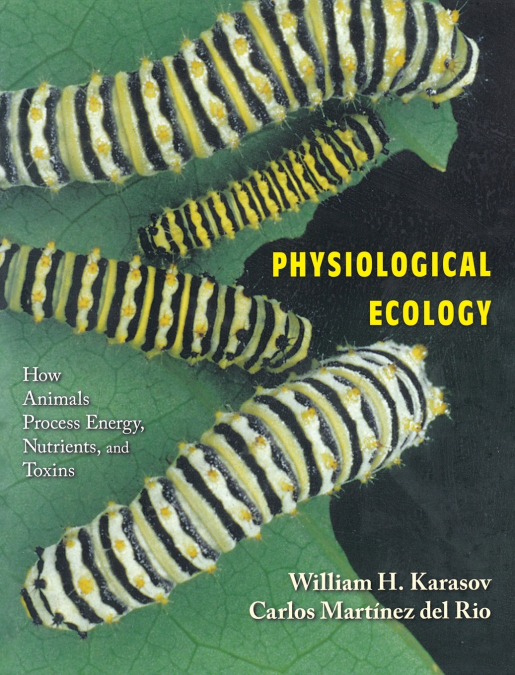
  • Physiological Ecology
    Carlos Martínez del Rio / William H. Karasov
    Unlocking the puzzle of how animals behave and how they interact with their environments is impossible without understanding the physiological processes that determine their use of food resources. But long overdue is a user-friendly introduction to the subject that systematically bridges the gap between physiology and ecology. Ecologists--for whom such knowledge can help clarif...
  • Critical Transitions in Nature and Society
    Marten Scheffer
    How do we explain the remarkably abrupt changes that sometimes occur in nature and society--and can we predict why and when they happen? This book offers a comprehensive introduction to critical transitions in complex systems--the radical changes that happen at tipping points when thresholds are passed. Marten Scheffer accessibly describes the dynamical systems theory behind cr...
    Disponible

    89,46 €

Otros libros del autor

  • The Other Lepidoptera
    Tim R. New
    Conservation interest in moths, by far the predominant components of Lepidoptera, lags far behind that for butterflies, for which conservation practice provides many well-established lessons for extension to their near relatives. The needs of moths are at least as great, but their greater richness and variety, and far poorer documentation of diversity and biology over much of t...
    Disponible

    48,07 €

  • The Other Lepidoptera
    Tim R. New
    Conservation interest in moths, by far the predominant components of Lepidoptera, lags far behind that for butterflies, for which conservation practice provides many well-established lessons for extension to their near relatives. The needs of moths are at least as great, but their greater richness and variety, and far poorer documentation of diversity and biology over much of t...
  • Insect Diversity, Declines and Conservation in Australia
    Tim R. New
    Problems of insect enumeration and assessment of needs are addressed in the contexts of rapid and substantial losses and changes to all key Australian terrestrial and freshwater environments and promoting awarenesss of the importance of insects. Further definition of the insect fauna and its peculiarities can aid threat alleviation and practical management to protect and conser...
    Disponible

    146,41 €

  • Insect Diversity, Declines and Conservation in Australia
    Tim R. New
    Problems of insect enumeration and assessment of needs are addressed in the contexts of rapid and substantial losses and changes to all key Australian terrestrial and freshwater environments and promoting awarenesss of the importance of insects. Further definition of the insect fauna and its peculiarities can aid threat alleviation and practical management to protect and conser...
  • Insect Conservation and Australia’s Grasslands
    Tim R. New
    Australia’s varied grasslands have suffered massive losses and changes since European settlement, and those changes continue under increasingly intensive human pressures for development and agricultural production. The values of native grasslands for conservation of endemic native biodiversity, both flora and fauna, have led to strong interests in the protection of remaining fr...
    Disponible

    219,99 €

  • Insect Conservation and Australia’s Grasslands
    Tim R. New
    Australia’s varied grasslands have suffered massive losses and changes since European settlement, and those changes continue under increasingly intensive human pressures for development and agricultural production. The values of native grasslands for conservation of endemic native biodiversity, both flora and fauna, have led to strong interests in the protection of remaining fr...