The Other Lepidoptera

The Other Lepidoptera

Tim R. New

196,24 €
IVA incluido
Consulta disponibilidad
Editorial:
Springer Nature B.V.
Año de edición:
2023
Materia
Conservación del medioambiente
ISBN:
9783031321023

Selecciona una librería:

  • Librería Samer Atenea
  • Librería Aciertas (Toledo)
  • Kálamo Books
  • Librería Perelló (Valencia)
  • Librería Elías (Asturias)
  • Donde los libros
  • Librería Kolima (Madrid)
  • Librería Proteo (Málaga)

Conservation interest in moths, by far the predominant components of Lepidoptera, lags far behind that for butterflies, for which conservation practice provides many well-established lessons for extension to their near relatives. The needs of moths are at least as great, but their greater richness and variety, and far poorer documentation of diversity and biology over much of the world contribute to this lack of attention. Australia’s rich moth fauna, largely endemic and of global interest, illustrates many of the problems of developing wider interest and support for moth conservation. Numerous species (perhaps half the total fauna) are undescribed, and many are ecological specialists in restricted and vulnerable environments over small parts of the continent. Establishing their conservation status and needs whilst accepting that foundation knowledge is highly incomplete and much species-focused conservation is impracticable provides complex problems in setting priorities, based largely on wider diversity and effective advocacy.  Most Australian vegetation systems, from grassland to forest and from sea-level to alpine zones, have been eroded in extent and quality since European settlement, resulting in massive habitat changes for native insects and to leave fragmented (and commonly degraded) remnants in which moths and others may persist. Recent surveys continue to increase recorded moth richness, reveal local faunal peculiarities, and indicate how assemblage changes may mirror wider environmental changes. This book is an overview of advances in documenting and interpreting moth diversity and ecology, to show how information from better-studied moth faunas can help in planning conservation of Australia’s moths through measures such as understanding the moths themselves by increased surveys and study, the factors influencing their diversity and wellbeing, and how such threats may be countered through increased coordinated conservation interest, commitment and management.
Artículos relacionados

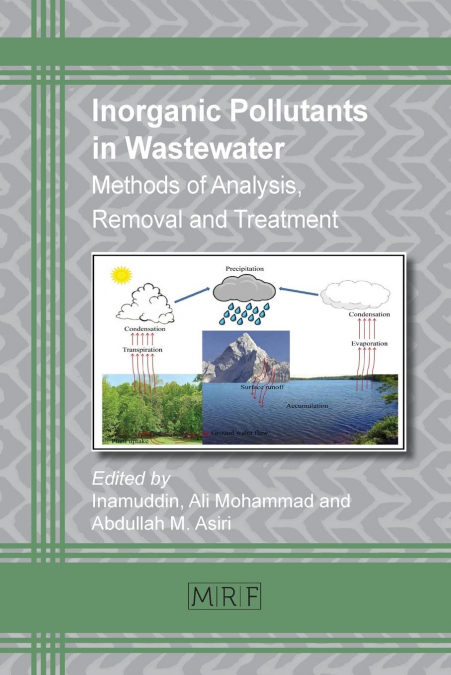
  • Inorganic Pollutants in Wastewater
    This book, 'Inorganic Pollutants in Wastewater: Methods of Analysis, Removal and Treatment' extensively investigates the most recent improvements in the area of inorganic pollutants analysis, removal and treatment of wastewater by utilizing different materials such as natural polymers, husks, graphene and carbon nanotube composites, fruit cortex etc. It covers photocata...
    Disponible

    144,10 €

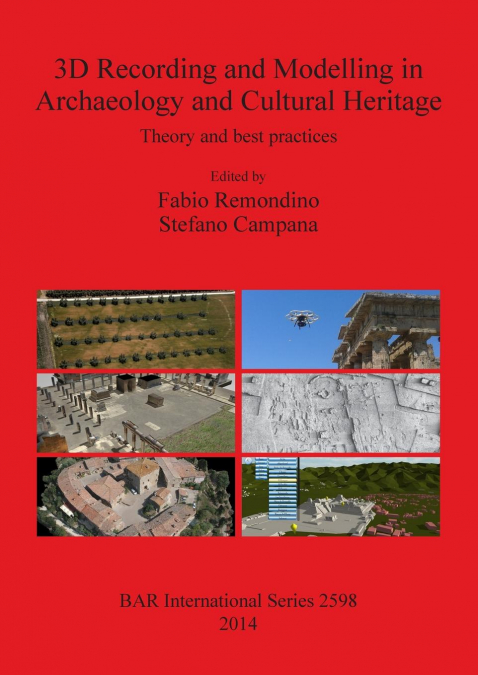
  • 3D Recording and Modelling in Archaeology and Cultural Heritage
    The book derives from the experiences of the authors as lecturers and tutors at different international summer schools on reality-based surveying and 3D modelling in the field of archaeology and cultural heritage. The book is organized in three main sections. The first part aims to introduce and discuss the contribution of geomatic techniques in archaeology and more generally i...
    Disponible

    88,00 €

  • SUN POWER
    NEVILLE WILLIAMS
    ...
    Disponible

    24,27 €

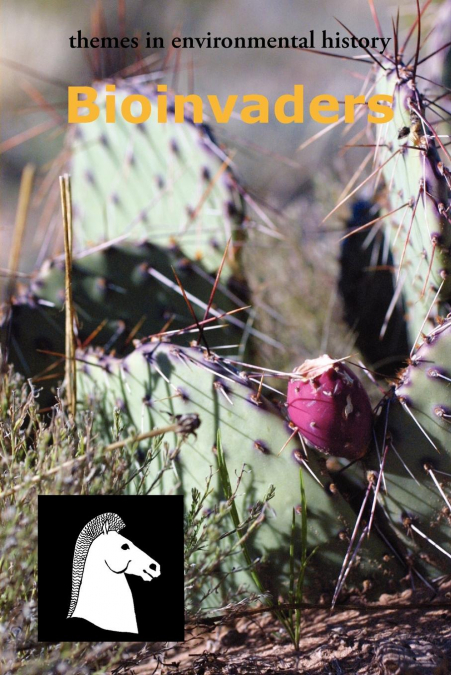
  • Bio-Invaders
    Sarah Johnson
    We are pleased to announce a new series ofenvironmental history readers, suitable for students.Comprising essays selected from our journals,Environment and History and Environmental Values,each inexpensive paperback volume will address animportant theme in environmental history, combiningunderlying theory and specific case-studies. The firstvolume, Bio-invaders, investigates th...
    Disponible

    39,21 €

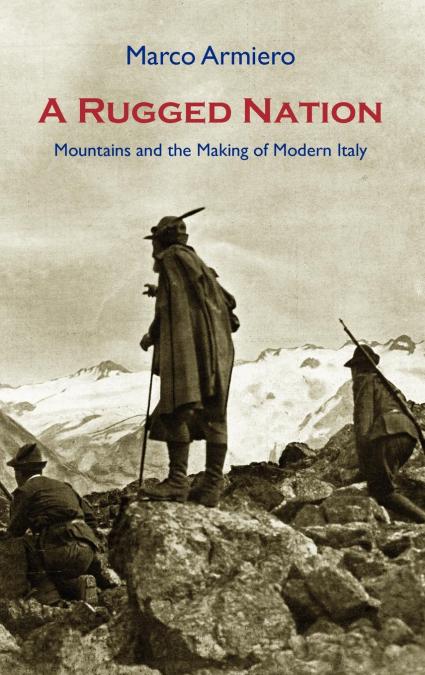
  • A Rugged Nation
    Marco Armiero
    Landscape, politics and history: the Italian mountains as a crucible of national and natural identity.This book is part of a wider current in environmental history, that explores the links between nature and nation. It uncovers how Italian identity and mountains have constituted one another. It argues that state regimes since unification in 1861 have made mountains into nationa...
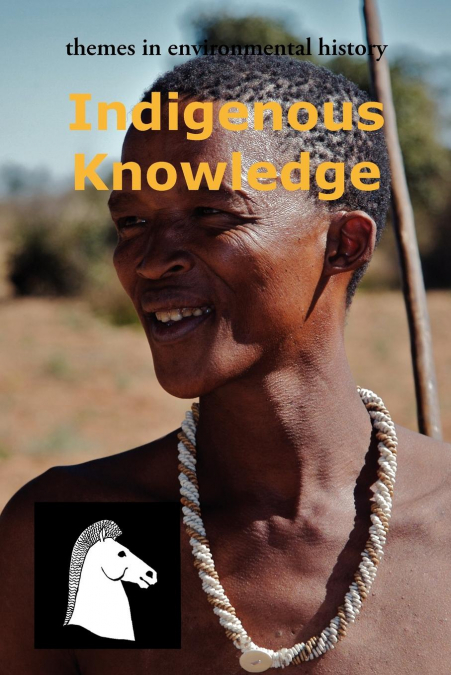
  • Indigenous Knowledge
    Sarah Johnson
    The third volume in the reader series, ’Themes in Environmental History’.Comprising essays selected from our journals, Environment and History and Environmental Values, these inexpensive paperbacks address important aspects of environmental history, by means of theoretical essays and case studies. Indigenous Knowledge investigates how indigenous peoples from various cultures in...
    Disponible

    38,83 €

Otros libros del autor

  • The Other Lepidoptera
    Tim R. New
    Conservation interest in moths, by far the predominant components of Lepidoptera, lags far behind that for butterflies, for which conservation practice provides many well-established lessons for extension to their near relatives. The needs of moths are at least as great, but their greater richness and variety, and far poorer documentation of diversity and biology over much of t...
    Disponible

    48,07 €

  • Insect Diversity, Declines and Conservation in Australia
    Tim R. New
    Problems of insect enumeration and assessment of needs are addressed in the contexts of rapid and substantial losses and changes to all key Australian terrestrial and freshwater environments and promoting awarenesss of the importance of insects. Further definition of the insect fauna and its peculiarities can aid threat alleviation and practical management to protect and conser...
    Disponible

    146,41 €

  • Insect Diversity, Declines and Conservation in Australia
    Tim R. New
    Problems of insect enumeration and assessment of needs are addressed in the contexts of rapid and substantial losses and changes to all key Australian terrestrial and freshwater environments and promoting awarenesss of the importance of insects. Further definition of the insect fauna and its peculiarities can aid threat alleviation and practical management to protect and conser...
  • Insect Conservation and Australia’s Grasslands
    Tim R. New
    Australia’s varied grasslands have suffered massive losses and changes since European settlement, and those changes continue under increasingly intensive human pressures for development and agricultural production. The values of native grasslands for conservation of endemic native biodiversity, both flora and fauna, have led to strong interests in the protection of remaining fr...
    Disponible

    219,99 €

  • Insect Conservation and Australia’s Grasslands
    Tim R. New
    Australia’s varied grasslands have suffered massive losses and changes since European settlement, and those changes continue under increasingly intensive human pressures for development and agricultural production. The values of native grasslands for conservation of endemic native biodiversity, both flora and fauna, have led to strong interests in the protection of remaining fr...
  • Forests and Insect Conservation in Australia
    Tim R. New
    Losses of forests and their insect inhabitants are a major global conservation concern, spanning tropical and temperate forest regions throughout the world. This broad overview of Australian forest insect conservation draws on studies from many places to demonstrate the diversity and vulnerability of forest insects and how their conservation may be pursued through combinations ...
    Disponible

    133,90 €