Inicio > Matemáticas y ciencia > Biologia, ciencias de la vida > Botánica y ciencias de las plantas > Lutte contre le foreur des gousses, H. armigera, sur le pois chiche
Lutte contre le foreur des gousses, H. armigera, sur le pois chiche

Lutte contre le foreur des gousses, H. armigera, sur le pois chiche

B.R Patel / O.P Veda / Yuvraj Shinde

72,27 €
IVA incluido
Disponible
Editorial:
KS OmniScriptum Publishing
Año de edición:
2026
Materia
Botánica y ciencias de las plantas
ISBN:
9786630273601
72,27 €
IVA incluido
Disponible

Selecciona una librería:

  • Librería Samer Atenea
  • Kálamo Books
  • Librería Elías (Asturias)
  • Librería Kolima (Madrid)
  • Librería Proteo (Málaga)

Les légumineuses sont cultivées en Inde depuis des temps immémoriaux. Parmi les différentes espèces, le pois chiche est l’une des principales légumineuses cultivées pendant la saison rabi. Il est communément appelé Bengal gram ou Gram . Il s’agit d’une plante autogame, appartenant à la sous-famille des Papilionacées de la famille des Légumineuses (Bentham et Hooker 1970). Le pois chiche (Cicer arietinum) est une légumineuse alimentaire importante de saison fraîche, dont la répartition géographique est très étendue. Il bénéficie d’une grande popularité et d’une large utilisation ; outre sa richesse en protéines, sa capacité à fixer l’azote atmosphérique par fixation biologique est économiquement plus viable et respectueuse de l’environnement. Le pois chiche est utilisé sous forme de dal (grains fendus) ; les graines entières, frites ou bouillies, sont également consommées. Les cosses et les morceaux de dal servent d’aliments nutritifs pour les animaux. Les pois chiches verts immatures sont consommés comme légume et leur farine est un ingrédient majeur dans la fabrication d’en-cas et de confiseries en Inde et au Pakistan. On attribue au pois chiche des vertus médicinales ; il est notamment utilisé pour purifier le sang. Le pois chiche contient 21,1 % de protéines, 61,5 % de glucides et 4,5 % de matières grasses.
Artículos relacionados

  • The Green Architecture
    Ali Mirshafieyan / Ghazal Yeganeh / Maryam Zamani Motlagh
    Protecting green energy as well as non-renewable energy, as well as their sustainable use, many advances in the technology of extracting oil products and other reserves under the ground have caused many improvements. In this regard, proposing the design of buildings in which the consumption of fossil fuels reaches its lowest level is considered one of the important solutions in...
    Disponible

    82,54 €

  • Responsible Use and Management of Agrochemicals
    Juan Carlos Nava
    Uso y manejo responsable de agroquímicos is a work product of the author’s experiences (undergraduate and graduate professor, with research and extension projects), aimed at producers, companies, professionals, students, advisors, researchers, among others.Due to its structure and content, it is expected to be a valuable aid to all people directly or indirectly involved in the ...
    Disponible

    49,45 €

  • Hope in the Soil
    Ellen G White
    Before edible classrooms began 'sprouting' in elementary schools, before buzzwords like 'sustainable agriculture', 'organic,' or 'veganic' came into existence, an exceptional woman named Ellen G. White penned numerous letters and articles on the importance of farming, an outdoor life, and manual labor. Though often remembered for other things, Mrs. White was actively engaged in...
    Disponible

    18,38 €

  • The Green Revolution
    Binitha Sophine Emmanuel
    The Green Revolution, a transformative era in the annals of agriculture, emerged as a game-changing force during the mid-20th century, fundamentally reshaping the methodology of food production and steering the trajectory of global food security. Characterized by a sequence of technological breakthroughs, the Green Revolution aimed to substantially augment agricultural producti...
    Disponible

    53,23 €

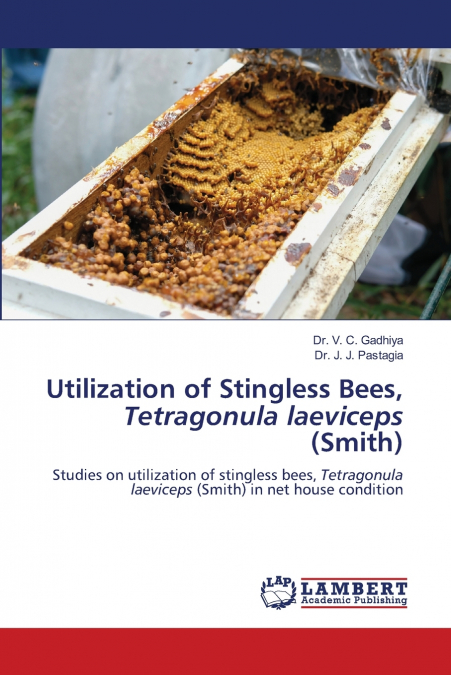
  • Utilization of Stingless Bees, Tetragonula laeviceps (Smith)
    Dr. J. J. Pastagia / Dr. V. C. Gadhiya
    The present investigations on utilization of stingless bees, T. laeviceps Smith in net house condition carried out with the broad aspects like flowers visited by stingless bees, T. laeviceps Smith, toxicity of insecticides to T. laeviceps Smith workers, floral biology of musk melon, foraging behavior of stingless bees, T. laeviceps Smith in net house condition, effect of pollin...
    Disponible

    84,80 €

  • La révolution verte
    Binitha Sophine Emmanuel
    La révolution verte, une ère transformatrice dans les annales de l’agriculture, est apparue comme une force qui a changé la donne au milieu du 20e siècle, remodelant fondamentalement la méthodologie de la production alimentaire et orientant la trajectoire de la sécurité alimentaire mondiale. Caractérisée par une série de percées technologiques, la révolution verte visait à augm...
    Disponible

    53,29 €

Otros libros del autor

  • Bekämpfung des Kichererbsenbohrers H. armigera an Kichererbsen
    B.R Patel / O.P Veda / Yuvraj Shinde
    Hülsenfrüchte werden in Indien seit jeher angebaut. Unter den verschiedenen Hülsenfrüchten ist die Kichererbse eine der wichtigsten Leguminosen, die in der Rabi-Saison angebaut werden. Sie ist allgemein als „Bengal-Gram' oder „Gram' bekannt. Es handelt sich um eine selbstbestäubende Pflanze, die zur Unterfamilie der Papilionaceae innerhalb der Familie der Leguminaceae gehört (B...
    Disponible

    72,27 €

  • Gestione del parassita del baccello del cece, H. armigera
    B.R Patel / O.P Veda / Yuvraj Shinde
    I legumi sono coltivati in India da tempo immemorabile. Tra i vari legumi, il cece è una delle colture leguminose più importanti coltivate nella stagione rabi. È comunemente noto come 'Bengal gram' o 'Gram'. Si tratta di una coltura autoimpollinante, appartenente alla sottofamiglia delle Papilionaceae della famiglia delle Leguminaceae (Bentham e Hooker 1970). Il cece (Cicer ari...
    Disponible

    72,21 €

  • Zwalczanie szkodnika strąków ciecierzycy, H. armigera
    B.R Patel / O.P Veda / Yuvraj Shinde
    Rośliny strączkowe uprawiane są w Indiach od niepamiętnych czasów. Spośród różnych roślin strączkowych ciecierzyca jest jedną z najważniejszych roślin strączkowych uprawianych w sezonie rabi. Powszechnie znana jest pod nazwą „bengal gram' lub „gram'. Jest to roślina samozapylająca, należąca do podrodziny Papilionaceae z rodziny Leguminaceae (Bentham i Hooker 1970). Ciecierzyca ...
    Disponible

    72,21 €

  • Controlo da broca da vagem, H. armigera, no grão-de-bico
    B.R Patel / O.P Veda / Yuvraj Shinde
    As leguminosas são cultivadas na Índia desde tempos imemoriais. Entre as várias leguminosas, o grão-de-bico é uma das culturas leguminosas mais importantes cultivadas na estação rabi. É vulgarmente conhecido como Bengal gram ou Gram. Trata-se de uma cultura autopolinizada, pertencente à subfamília Papilionaceae da família Leguminaceae (Bentham e Hooker 1970). O grão-de-bico (Ci...
    Disponible

    72,21 €