Inicio > Matemáticas y ciencia > Biologia, ciencias de la vida > Botánica y ciencias de las plantas > Importância do biofertilizante no crescimento e rendimento de Okara
Importância do biofertilizante no crescimento e rendimento de Okara

Importância do biofertilizante no crescimento e rendimento de Okara

Charan Singh Choudhary / Sunita Choudhary

53,35 €
IVA incluido
Disponible
Editorial:
KS OmniScriptum Publishing
Año de edición:
2024
Materia
Botánica y ciencias de las plantas
ISBN:
9786207714933
53,35 €
IVA incluido
Disponible

Selecciona una librería:

  • Librería Samer Atenea
  • Librería Aciertas (Toledo)
  • Kálamo Books
  • Librería Perelló (Valencia)
  • Librería Elías (Asturias)
  • Donde los libros
  • Librería Kolima (Madrid)
  • Librería Proteo (Málaga)

O quiabo é um vegetal popular no subcontinente indiano e em todo o mundo. A parte comestível do quiabo são as suas vagens de sementes verdes que são consumidas como alimento depois de cozinhadas. O quiabo é uma boa fonte de nutrição e é uma fonte rica em Vita. C, Vita. A, Vita B-6, Magnésio, Cálcio, Potássio e Ferro, também contém uma quantidade adequada de Hidratos de Carbono, fibra alimentar, Proteína e Sódio. O quiabo contém 0% de colesterol e uma quantidade muito baixa de gordura, pelo que é também um alimento de dieta popular.Os fertilizantes orgânicos fornecem uma grande quantidade de matéria orgânica (Carbono) aos microrganismos presentes no solo, a matéria orgânica fornecida ajuda no crescimento da população de microrganismos que acelera as actividades físicas, químicas e biológicas no solo e também fornece uma quantidade moderada de nutrientes ao solo que são posteriormente utilizados pela cultura cultivada para o seu crescimento e desenvolvimento. Os biofertilizantes melhoram a relação C:N do solo, fixam o azoto atmosférico no solo, disponibilizam o fósforo solubilizando-o no solo, aumentam a população de microrganismos benéficos no solo, o que melhora ainda mais a absorção de nutrientes pelas plantas e melhora a capacidade de retenção de água do solo.
Artículos relacionados

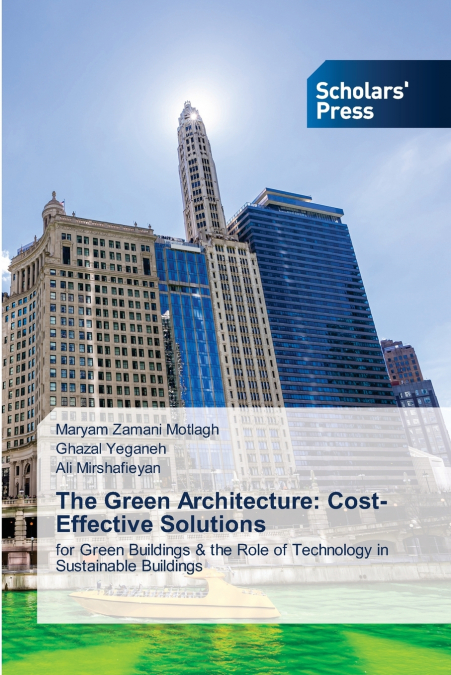
  • The Green Architecture
    Ali Mirshafieyan / Ghazal Yeganeh / Maryam Zamani Motlagh
    Protecting green energy as well as non-renewable energy, as well as their sustainable use, many advances in the technology of extracting oil products and other reserves under the ground have caused many improvements. In this regard, proposing the design of buildings in which the consumption of fossil fuels reaches its lowest level is considered one of the important solutions in...
    Disponible

    82,54 €

  • Responsible Use and Management of Agrochemicals
    Juan Carlos Nava
    Uso y manejo responsable de agroquímicos is a work product of the author’s experiences (undergraduate and graduate professor, with research and extension projects), aimed at producers, companies, professionals, students, advisors, researchers, among others.Due to its structure and content, it is expected to be a valuable aid to all people directly or indirectly involved in the ...
    Disponible

    49,45 €

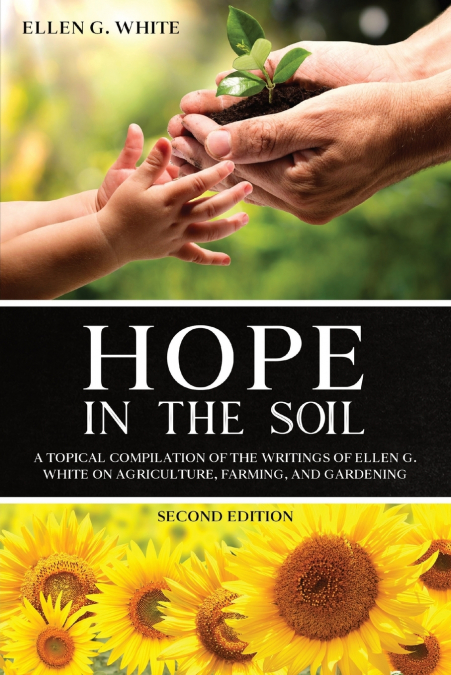
  • Hope in the Soil
    Ellen G White
    Before edible classrooms began 'sprouting' in elementary schools, before buzzwords like 'sustainable agriculture', 'organic,' or 'veganic' came into existence, an exceptional woman named Ellen G. White penned numerous letters and articles on the importance of farming, an outdoor life, and manual labor. Though often remembered for other things, Mrs. White was actively engaged in...
    Disponible

    18,38 €

  • The Green Revolution
    Binitha Sophine Emmanuel
    The Green Revolution, a transformative era in the annals of agriculture, emerged as a game-changing force during the mid-20th century, fundamentally reshaping the methodology of food production and steering the trajectory of global food security. Characterized by a sequence of technological breakthroughs, the Green Revolution aimed to substantially augment agricultural producti...
    Disponible

    53,23 €

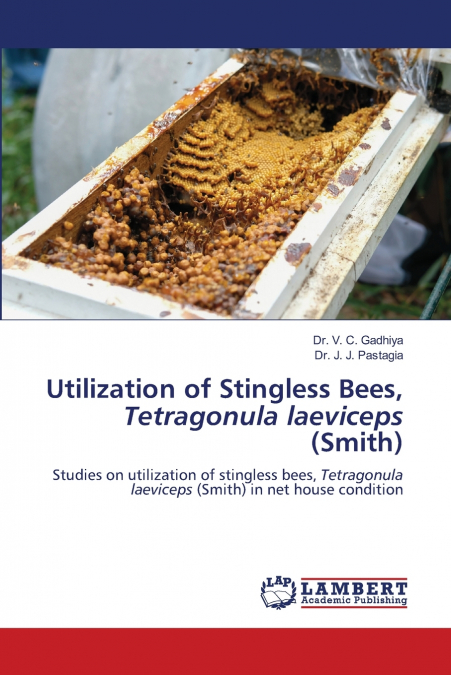
  • Utilization of Stingless Bees, Tetragonula laeviceps (Smith)
    Dr. J. J. Pastagia / Dr. V. C. Gadhiya
    The present investigations on utilization of stingless bees, T. laeviceps Smith in net house condition carried out with the broad aspects like flowers visited by stingless bees, T. laeviceps Smith, toxicity of insecticides to T. laeviceps Smith workers, floral biology of musk melon, foraging behavior of stingless bees, T. laeviceps Smith in net house condition, effect of pollin...
    Disponible

    84,80 €

  • La révolution verte
    Binitha Sophine Emmanuel
    La révolution verte, une ère transformatrice dans les annales de l’agriculture, est apparue comme une force qui a changé la donne au milieu du 20e siècle, remodelant fondamentalement la méthodologie de la production alimentaire et orientant la trajectoire de la sécurité alimentaire mondiale. Caractérisée par une série de percées technologiques, la révolution verte visait à augm...
    Disponible

    53,29 €

Otros libros del autor

  • Importance des biofertilisants sur la croissance et le rendement d’Okara
    Charan Singh Choudhary / Sunita Choudhary
    L’okra est un légume populaire dans le sous-continent indien et dans le monde entier. La partie comestible de l’okra est constituée par ses gousses vertes qui sont consommées après cuisson. Le gombo est une bonne source de nutrition et une riche source de Vita. C, Vita. A, Vita B-6, de magnésium, de calcium, de potassium et de fer. Il contient également des quantités appropriée...
    Disponible

    53,35 €

  • Bedeutung von Biodünger für Wachstum und Ertrag von Okara
    Charan Singh Choudhary / Sunita Choudhary
    Okra ist ein beliebtes Gemüse auf dem indischen Subkontinent und weltweit. Der essbare Teil der Okra sind ihre grünen Samenschoten, die nach dem Kochen als Lebensmittel verzehrt werden. Okra ist eine gute Nahrungsquelle und reich an Vita. C, Vita. A, Vita B-6, Magnesium, Kalzium, Kalium und Eisen, außerdem enthält sie eine angemessene Menge an Kohlenhydraten, Ballaststoffen, Ei...
    Disponible

    53,35 €

  • Importanza dei biofertilizzanti sulla crescita e sulla resa dell’Okara
    Charan Singh Choudhary / Sunita Choudhary
    L’okra è un ortaggio popolare nel subcontinente indiano e in tutto il mondo. La parte commestibile dell’okra è costituita dai baccelli verdi dei semi, che vengono consumati come cibo dopo la cottura. L’okra è una buona fonte di nutrimento ed è ricca di Vita. C, Vita. A, Vita B-6, Magnesio, Calcio, Potassio e Ferro; contiene inoltre una quantità adeguata di carboidrati, fibre al...
    Disponible

    53,29 €