Inicio > Matemáticas y ciencia > Biologia, ciencias de la vida > Botánica y ciencias de las plantas > Gestão das doenças pós-colheita da romã(Punica granatum L.)
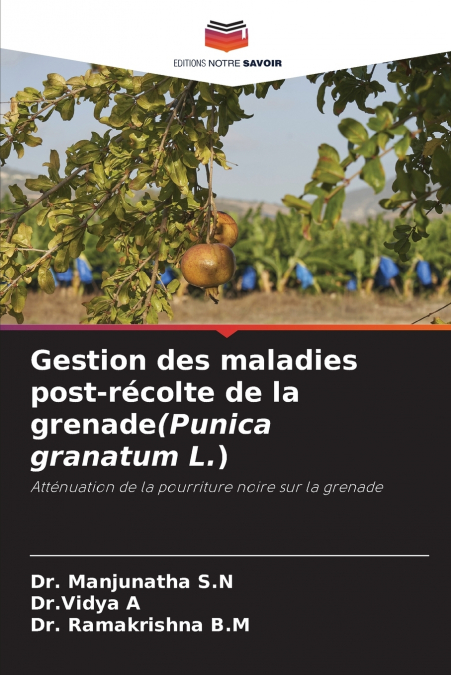
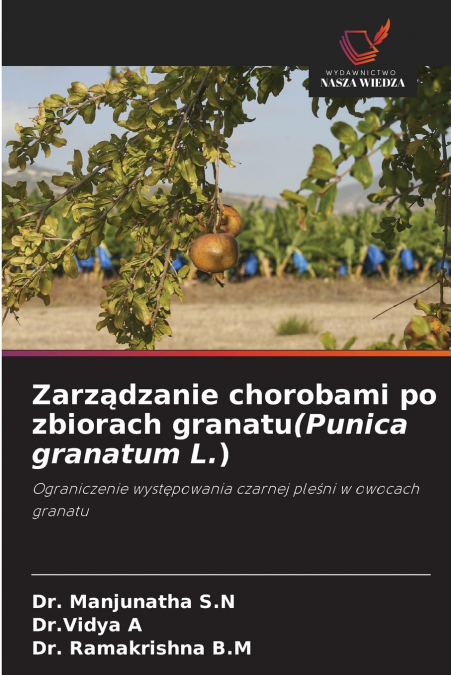
Gestão das doenças pós-colheita da romã(Punica granatum L.)

Gestão das doenças pós-colheita da romã(Punica granatum L.)

Dr. Manjunatha S.N / Dr. Ramakrishna B.M / Dr.Vidya A

74,82 €
IVA incluido
Disponible
Editorial:
KS OmniScriptum Publishing
Año de edición:
2026
Materia
Botánica y ciencias de las plantas
ISBN:
9786209835988
74,82 €
IVA incluido
Disponible

Selecciona una librería:

  • Librería Samer Atenea
  • Kálamo Books
  • Librería Elías (Asturias)
  • Librería Kolima (Madrid)
  • Librería Proteo (Málaga)

Um inquérito quinzenal aos mercados de fruta em Bengaluru, Tumkuru, Shimoga e Chitradurga, de novembro-dezembro de 2015 a março-abril de 2016, revelou a podridão cinzenta da romã durante todo o período do inquérito. A incidência da doença foi mais elevada em abril (12,48%) e mais baixa em janeiro (4,44%). Os estudos epidemiológicos mostraram que a lesão dos frutos foi essencial para a infeção, uma vez que os frutos inoculados sem lesão não desenvolveram sintomas. Todos os frutos feridos desenvolveram podridão, sendo o método de inoculação mais eficaz o ferimento com cortiça. A infeção ocorreu nos estádios imaturo, semi-maduro e maduro, com gravidade máxima no estádio maduro. A temperatura e a humidade relativa influenciaram o desenvolvimento da doença, com a menor incidência a 0°C e a maior a 30°C. A gravidade da doença foi menor a 50% de humidade relativa e aumentou até 100%. Os tratamentos pós-colheita, como a imersão em água quente (40±1°C a 50±1°C durante 10 minutos), os fungicidas, os óleos e os conservantes alimentares reduziram eficazmente a gravidade da podridão. Bavistin (0,1%), Indofil M-45 (0,2%), Captan (0,2%), óleo de rícino (0,4%), óleo de neem (4,0%), metabissulfito de potássio (0,5%) e benzoato de sódio (0,5%) foram eficazes na redução da infeção e na manutenção da qualidade dos frutos.

Artículos relacionados

  • The Green Architecture
    Ali Mirshafieyan / Ghazal Yeganeh / Maryam Zamani Motlagh
    Protecting green energy as well as non-renewable energy, as well as their sustainable use, many advances in the technology of extracting oil products and other reserves under the ground have caused many improvements. In this regard, proposing the design of buildings in which the consumption of fossil fuels reaches its lowest level is considered one of the important solutions in...
    Disponible

    82,54 €

  • Responsible Use and Management of Agrochemicals
    Juan Carlos Nava
    Uso y manejo responsable de agroquímicos is a work product of the author’s experiences (undergraduate and graduate professor, with research and extension projects), aimed at producers, companies, professionals, students, advisors, researchers, among others.Due to its structure and content, it is expected to be a valuable aid to all people directly or indirectly involved in the ...
    Disponible

    49,45 €

  • Hope in the Soil
    Ellen G White
    Before edible classrooms began 'sprouting' in elementary schools, before buzzwords like 'sustainable agriculture', 'organic,' or 'veganic' came into existence, an exceptional woman named Ellen G. White penned numerous letters and articles on the importance of farming, an outdoor life, and manual labor. Though often remembered for other things, Mrs. White was actively engaged in...
    Disponible

    18,38 €

  • The Green Revolution
    Binitha Sophine Emmanuel
    The Green Revolution, a transformative era in the annals of agriculture, emerged as a game-changing force during the mid-20th century, fundamentally reshaping the methodology of food production and steering the trajectory of global food security. Characterized by a sequence of technological breakthroughs, the Green Revolution aimed to substantially augment agricultural producti...
    Disponible

    53,23 €

  • Utilization of Stingless Bees, Tetragonula laeviceps (Smith)
    Dr. J. J. Pastagia / Dr. V. C. Gadhiya
    The present investigations on utilization of stingless bees, T. laeviceps Smith in net house condition carried out with the broad aspects like flowers visited by stingless bees, T. laeviceps Smith, toxicity of insecticides to T. laeviceps Smith workers, floral biology of musk melon, foraging behavior of stingless bees, T. laeviceps Smith in net house condition, effect of pollin...
    Disponible

    84,80 €

  • La révolution verte
    Binitha Sophine Emmanuel
    La révolution verte, une ère transformatrice dans les annales de l’agriculture, est apparue comme une force qui a changé la donne au milieu du 20e siècle, remodelant fondamentalement la méthodologie de la production alimentaire et orientant la trajectoire de la sécurité alimentaire mondiale. Caractérisée par une série de percées technologiques, la révolution verte visait à augm...
    Disponible

    53,29 €

Otros libros del autor

  • Gestion des maladies post-récolte de la grenade(Punica granatum L.)
    Dr. Manjunatha S.N / Dr. Ramakrishna B.M / Dr.Vidya A
    Une enquête bimensuelle sur les marchés de fruits à Bengaluru, Tumkuru, Shimoga et Chitradurga de novembre-décembre 2015 à mars-avril 2016 a révélé une pourriture par moisissure noire de la grenade tout au long de la période d’enquête. L’incidence de la maladie était la plus élevée en avril (12,48%) et la plus faible en janvier (4,44%). Les études épidémiologiques ont montré qu...
    Disponible

    73,58 €

  • Behandlung von Nacherntekrankheiten des Granatapfels(Punica granatum L.)
    Dr. Manjunatha S.N / Dr. Ramakrishna B.M / Dr.Vidya A
    Bei einer vierzehntägigen Erhebung auf Obstmärkten in Bengaluru, Tumkuru, Shimoga und Chitradurga von November-Dezember 2015 bis März-April 2016 wurde während des gesamten Erhebungszeitraums Schwarzschimmelfäule an Granatäpfeln festgestellt. Das Auftreten der Krankheit war im April am höchsten (12,48 %) und im Januar am niedrigsten (4,44 %). Epidemiologische Untersuchungen zeig...
    Disponible

    74,88 €

  • Zarządzanie chorobami po zbiorach granatu(Punica granatum L.)
    Dr. Manjunatha S.N / Dr. Ramakrishna B.M / Dr.Vidya A
    Dwutygodniowe badanie rynków owocowych w Bengaluru, Tumkuru, Shimoga i Chitradurga od listopada-grudnia 2015 r. do marca-kwietnia 2016 r. ujawniło czarną pleśń granatu przez cały okres badania. Częstość występowania choroby była najwyższa w kwietniu (12,48%), a najniższa w styczniu (4,44%). Badania epidemiologiczne wykazały, że uszkodzenie owoców było niezbędne do zakażenia, po...
    Disponible

    74,88 €

  • Gestione delle malattie post-raccolta del melograno(Punica granatum L.)
    Dr. Manjunatha S.N / Dr. Ramakrishna B.M / Dr.Vidya A
    Un’indagine quindicinale sui mercati della frutta di Bengaluru, Tumkuru, Shimoga e Chitradurga da novembre-dicembre 2015 a marzo-aprile 2016 ha rivelato un marciume da muffa nera del melograno durante tutto il periodo di indagine. L’incidenza della malattia è stata massima in aprile (12,48%) e minima in gennaio (4,44%). Gli studi epidemiologici hanno dimostrato che la lesione d...
    Disponible

    74,82 €

  • Management of post harvest disease of Pomegranate (Punica granatum L.)
    Dr. Manjunatha S.N / Dr. Ramakrishna B.M / Dr.Vidya A
    A fortnightly survey of fruit markets in Bengaluru, Tumkuru, Shimoga and Chitradurga from November-December 2015 to March-April 2016 revealed black mould rot of pomegranate throughout the survey period. The disease incidence was highest in April (12.48%) and lowest in January (4.44%). Epidemiological studies showed that fruit injury was essential for infection, as fruits inocul...
    Disponible

    73,52 €