Amina Bouzana / Maroua Drissi / Saoussene Chernine
 Librería Samer Atenea
 Kálamo Books
 Librería Elías (Asturias)
 Librería Kolima (Madrid)
 Librería Proteo (Málaga)
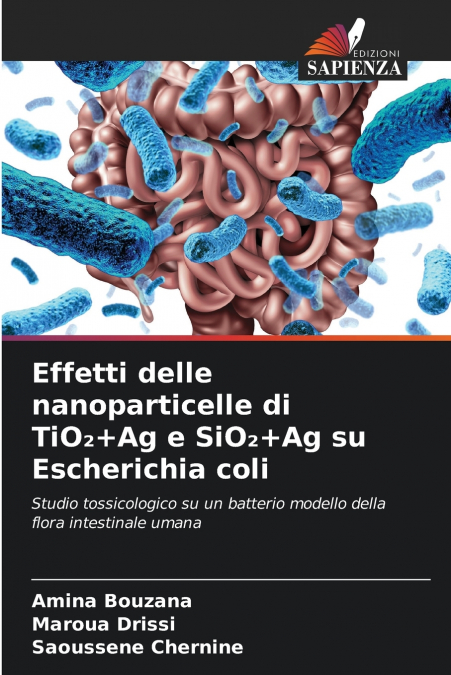
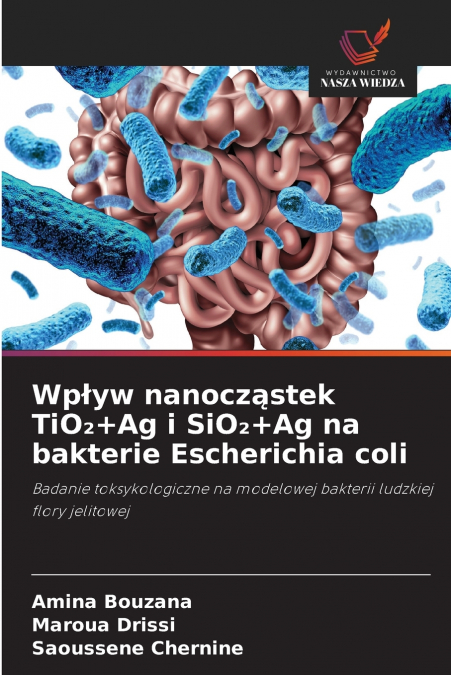
The proliferation of nanotechnologies, particularly in the food sector, raises concerns about their safety for human health. Due to their nanometric size, these particles cross biological barriers, from the mouth to the intestine. This work assesses the toxicological impact of two nanoparticle (NP) mixtures: TiO₂/Ag and SiO₂/Ag on Escherichia coli, a bacterium representative of the intestinal flora. A clinical strain was isolated by coproculture, identified (API 20E), then exposed to dilutions of NPs (0.125-1024 μg/ml). Petri dishes in Hecktoen medium revealed phenotypic alterations after 24 h incubation at 37°C: decreased growth, reduced colonies, morphological changes, loss of mobility and variations in grouping. At certain concentrations (2 μg/mL TiO₂/Ag, 4 μg/mL SiO₂/Ag), genomic changes were observed (Gram staining), suggesting a potential imbalance in the gut microbiota. These results highlight the need for further study by molecular analysis (DNA extraction, sequencing) to better understand NPs-induced mutations.