Inicio > Matemáticas y ciencia > Biologia, ciencias de la vida > Ciencias de la vida: cuestiones generales > Ecología, la biosfera > Welche Bodenart bevorzugen Regenwürmer unter besonderer Berücksichtigung ihrer Aktivität und Nahrungsaufnahme?
Welche Bodenart bevorzugen Regenwürmer unter besonderer Berücksichtigung ihrer Aktivität und Nahrungsaufnahme?

Welche Bodenart bevorzugen Regenwürmer unter besonderer Berücksichtigung ihrer Aktivität und Nahrungsaufnahme?

Barbara Senft

21,88 €
IVA incluido
Disponible
Editorial:
GRIN Publishing
Año de edición:
2012
Materia
Ecología, la biosfera
ISBN:
9783656255093
21,88 €
IVA incluido
Disponible

Selecciona una librería:

  • Librería Samer Atenea
  • Librería Aciertas (Toledo)
  • Kálamo Books
  • Librería Perelló (Valencia)
  • Librería Elías (Asturias)
  • Donde los libros
  • Librería Kolima (Madrid)
  • Librería Proteo (Málaga)

Facharbeit (Schule) aus dem Jahr 2006 im Fachbereich Biologie - Ökologie, Note: 2,1, , Veranstaltung: Leistungskurs Biologie, Sprache: Deutsch, Abstract: Inhaltsverzeichnis Einleitung 1. Der Regenwurm 1.1. Anatomie 1.2. Magen-Darm-Trakt und Nahrungsaufnahme 1.3. Anspruch an die Erde und die Nahrung 1.4. Ökologischer Nutzen 2. Die Bodenarten 2.1. Braunerde mit hohem Schluffanteil 2.2. Sandboden 2.3. Tonboden 2.4. ph-Wert Bestimmung des Bodens 3. Der Versuch 3.1. Aufbau 3.2. Beschreibung 4. Fazit: Wo fühlen sich Regenwürmer am wohlsten? Zum Schluss Literaturverzeichnis Versicherung Einleitung Warum gerade dieses Thema? Der Regenwurm mit seiner 200 Millionen alten Geschichte ist gerade zu eine Sensation der Natur. Nur er kann von sich behaupten, dass er Abfall aus der Natur in neuen Humus verwandeln kann. Man kann sagen, die Felder verdanken ihm die Fruchtbarkeit. Vermoderte Pflanzenreste erscheinen in seinen Kotballen als fix und fertig zubereitete Nährstoffe wieder. Aber leider hat dieser völlig wehr- und schutzlose Wurm viele Feinde. Angler spießen ihn auf, Kinder reißen ihn aus Spaß in Stücke. Beim Pflügen trachtet die Bachstelze, Star und Saatkrähe nach dem Leben, am Meer die Möwen. Kaum hält er seinen Kopf in der lauen Nacht aus der Röhre, so warten schon Igel, Spitzmaus, Tausendfüßer und Co. auf den leckeren Verzehr. Der Maulwurf beißt ihm sogar den Kopf ab, um ihn die Flucht aus seiner Vorratskammer unmöglich zu machen. Der Regenwurm sagt jedoch mit seiner starken Vermehrung seinen Gegnern den Kampf an. Der Mensch übernimmt dabei die Aufgabe, die Natur für ihn im Gleichgewicht zu halten. Lebensraum und Boden müssen seinem Anspruch entsprechen. Im Laufe dieser Facharbeit wird der Leser diesen wertvollen Freund besser kennen lernen. Sicherlich kann er sein erworbenes Wissen dazu nutzen, den Regenwurm zu unterstützen, „seinen Job' auch weiterhin so gut zu machen. 1. Der Regenwurm Der Regenwurm war ursprünglich ein Lebewesen, das sich im Wasser entwi
Artículos relacionados

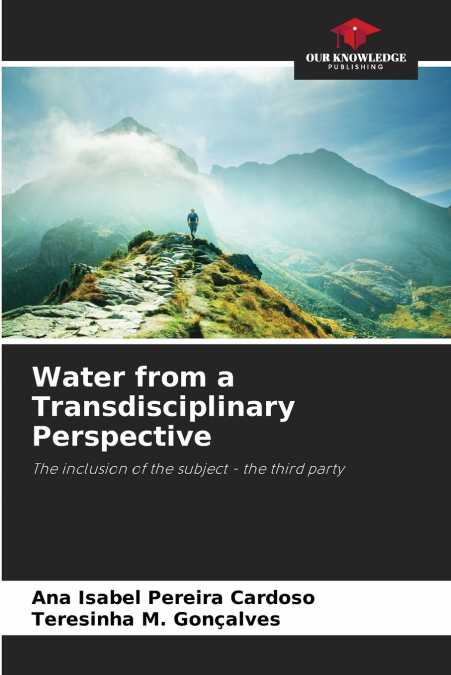
  • Water from a Transdisciplinary Perspective
    Ana Isabel Pereira Cardoso / Teresinha M. Gonçalves
    Life in cities has distanced human beings from nature and made it difficult to understand the ecology of life dependent on the environment. Urban water collection and distribution processes contribute significantly to the fragmentation of knowledge and the vital recognition of the water cycle. Without the effective participation of the subject in environmental actions, it is no...
    Disponible

    43,82 €

  • Modeling Populations of Adaptive Individuals
    Bret C. Harvey / Steven F. Railsback
    Ecologists now recognize that the dynamics of populations, communities, and ecosystems are strongly affected by adaptive individual behaviors. Yet until now, we have lacked effective and flexible methods for modeling such dynamics. Traditional ecological models become impractical with the inclusion of behavior, and the optimization approaches of behavioral ecology cannot be use...
    Disponible

    65,53 €

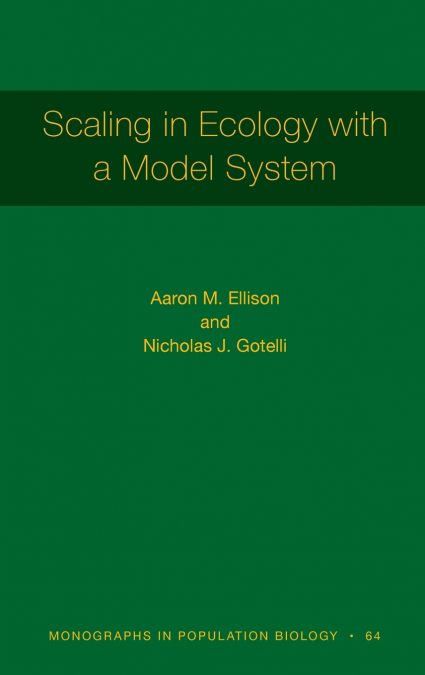
  • Scaling in Ecology with a Model System
    Aaron Ellison / Aaron M. Ellison / Nicholas J. Gotelli
    A groundbreaking approach to scale and scaling in ecological theory and practiceScale is one of the most important concepts in ecology, yet researchers often find it difficult to find ecological systems that lend themselves to its study. Scaling in Ecology with a Model System synthesizes nearly three decades of research on the ecology of Sarracenia purpurea-the northern pitcher...
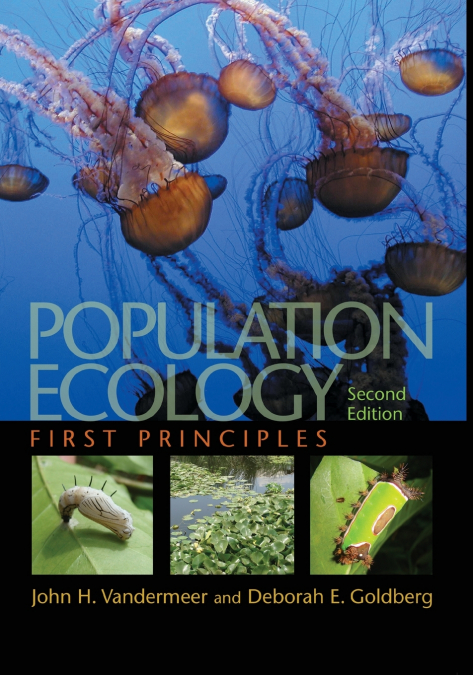
  • Population Ecology
    Deborah E. Goldberg / John H. Vandermeer
    The essential introduction to population ecology-now expanded and fully updatedEcology is capturing the popular imagination like never before, with issues such as climate change, species extinctions, and habitat destruction becoming ever more prominent. At the same time, the science of ecology has advanced dramatically, growing in mathematical and theoretical sophistication. He...
    Disponible

    124,92 €

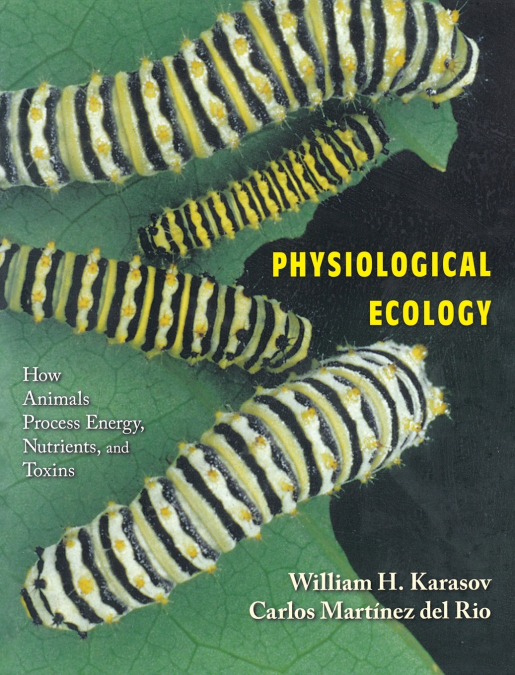
  • Physiological Ecology
    Carlos Martínez del Rio / William H. Karasov
    Unlocking the puzzle of how animals behave and how they interact with their environments is impossible without understanding the physiological processes that determine their use of food resources. But long overdue is a user-friendly introduction to the subject that systematically bridges the gap between physiology and ecology. Ecologists--for whom such knowledge can help clarif...
  • Critical Transitions in Nature and Society
    Marten Scheffer
    How do we explain the remarkably abrupt changes that sometimes occur in nature and society--and can we predict why and when they happen? This book offers a comprehensive introduction to critical transitions in complex systems--the radical changes that happen at tipping points when thresholds are passed. Marten Scheffer accessibly describes the dynamical systems theory behind cr...
    Disponible

    89,46 €