Inicio > Matemáticas y ciencia > Biologia, ciencias de la vida > Ciencias de la vida: cuestiones generales > Ecología, la biosfera > Valutazione dell’efficacia della gestione della Riserva della Biosfera di Dimonika
Valutazione dell’efficacia della gestione della Riserva della Biosfera di Dimonika

Valutazione dell’efficacia della gestione della Riserva della Biosfera di Dimonika

Guichard Geoffroy Boungou Kibenga

73,32 €
IVA incluido
Disponible
Editorial:
KS OmniScriptum Publishing
Año de edición:
2026
Materia
Ecología, la biosfera
ISBN:
9786630131505
73,32 €
IVA incluido
Disponible

Selecciona una librería:

  • Librería Samer Atenea
  • Kálamo Books
  • Librería Elías (Asturias)
  • Librería Kolima (Madrid)
  • Librería Proteo (Málaga)

Il Congo è un paese ricco di foreste, la cui popolazione è fortemente concentrata nella zona meridionale urbanizzata. La foresta e la savana occupano rispettivamente il 65% e il 35% del territorio nazionale. La copertura forestale è molto discontinua ed eterogenea e comprende foreste di terraferma (45% del territorio) e foreste allagate nella conca congolese (20%). Complessivamente, la foresta si estende su circa 22 milioni di ettari e svolge un ruolo ecologico e socio-economico di primaria importanza (De Wasseige et al., 2010). Eterogene dal punto di vista naturale, è caratterizzata da una notevole ricchezza biologica e da una varietà paesaggistica straordinaria. Secondo l’Agenzia congolese per la fauna e le aree protette (ACFAP), la rete conta oggi 18 aree protette che coprono una superficie pari a circa l’11% del territorio nazionale. Tuttavia, lo sviluppo sostenibile della Riserva della Biosfera di Dimonika (RBD) passa necessariamente attraverso la realizzazione di una valutazione dell’efficacia della sua gestione, in vista della valutazione periodica delle riserve della biosfera da parte del Consiglio Internazionale di Coordinamento del Programma MAB (CIC).
Artículos relacionados

  • Water from a Transdisciplinary Perspective
    Ana Isabel Pereira Cardoso / Teresinha M. Gonçalves
    Life in cities has distanced human beings from nature and made it difficult to understand the ecology of life dependent on the environment. Urban water collection and distribution processes contribute significantly to the fragmentation of knowledge and the vital recognition of the water cycle. Without the effective participation of the subject in environmental actions, it is no...
    Disponible

    43,82 €

  • Modeling Populations of Adaptive Individuals
    Bret C. Harvey / Steven F. Railsback
    Ecologists now recognize that the dynamics of populations, communities, and ecosystems are strongly affected by adaptive individual behaviors. Yet until now, we have lacked effective and flexible methods for modeling such dynamics. Traditional ecological models become impractical with the inclusion of behavior, and the optimization approaches of behavioral ecology cannot be use...
    Disponible

    64,30 €

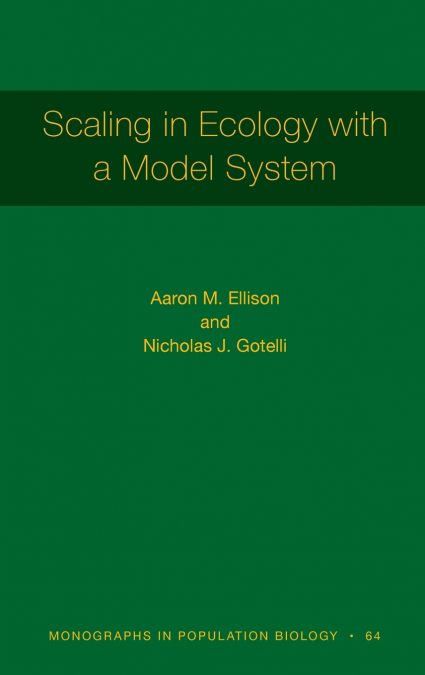
  • Scaling in Ecology with a Model System
    Aaron Ellison / Aaron M. Ellison / Nicholas J. Gotelli
    A groundbreaking approach to scale and scaling in ecological theory and practiceScale is one of the most important concepts in ecology, yet researchers often find it difficult to find ecological systems that lend themselves to its study. Scaling in Ecology with a Model System synthesizes nearly three decades of research on the ecology of Sarracenia purpurea-the northern pitcher...
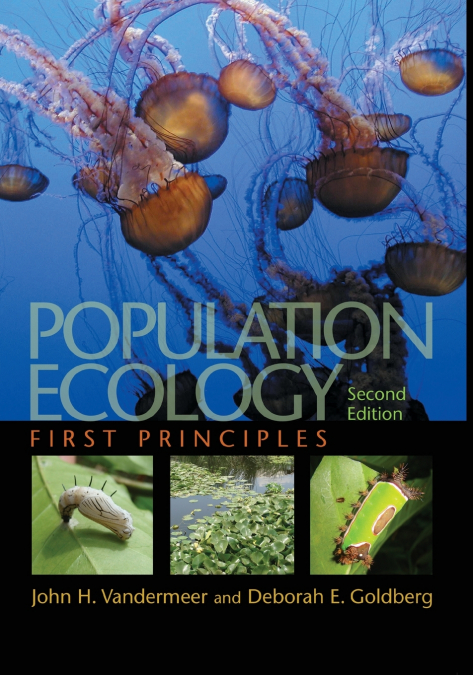
  • Population Ecology
    Deborah E. Goldberg / John H. Vandermeer
    The essential introduction to population ecology-now expanded and fully updatedEcology is capturing the popular imagination like never before, with issues such as climate change, species extinctions, and habitat destruction becoming ever more prominent. At the same time, the science of ecology has advanced dramatically, growing in mathematical and theoretical sophistication. He...
    Disponible

    117,24 €

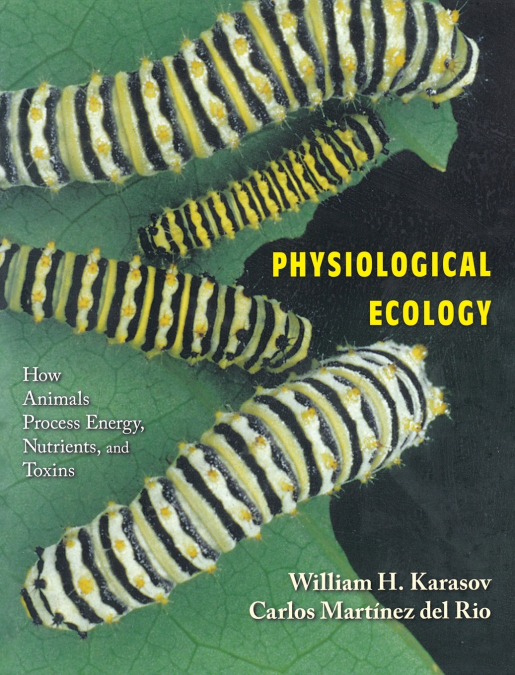
  • Physiological Ecology
    Carlos Martínez del Rio / William H. Karasov
    Unlocking the puzzle of how animals behave and how they interact with their environments is impossible without understanding the physiological processes that determine their use of food resources. But long overdue is a user-friendly introduction to the subject that systematically bridges the gap between physiology and ecology. Ecologists--for whom such knowledge can help clarif...
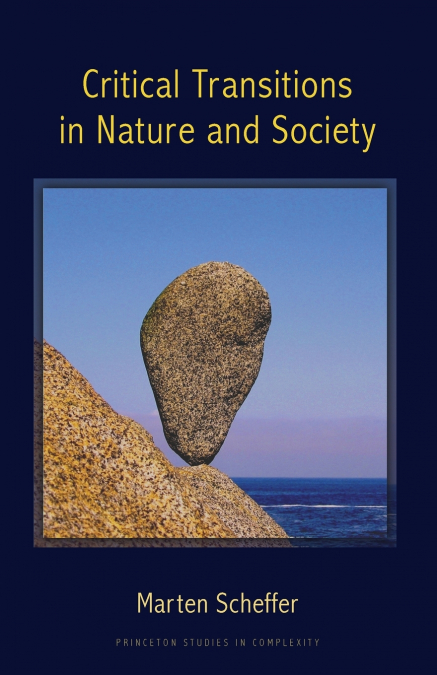
  • Critical Transitions in Nature and Society
    Marten Scheffer
    How do we explain the remarkably abrupt changes that sometimes occur in nature and society--and can we predict why and when they happen? This book offers a comprehensive introduction to critical transitions in complex systems--the radical changes that happen at tipping points when thresholds are passed. Marten Scheffer accessibly describes the dynamical systems theory behind cr...
    Disponible

    87,92 €

Otros libros del autor

  • Bewertung der Wirksamkeit der Verwaltung des Biosphärenreservats Dimonika
    Guichard Geoffroy Boungou Kibenga
    Der Kongo ist ein waldreiches Land, dessen Bevölkerung sich stark auf den urbanisierten südlichen Teil konzentriert. Wald und Savanne nehmen 65 bzw. 35 % der Landesfläche ein. Die Waldbedeckung ist sehr lückenhaft und heterogen und umfasst Trockenwälder (45 % der Landesfläche) sowie Überschwemmungswälder im Kongobecken (20 %). Insgesamt erstreckt sich der Wald über fast 22 Mill...
    Disponible

    73,38 €

  • Assessment of the effectiveness of the management of the Dimonika Biosphere Reserve
    Guichard Geoffroy Boungou Kibenga
    The Congo is a forested country whose population is heavily concentrated in the urbanised southern region. Forests and savannah account for 65 per cent and 35 per cent of the national territory respectively. Forest cover is highly patchy and heterogeneous, comprising dryland forests (45 per cent of the territory) and flooded forests in the Congolese Basin (20 per cent). In tota...
    Disponible

    73,32 €

  • Ocena skuteczności zarządzania rezerwatem biosfery Dimonika
    Guichard Geoffroy Boungou Kibenga
    Kongo jest krajem leśnym, którego ludność skupia się głównie w zurbanizowanej części południowej. Lasy i sawanny zajmują odpowiednio 65 i 35% terytorium kraju. Pokrywa leśna jest bardzo nieciągła i niejednorodna i obejmuje lasy na suchym lądzie (45% terytorium) oraz lasy zalewowe w kotlinie kongijskiej (20%). Łącznie lasy zajmują powierzchnię blisko 22 milionów hektarów i odgry...
    Disponible

    73,32 €

  • Avaliação da eficácia da gestão da Reserva da Biosfera de Dimonika
    Guichard Geoffroy Boungou Kibenga
    O Congo é um país florestal cuja população se concentra fortemente na zona meridional urbanizada. A floresta e a savana ocupam, respetivamente, 65 % e 35 % do território nacional. A cobertura florestal é muito descontínua e heterogénea e inclui florestas de terra firme (45 % do território) e florestas alagadas na bacia congolesa (20 %). No total, a floresta estende-se por cerca...
    Disponible

    73,32 €