 Librería Samer Atenea
 Kálamo Books
 Librería Elías (Asturias)
 Librería Kolima (Madrid)
 Librería Proteo (Málaga)
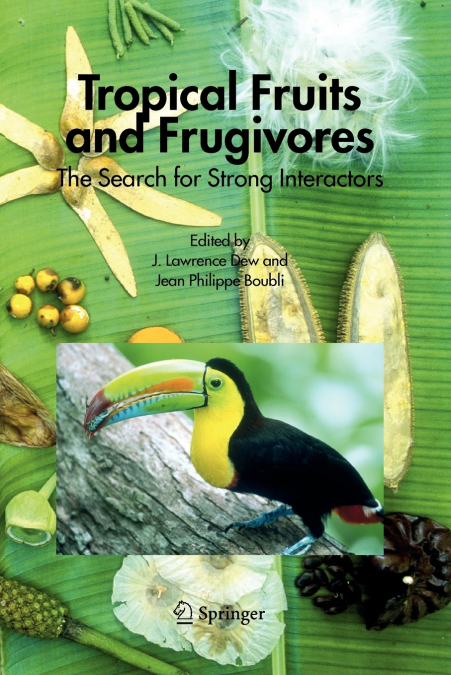
Preface. Introduction: Frugivory, Phenology, and Rainforest Conservation; J.L. Dew. Do Frugivore Population Fluctuations Reflect Fruit Production? Evidence from Panama; K. Milton et al. Potential Keystone Plant Species for the Frugivore Community at Tinigua Park, Colombia; P. Stevenson. Floristics, Primary Productivity and Primate Diversity in Amazonia: Contrasting a Eutrophic Varzea Forest and an Oligotrophic Caatinga Forest in Brazil; J.P. Boubli. A 12-Year Phenological Record of Fruiting: Implications for Frugivore Populations and Indicators of Climate Change; C.C. Chapman et al. An Intersite Comparison of Fruit Characteristics in Madagascar: Evidence for Selection Pressure through Abiotic Constraints Rather Than through Co-evolution; A. Bollen et al. The Key to Madagascar Frugivores; P.C. Wright et al. Fruiting Phenology and Pre-dispersal Seed Predation in a Rainforest in Southern Western Ghats, India; T. Ganesh, P. Davidar. Fast Foods of the Forest: The Influence of Figs on Primates and Hornbills across Wallace’s Line; M.F. Kinnaird, T.G. O’Brien. The Frugivore Community and the Fruiting Plant Flora in a New Guinea Rainforest: Identifying Keystone Frugivores; A.L. Mack, D.D. Wright.Diet, Keystone Resources, and Altitudinal Movement of Dwarf Cassowaries in Relation to Fruiting Phenology in a Papua New Guinea Rainforest; D.D. Wright. Keystone Fruit Resources and Australia’s Tropical Rain Forests; D. Westcott et al.