
Tropical Forests in Transition

Tropical Forests in Transition

J. Goldammer

68,61 €
IVA incluido
Disponible
Editorial:
Springer Nature B.V.
Año de edición:
2012
Materia
Ecología, la biosfera
ISBN:
9783034872584
68,61 €
IVA incluido
Disponible

Selecciona una librería:

  • Librería Samer Atenea
  • Librería Aciertas (Toledo)
  • Kálamo Books
  • Librería Perelló (Valencia)
  • Librería Elías (Asturias)
  • Donde los libros
  • Librería Kolima (Madrid)
  • Librería Proteo (Málaga)

In evolutionary time scales natural disturbances have affected the vegetation on Earth. During the Quaternary the forest biomes of the tropics were subjected to manifold disturbances. Climate changes and climate oscillations were associated with changing precipitation and drought regimes, flooding, siltation, landslides, etc. The prehistorical forest was also influenced by the effects of large wildlife populations. Large-scale catastrophies in the forest biomes were mainly caused by abiotic environmental alterations, the small-scale disturbances were and still are related to both biotic and abiotic processes. Both the large-and the small-scale disturbances have played a significant role in shaping distribution, dynamics, structure and composition of the paleoforest. After the expansion of hominids and early humans, and later, by modern humans, the anthropogenic influences on the tropical forest began to overlap natural disturbances. Today’s anthropogenic impacts on the tropical forests differ qualitatively and quanitatively from the natural disturbances. The speed of tropical deforestation and savannization is dramatically increasing. The physical and chemical impacts of forest conversion and biomass burning add to other anthropogenic influences on the atmosphere and climate. The expected anthropogenic climate change will also have considerable impacts on the tropical flora and fauna. The book on 'Tropical Forests in Transition' synthesizes information on changing environmental conditions and human impacts on the tropical forest by looking back to the paleoecology, analyzing the impact of modern human populations and modeling the future of the tropical forest in a changing environment. The aim of the book is to strengthen multidisciplinary thinking in disturbance ecology.

Artículos relacionados

  • Water from a Transdisciplinary Perspective
    Ana Isabel Pereira Cardoso / Teresinha M. Gonçalves
    Life in cities has distanced human beings from nature and made it difficult to understand the ecology of life dependent on the environment. Urban water collection and distribution processes contribute significantly to the fragmentation of knowledge and the vital recognition of the water cycle. Without the effective participation of the subject in environmental actions, it is no...
    Disponible

    43,82 €

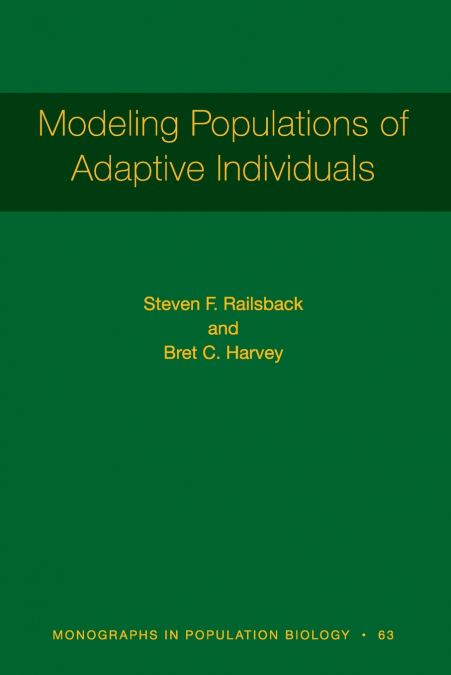
  • Modeling Populations of Adaptive Individuals
    Bret C. Harvey / Steven F. Railsback
    Ecologists now recognize that the dynamics of populations, communities, and ecosystems are strongly affected by adaptive individual behaviors. Yet until now, we have lacked effective and flexible methods for modeling such dynamics. Traditional ecological models become impractical with the inclusion of behavior, and the optimization approaches of behavioral ecology cannot be use...
    Disponible

    65,53 €

  • Scaling in Ecology with a Model System
    Aaron Ellison / Aaron M. Ellison / Nicholas J. Gotelli
    A groundbreaking approach to scale and scaling in ecological theory and practiceScale is one of the most important concepts in ecology, yet researchers often find it difficult to find ecological systems that lend themselves to its study. Scaling in Ecology with a Model System synthesizes nearly three decades of research on the ecology of Sarracenia purpurea-the northern pitcher...
  • Population Ecology
    Deborah E. Goldberg / John H. Vandermeer
    The essential introduction to population ecology-now expanded and fully updatedEcology is capturing the popular imagination like never before, with issues such as climate change, species extinctions, and habitat destruction becoming ever more prominent. At the same time, the science of ecology has advanced dramatically, growing in mathematical and theoretical sophistication. He...
    Disponible

    124,92 €

  • Physiological Ecology
    Carlos Martínez del Rio / William H. Karasov
    Unlocking the puzzle of how animals behave and how they interact with their environments is impossible without understanding the physiological processes that determine their use of food resources. But long overdue is a user-friendly introduction to the subject that systematically bridges the gap between physiology and ecology. Ecologists--for whom such knowledge can help clarif...
  • Critical Transitions in Nature and Society
    Marten Scheffer
    How do we explain the remarkably abrupt changes that sometimes occur in nature and society--and can we predict why and when they happen? This book offers a comprehensive introduction to critical transitions in complex systems--the radical changes that happen at tipping points when thresholds are passed. Marten Scheffer accessibly describes the dynamical systems theory behind cr...
    Disponible

    89,46 €