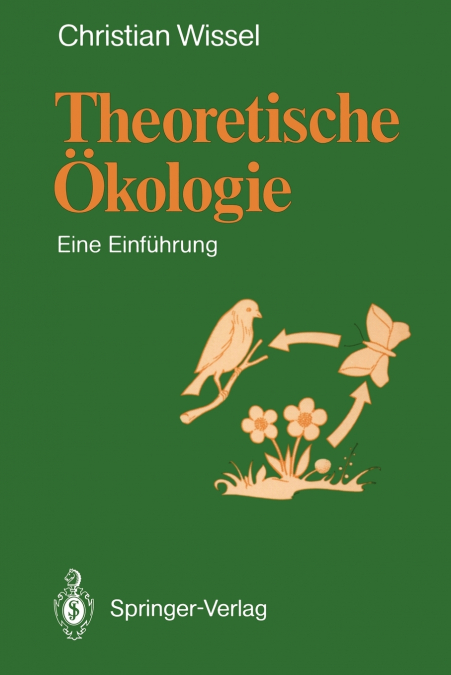

Theoretische Ökologie

Theoretische Ökologie

Christian Wissel

72,33 €
IVA incluido
Disponible
Editorial:
Springer Nature B.V.
Año de edición:
1989
Materia
Ecología, la biosfera
ISBN:
9783540508489
72,33 €
IVA incluido
Disponible

Selecciona una librería:

  • Librería Samer Atenea
  • Librería Aciertas (Toledo)
  • Kálamo Books
  • Librería Perelló (Valencia)
  • Librería Elías (Asturias)
  • Donde los libros
  • Librería Kolima (Madrid)
  • Librería Proteo (Málaga)

Dieses Buch ist als EinfUhrung in die Theoretische Okologie gedacht. Den Begriff 'okologisches Modell' habe ich im Titel absichtlich vermieden, denn hierzu ziihlen ganz verschiedene Methoden der mathematischen Beschreibung von okologischen V orgiingen. Ziel einer Theorie ist es, ein Verstandnis fUr die Vor­ gange und funktionellen Zusammenhange eines Fachgebietes zu erlangen. Dies kann natiirlich auch ohne Mathematik durch Denken in verbalen Kategorien ge­ schehen. Jeder Naturwissenschaftler ist angehalten, iiber das, was er im Experi­ ment oder in der freien Natur gefunden hat, nachzudenken. Dies sind bereits die ersten Ansiitze zu einer Theorie. Eine mathematische Theorie ist nun’ nichts weiter, als eine Fortsetzung dieses Denkens in einer anderen Spnlche - der Sprache der Mathematik. Dabei muB immer das okologische Problem im Vorder­ grund stehen. Die Mathematik ist nur ein' mogliches Hilfsmittel, urn em besseres Verstandnis fUr die okologischen Vorgange zu bekommen. Anders als in der Theoretischen Physik sind in der Okologie kaum all­ gemeingiiltige Prinzipien und Gesetze gefunden worden, aus denen man die Losung eines speziellen Problems deduzieren kann. Eine Ursache hierfUr mag neben der Komplexitat von Okosystemen auch die Schwierigkeit sein, Modelle und Theorien der Okologie durch gezielte Experimente in der freien Natur zu iiberpriifen. Das Fehlen einer allgemein anerkannten Theorie hat zur Folge, daB die Auswahl der induktiv aufgestellten Modelle subjektiv sein muB. So wird man­ cher Leser einzelnen Darstellungen dieses Buches nicht zustimmen. Es gibt recht verschiedene Methoden des Modellierens. Mitunter ist nicht einmal klar, mit welcher Fragestellung man an die Objekte herangehen solI.
Artículos relacionados

  • Water from a Transdisciplinary Perspective
    Ana Isabel Pereira Cardoso / Teresinha M. Gonçalves
    Life in cities has distanced human beings from nature and made it difficult to understand the ecology of life dependent on the environment. Urban water collection and distribution processes contribute significantly to the fragmentation of knowledge and the vital recognition of the water cycle. Without the effective participation of the subject in environmental actions, it is no...
    Disponible

    43,82 €

  • Modeling Populations of Adaptive Individuals
    Bret C. Harvey / Steven F. Railsback
    Ecologists now recognize that the dynamics of populations, communities, and ecosystems are strongly affected by adaptive individual behaviors. Yet until now, we have lacked effective and flexible methods for modeling such dynamics. Traditional ecological models become impractical with the inclusion of behavior, and the optimization approaches of behavioral ecology cannot be use...
    Disponible

    65,53 €

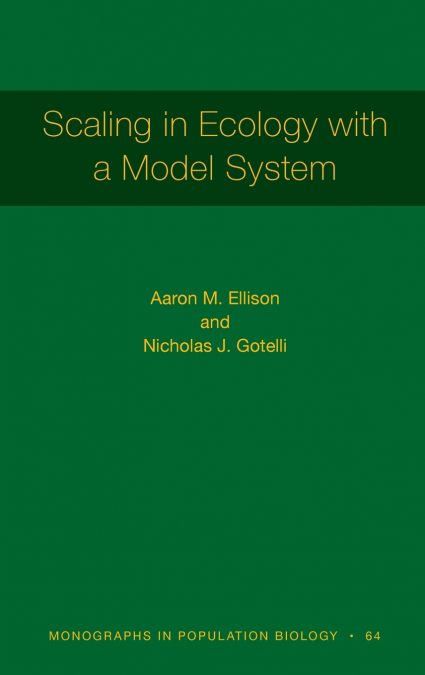
  • Scaling in Ecology with a Model System
    Aaron Ellison / Aaron M. Ellison / Nicholas J. Gotelli
    A groundbreaking approach to scale and scaling in ecological theory and practiceScale is one of the most important concepts in ecology, yet researchers often find it difficult to find ecological systems that lend themselves to its study. Scaling in Ecology with a Model System synthesizes nearly three decades of research on the ecology of Sarracenia purpurea-the northern pitcher...
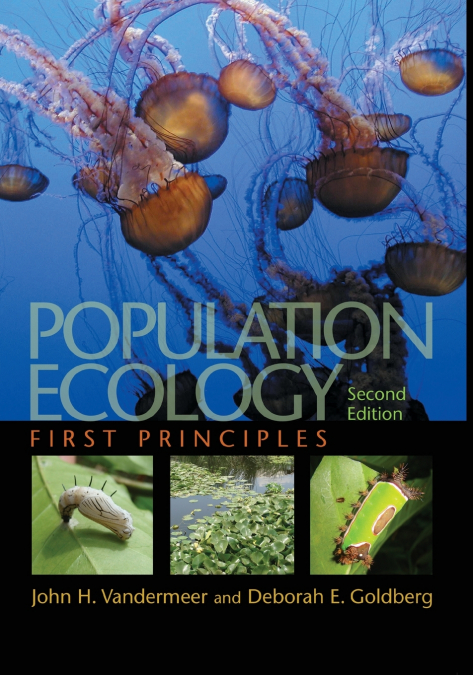
  • Population Ecology
    Deborah E. Goldberg / John H. Vandermeer
    The essential introduction to population ecology-now expanded and fully updatedEcology is capturing the popular imagination like never before, with issues such as climate change, species extinctions, and habitat destruction becoming ever more prominent. At the same time, the science of ecology has advanced dramatically, growing in mathematical and theoretical sophistication. He...
    Disponible

    124,92 €

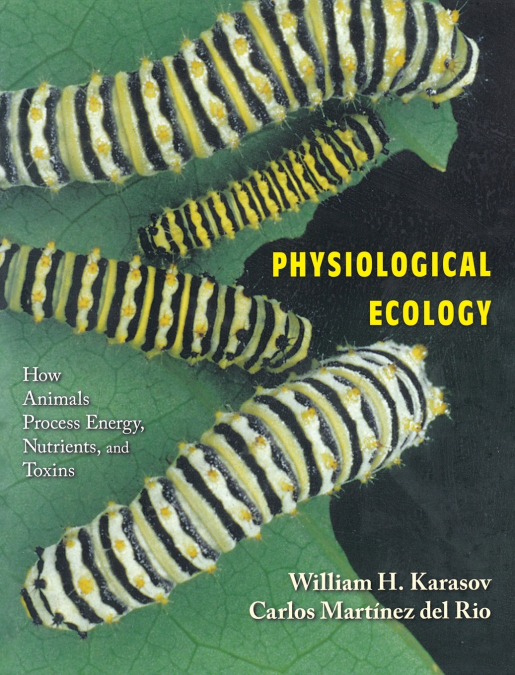
  • Physiological Ecology
    Carlos Martínez del Rio / William H. Karasov
    Unlocking the puzzle of how animals behave and how they interact with their environments is impossible without understanding the physiological processes that determine their use of food resources. But long overdue is a user-friendly introduction to the subject that systematically bridges the gap between physiology and ecology. Ecologists--for whom such knowledge can help clarif...
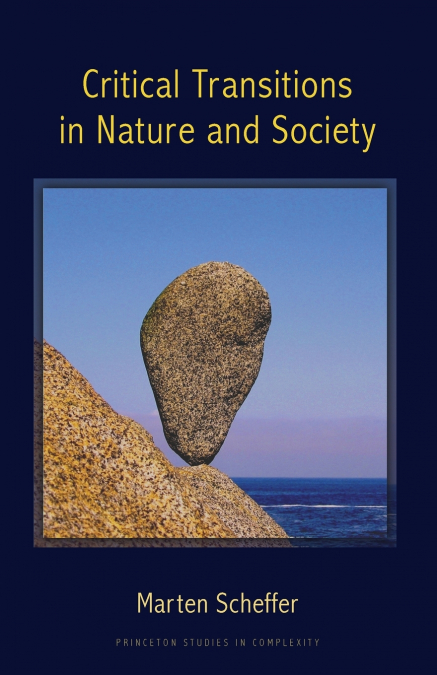
  • Critical Transitions in Nature and Society
    Marten Scheffer
    How do we explain the remarkably abrupt changes that sometimes occur in nature and society--and can we predict why and when they happen? This book offers a comprehensive introduction to critical transitions in complex systems--the radical changes that happen at tipping points when thresholds are passed. Marten Scheffer accessibly describes the dynamical systems theory behind cr...
    Disponible

    89,46 €