 Librería Samer Atenea
 Kálamo Books
 Librería Elías (Asturias)
 Librería Kolima (Madrid)
 Librería Proteo (Málaga)
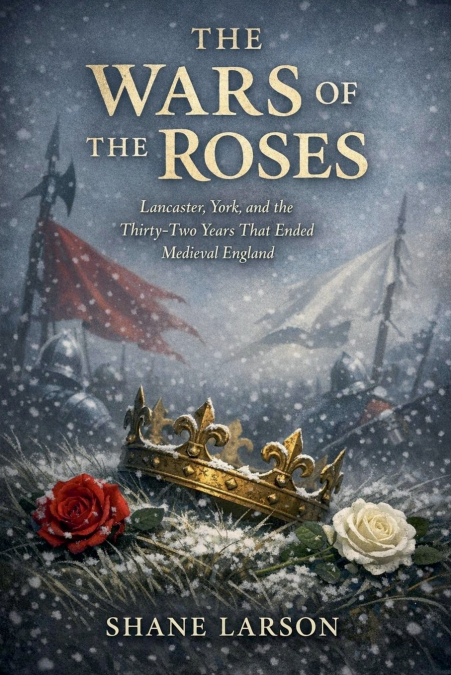
Nobody who fought in the Wars of the Roses called them that. The name was settled by the Victorians, the red rose was supplied after the fighting was over, and the garden where the nobles pluck their roses was written by Shakespeare.What happened was harder and stranger. In August 1453 Henry VI, a gentle, devout king who could not decide things, stopped responding to the world and stayed that way until about Christmas 1454, through the birth of his only son. A medieval monarchy could survive a weak king. It could not survive an absent one, and the question of who would act for him became the question of who should replace him. Between St Albans in May 1455 and East Stoke in June 1487, a king was deposed, restored and deposed again, two kings were killed, a twelve-year-old king was seen less and less in the Tower and then not at all, and the man who ended it had the thinnest claim of any contender.The battles were short and some were enormous. Towton, fought in a snowstorm on Palm Sunday 1461, may be the largest battle fought on English soil; the chroniclers’ 28,000 dead is widely doubted, but the grave opened beside Towton Hall in 1996 held at least thirty-seven men, and one of them had been struck in the head eight times. Barnet was fought in fog so thick that the Earl of Oxford’s star was taken for King Edward’s sun by his own allies. Tewkesbury ended the male line of Lancaster in an afternoon, and Henry VI was dead in the Tower within the month. Between the battles the real war went on in oaths, marriages, attainders and pardons, and much of it was carried by women: Margaret of Anjou, who kept Lancaster in the field for a decade; Elizabeth Woodville, whose secret marriage did more damage than any army; Margaret Beaufort, who spent twenty-eight years turning an exile into a king.The book works from what contemporaries wrote, the London chronicles and the Paston letters, and from the ground: the Towton bones, and the lead shot that between 2005 and 2009 moved the battle of Bosworth two miles from its traditional site. Every story that first appears after 1485, the paper crown, the crown in the hawthorn bush, is labelled as such. It ends at Stoke, where the fighting did, with a boy crowned in Dublin put to work in the royal kitchens.What you’ll learn:Why the crown failed before the nobles did, and how a king’s silence became a civil warWhat the 1996 Towton grave shows that no chronicle couldHow Warwick made two kings, and why 'Kingmaker' is a later nameWhy Edward IV’s secret marriage in 1464 cost more than any battle of the decadeWhere Bosworth was actually fought, and which of its famous moments are Tudor legendWhy the war did not end at Bosworth, and what happened at Stoke two years laterThis book is for you if:You have read The Hundred Years’ War and want to know what the men who lost it did nextYou know the plays and want to know what the record says insteadYou want Henry VI, Margaret of Anjou and Warwick given the room most histories give to 1483You want every death toll given as what was claimed, with the reasons for doubtThirty-two years, five kings, and a name nobody who fought under it would have recognised. This is the whole war, from the first blood at St Albans to the last battle at Stoke.