
The Theory of Ecological Communities

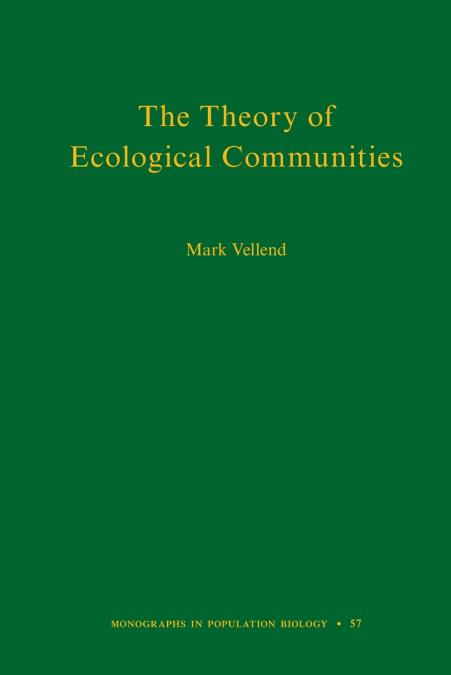
The Theory of Ecological Communities

Mark Vellend

54,16 €
IVA incluido
Disponible
Editorial:
Princeton University Press
Año de edición:
2020
Materia
Ecología, la biosfera
ISBN:
9780691208992
54,16 €
IVA incluido
Disponible

Selecciona una librería:

  • Librería Samer Atenea
  • Librería Aciertas (Toledo)
  • Kálamo Books
  • Librería Perelló (Valencia)
  • Librería Elías (Asturias)
  • Donde los libros
  • Librería Kolima (Madrid)
  • Librería Proteo (Málaga)

A plethora of different theories, models, and concepts make up the field of community ecology. Amid this vast body of work, is it possible to build one general theory of ecological communities? What other scientific areas might serve as a guiding framework? As it turns out, the core focus of community ecology-understanding patterns of diversity and composition of biological variants across space and time-is shared by evolutionary biology and its very coherent conceptual framework, population genetics theory. The Theory of Ecological Communities takes this as a starting point to pull together community ecology’s various perspectives into a more unified whole.Mark Vellend builds a theory of ecological communities based on four overarching processes: selection among species, drift, dispersal, and speciation. These are analogues of the four central processes in population genetics theory-selection within species, drift, gene flow, and mutation-and together they subsume almost all of the many dozens of more specific models built to describe the dynamics of communities of interacting species. The result is a theory that allows the effects of many low-level processes, such as competition, facilitation, predation, disturbance, stress, succession, colonization, and local extinction to be understood as the underpinnings of high-level processes with widely applicable consequences for ecological communities.Reframing the numerous existing ideas in community ecology, The Theory of Ecological Communities provides a new way for thinking about biological composition and diversity.
Artículos relacionados

  • Water from a Transdisciplinary Perspective
    Ana Isabel Pereira Cardoso / Teresinha M. Gonçalves
    Life in cities has distanced human beings from nature and made it difficult to understand the ecology of life dependent on the environment. Urban water collection and distribution processes contribute significantly to the fragmentation of knowledge and the vital recognition of the water cycle. Without the effective participation of the subject in environmental actions, it is no...
    Disponible

    43,82 €

  • Modeling Populations of Adaptive Individuals
    Bret C. Harvey / Steven F. Railsback
    Ecologists now recognize that the dynamics of populations, communities, and ecosystems are strongly affected by adaptive individual behaviors. Yet until now, we have lacked effective and flexible methods for modeling such dynamics. Traditional ecological models become impractical with the inclusion of behavior, and the optimization approaches of behavioral ecology cannot be use...
    Disponible

    65,53 €

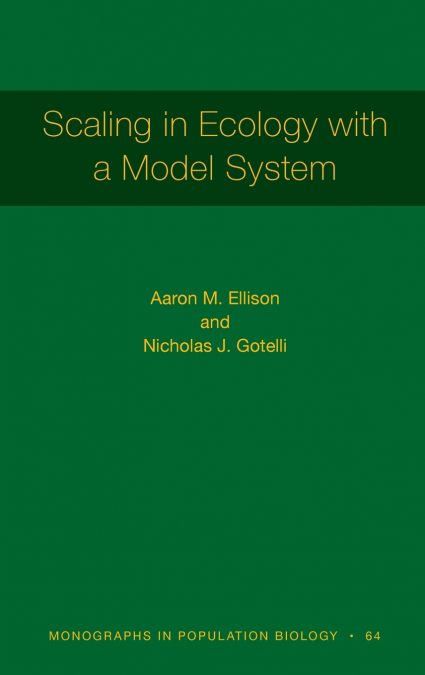
  • Scaling in Ecology with a Model System
    Aaron Ellison / Aaron M. Ellison / Nicholas J. Gotelli
    A groundbreaking approach to scale and scaling in ecological theory and practiceScale is one of the most important concepts in ecology, yet researchers often find it difficult to find ecological systems that lend themselves to its study. Scaling in Ecology with a Model System synthesizes nearly three decades of research on the ecology of Sarracenia purpurea-the northern pitcher...
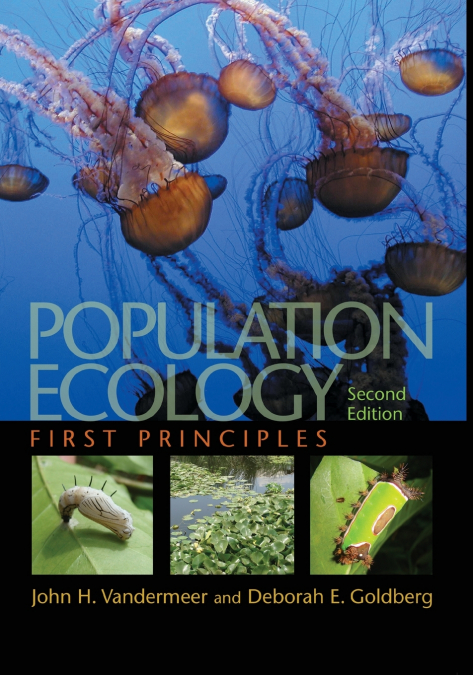
  • Population Ecology
    Deborah E. Goldberg / John H. Vandermeer
    The essential introduction to population ecology-now expanded and fully updatedEcology is capturing the popular imagination like never before, with issues such as climate change, species extinctions, and habitat destruction becoming ever more prominent. At the same time, the science of ecology has advanced dramatically, growing in mathematical and theoretical sophistication. He...
    Disponible

    124,92 €

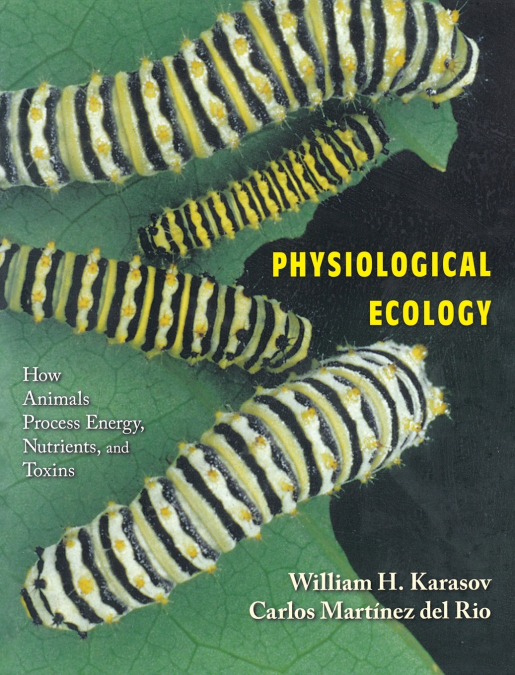
  • Physiological Ecology
    Carlos Martínez del Rio / William H. Karasov
    Unlocking the puzzle of how animals behave and how they interact with their environments is impossible without understanding the physiological processes that determine their use of food resources. But long overdue is a user-friendly introduction to the subject that systematically bridges the gap between physiology and ecology. Ecologists--for whom such knowledge can help clarif...
  • Critical Transitions in Nature and Society
    Marten Scheffer
    How do we explain the remarkably abrupt changes that sometimes occur in nature and society--and can we predict why and when they happen? This book offers a comprehensive introduction to critical transitions in complex systems--the radical changes that happen at tipping points when thresholds are passed. Marten Scheffer accessibly describes the dynamical systems theory behind cr...
    Disponible

    89,46 €