Inicio > Humanidades > Filosofía > Filosofía: estética > The Theological Understanding of Beauty in Scholastic Tradition
The Theological Understanding of Beauty in Scholastic Tradition

The Theological Understanding of Beauty in Scholastic Tradition

Connor Hill

20,52 €
IVA incluido
Disponible
Editorial:
Colloquium
Año de edición:
2025
Materia
Filosofía: estética
ISBN:
9798232257552
20,52 €
IVA incluido
Disponible

Selecciona una librería:

  • Librería Samer Atenea

  • Kálamo Books
  • Librería Elías (Asturias)
  • Librería Kolima (Madrid)
  • Librería Proteo (Málaga)

In this groundbreaking exploration of medieval aesthetics, 'The Theological Understanding of Beauty in Scholastic Tradition' reveals how the greatest minds of the Middle Ages developed a profound and sophisticated understanding of beauty that continues to resonate in our contemporary world.From the soaring spires of Gothic cathedrals to the intricate illuminations of medieval manuscripts, from the mathematical harmonies of Gregorian chant to the mystical visions of Hildegard of Bingen, the medieval world was saturated with a conception of beauty that transcended mere decoration. For scholastic thinkers like Thomas Aquinas and Bonaventure, beauty was nothing less than a pathway to the divine-a transcendental property of being itself that could elevate the human spirit toward ultimate truth.Drawing on extensive original sources and cutting-edge scholarship, this book takes readers on a captivating journey through the intellectual landscape of medieval Christianity. We witness how Anselm’s rational theology established beauty as an attribute of God worthy of contemplation; how Hugh of St. Victor developed a symbolic understanding of beauty that transformed material objects into spiritual signposts; how Aquinas systematized beauty as 'that which pleases when seen'-a harmony of integrity, proportion, and clarity that reflects divine perfection.But this isn’t merely a historical study. The book demonstrates how scholastic conceptions of beauty offer a powerful alternative to both the relativism that dominates contemporary aesthetic discourse and the commercialization that trivializes beauty in modern life. As our digital culture fragments experience into disconnected moments of sensory stimulation, the integrated vision of medieval thinkers-who saw beauty as inseparable from truth and goodness-provides a compelling countercultural perspective.Whether you’re a theologian seeking deeper insights into Christian aesthetics, a philosopher interested in alternative approaches to beauty, an artist looking for richer conceptual foundations, or simply someone who has stood in awe before a medieval cathedral wondering what inspired such magnificent creations, this book offers revelatory insights into one of Western civilization’s most profound intellectual achievements.In an age hungry for meaning and transcendence, the scholastic understanding of beauty speaks with surprising relevance and power-inviting us to see the world not as a collection of commodities but as a radiant manifestation of divine splendor waiting to be recognized, contemplated, and loved.


Artículos relacionados

  • Die verschiedenen Modi der Existenz
    Étienne Souriau
    'Wäre die Philosophie auch nur eine Stunde der Mühe wert, wenn sie uns nicht für das Leben rüstete?' Gezielten Schrittes entwirft der französische Philosoph Étienne Souriau in diesem dicht gedrängten Buch eine Grammatik der Existenz. Im Fokus steht nicht nur ihre Theorie, sondern auch die tatsächliche Ausübung der 'Kunst des Existierens'. Wie Gilles Deleuze und William Jame...
  • Beobachtungen über das Gefühl des Schönen und Erhabenen
    Immanuel Kant
    'Das Erhabene rührt, das Schöne reizt.' - I. Kant'Beobachtungen über das Gefühl des Schönen und Erhabenen' ist eine philosophische Abhandlung von Immanuel Kant aus dem späten 18. Jahrhundert. In diesem Werk untersucht Kant die Natur von Schönheit und Erhabenheit. Er argumentiert, dass Schönheit subjektiv ist und im Gefühl der Harmonie und Symmetrie liegt, während das Erhabene e...
    Disponible

    11,23 €

  • A book of monsters
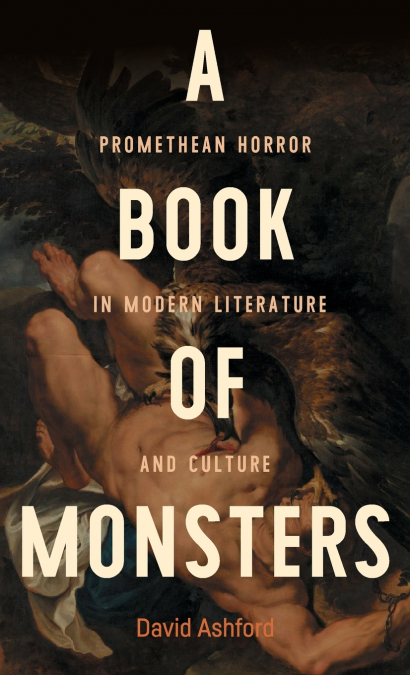
    David Ashford
    This books traces the rise to prominence in the twentieth-century of a sub-genre of gothic fiction that is, emphatically, a horror of enlightenment rationality rather than gothic darkness, examining post-modern revisions of Modernist 'Promethean' tropes in an eclectic range of gothic, fantasy and SF writing. Whether the subject be terror of London’s churches in the psychogeogra...
  • Embracing Wabi-Sabi
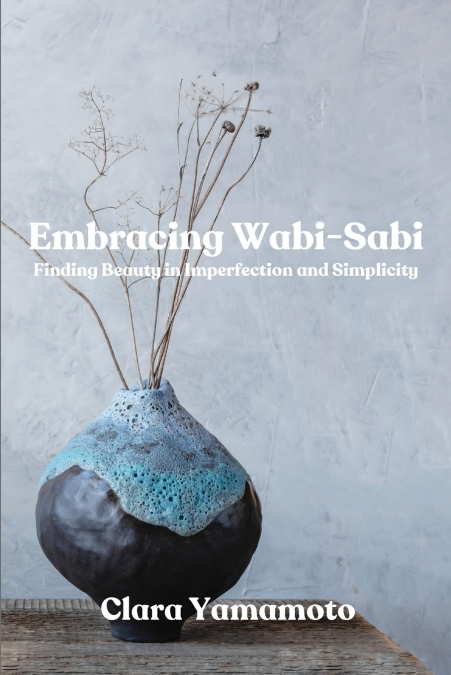
    Clara Yamamoto
    The insightful and informative book 'Embracing Wabi-Sabi: Finding Beauty in Imperfection and Simplicity' delves into the age-old Japanese concept of Wabi-Sabi. This book explores the core ideas of a worldview that finds peace in the transient aspect of existence, the richness of simplicity, and the beauty of imperfection. By utilizing a combination of cultural insights, histori...
    Disponible

    16,39 €

  • Introducing Aesthetics and the Philosophy of Art
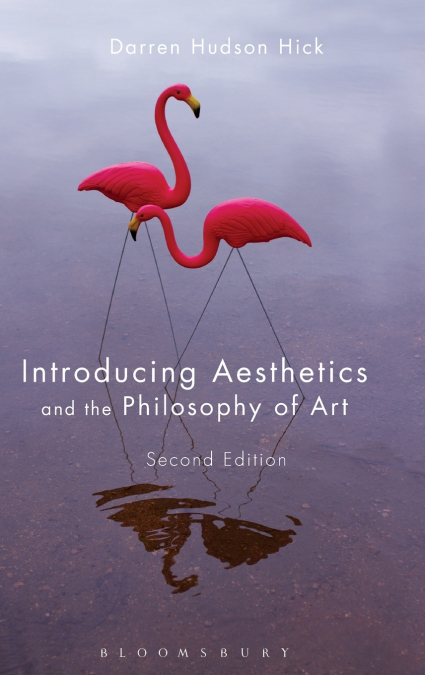
    Darren Hudson Hick
    ’Place in garden, lawn, to beautify landscape.’When Don Featherstone’s plastic pink flamingos were first advertised in the 1957 Sears catalogue, these were the instructions. The flamingos are placed on the cover of this book for another reason: to start us asking questions. That’s where philosophy always begins.Introducing Aesthetics and the Philosophy of Art is written to intr...
  • Whoraxia, Lilac and Leonine
    Gregory Scaff
    Whoraxia, Lilac & Leonine by Gregory Scaff is a collection of philosophical poetry and prose regarding aesthetics, history, language, sexuality, and ethics. His creative use of writing explores profound ideas in order to provoke scholarly contemplation in his readers. Gregory joins the realms of literature and philosophy to create a unique and enriching experience. This book ...
    Disponible

    24,16 €

Otros libros del autor

  • The Rise of Medieval Islamic Scholarly Culture
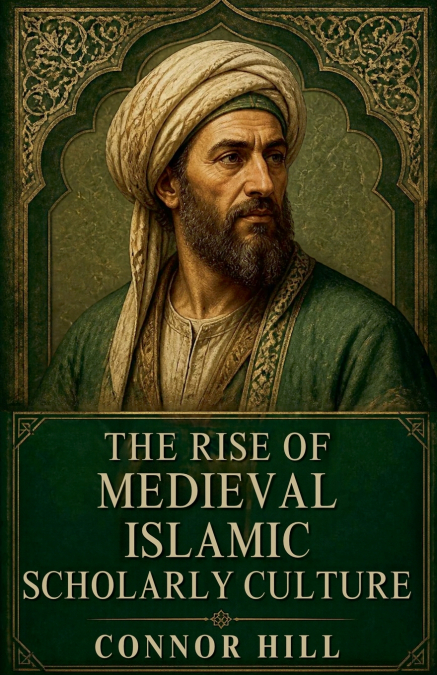
    Connor Hill
    Few phenomena in world history rival the remarkable emergence of scholarly culture in the medieval Islamic world. Within a span of several centuries, communities stretching from the Atlantic shores of North Africa to the river valleys of Central Asia participated in the creation of one of the most extensive intellectual networks the premodern world had ever known. Across desert...
    Disponible

    20,97 €

  • The Thirteenth-Century Intellectual World
    Connor Hill
    The thirteenth century occupies a singular place in the history of human thought. Few periods before the modern age witnessed such a concentration of intellectual energy, institutional innovation, and cultural exchange. Across the cities, monasteries, courts, universities, and religious houses of Europe, new forms of inquiry transformed the understanding of nature, society, gov...
    Disponible

    20,87 €

  • The Translation Movements in Medieval Spain and Sicily
    Connor Hill
    The history of medieval Europe has often been told as a story of kingdoms, dynasties, wars, crusades, and religious transformation. Yet beneath these visible structures of political and social change lay another process that was equally consequential for the development of European civilization: the movement of knowledge across linguistic, cultural, and religious boundaries. Be...
    Disponible

    20,90 €

  • Christianity and Neoplatonism Before Augustine
    Connor Hill
    The encounter between Christianity and Platonism ranks among the most consequential intellectual events in the history of Western civilization. Long before Christianity emerged as the dominant religious force of the Roman Empire, the philosophical tradition originating with Plato had already shaped the intellectual language through which educated people understood reality, the ...
    Disponible

    20,96 €

  • The Platonic Influences on Later Christian Thought
    Connor Hill
    Few relationships in the history of ideas have generated as much fascination, controversy, and scholarly debate as the encounter between Christianity and Platonism. From the earliest centuries of the Christian era, believers and theologians found themselves living within a cultural world deeply shaped by Greek philosophical traditions. Among these traditions, none proved more i...
    Disponible

    21,05 €

  • Thomas Aquinas and the Christianization of Neoplatonism
    Connor Hill
    Few questions have exercised historians of philosophy and theology more persistently than the question of how Christianity came to appropriate, transform, and ultimately baptize elements of Greek philosophy. From the earliest centuries of the Church, Christian thinkers found themselves confronted by intellectual traditions that had been developed long before the emergence of Ch...
    Disponible

    21,03 €