 Librería Samer Atenea
 Kálamo Books
 Librería Elías (Asturias)
 Librería Kolima (Madrid)
 Librería Proteo (Málaga)
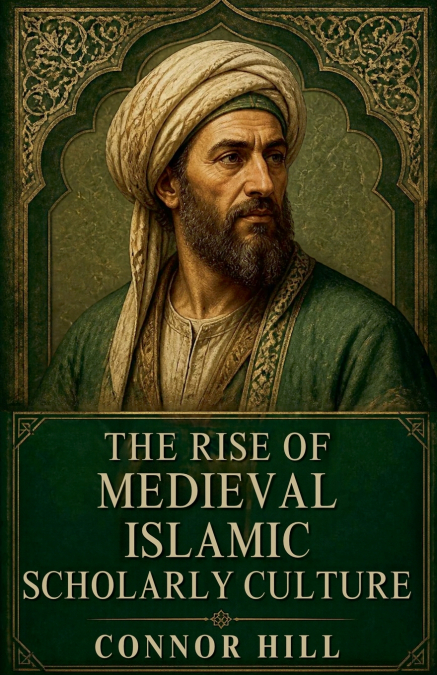
Few phenomena in world history rival the remarkable emergence of scholarly culture in the medieval Islamic world. Within a span of several centuries, communities stretching from the Atlantic shores of North Africa to the river valleys of Central Asia participated in the creation of one of the most extensive intellectual networks the premodern world had ever known. Across deserts, mountains, seas, and imperial frontiers, scholars exchanged books, ideas, methods, and questions. They debated theology in mosques, copied manuscripts in libraries, taught students in madrasas, observed the stars from observatories, treated patients in hospitals, and produced works that would influence societies far beyond the boundaries of the Islamic world. The rise of this scholarly culture was not a marginal development confined to religious institutions or learned elites. Rather, it became one of the defining characteristics of medieval Islamic civilization itself.At its heart, this book explores a simple but profound question: how did a society that emerged in seventh-century Arabia become the center of a vibrant and enduring intellectual tradition that linked continents and shaped the course of global history? The answer lies not in a single event, institution, or individual, but in a complex interaction of religious ideals, political structures, economic resources, linguistic developments, educational institutions, and social aspirations. The rise of Islamic scholarly culture was the product of historical processes that transformed learning into a deeply valued social activity and knowledge into one of the most respected forms of authority.