
The Northern Song Dynasty

The Northern Song Dynasty

Hui Wang

26,21 €
IVA incluido
Disponible
Editorial:
Hui Wang
Año de edición:
2025
Materia
Historia de Asia
ISBN:
9789189998643
26,21 €
IVA incluido
Disponible

Selecciona una librería:

  • Librería Samer Atenea
  • Librería Aciertas (Toledo)
  • Kálamo Books
  • Librería Perelló (Valencia)
  • Librería Elías (Asturias)
  • Donde los libros
  • Librería Kolima (Madrid)
  • Librería Proteo (Málaga)

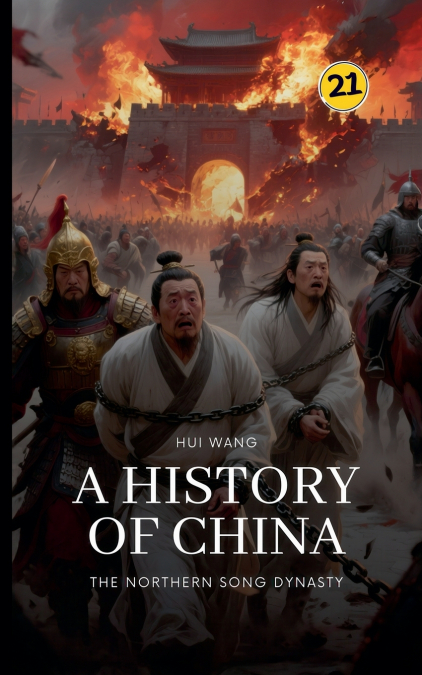
The Northern Song Dynasty: A History of China, PART THREE, pulls you into a world of reformers, poets, generals, and emperors - a time when Chinese civilization shone at an extraordinary height even as the ground beneath it grew perilously thin. As I wrote this book I wanted readers to feel what it was like to live in that age: the rush of hope, the tug of power, and the slow ache of heartbreak. From the brilliant but stubborn Wang Anshi and his patron Emperor Shenzong to the artist-emperor Huizong, each life in this story beats with ambition and fear, courage and error.At the heart of the opening chapters is the alliance between Wang Anshi and Emperor Shenzong. Together they launch the famous New Policies - bold, far-reaching reforms meant to make the empire richer, more efficient, and stronger on the battlefield. But their vision cleaves the court in two. Bitter struggles flare up between reformers and conservatives, spilling out of dusty files and lecture halls into the corridors of power. Those conflicts play out as factional purges, impeachments, and public scandals - literary and political prosecutions that would, in later decades, culminate in notorious episodes such as the Crow Terrace Poetry Trial. Conservative officials push back; influential palace figures maneuver behind the throne. The palace itself becomes a battlefield of ideas, where one misstep can end a career - or a life.When the young Emperor Zhezong took the throne, he inherited a court still rent by the same fierce battles over reform. The long shadow of Empress Dowager Gao’s regency, the disgrace and removal of Empress Meng amid palace intrigue, and the relentless struggle between rival ministerial camps - above all the reformers pushing Wang Anshi’s New Policies and their conservative opponents - showed how politics and family ties could fracture even the most promising reign. In those years, loyalty was a brittle thing, and speaking the truth could carry a price no honest man wanted to pay.Then came Emperor Huizong - an artist seated upon the dragon throne. A painter, poet, and dreamer, he filled his court with beauty: gardens and painted screens, music and calligraphy, a court dazzled by ornament and taste. He gathered around him favorites such as Cai Jing and Tong Guan, men whose talents and ambitions would both uplift and undo him. Behind the silk curtains and the painted scrolls, however, the state was growing fragile. The very figures who brought him renown also steered the empire toward calamity. Power turned into a performance; elegance became an escape.By the time we arrive at The Garden, the Goddess, and the Fall of a Dynasty and The Fall of the Northern Song, the stage is already set for collapse. But this is not merely a chronicle of a dynasty’s end - it’s the story of the people who built it, loved it, and watched it unravel. If you’re pulled toward tales of brilliant minds undone by pride, of art that outlives empires, and of rulers who, almost with their own hands, paint the map of their ruin, then this book will linger with you long after the last page is closed.
Artículos relacionados

  • Understanding Aikido
    Jan J Sunderlin
    Understanding Aikido: Essential Information and Perceptions (Special Edition) presents an historical, cultural, and philosophical look at the development of the Japanese martial art of Aikido. Sunderlin focuses on the influences brought to bear on Morihei Ueshiba, the founder of Aikido, and the subsequent cultivation of the latter's martial art as a vessel of Budo. The author a...
    Disponible

    63,06 €

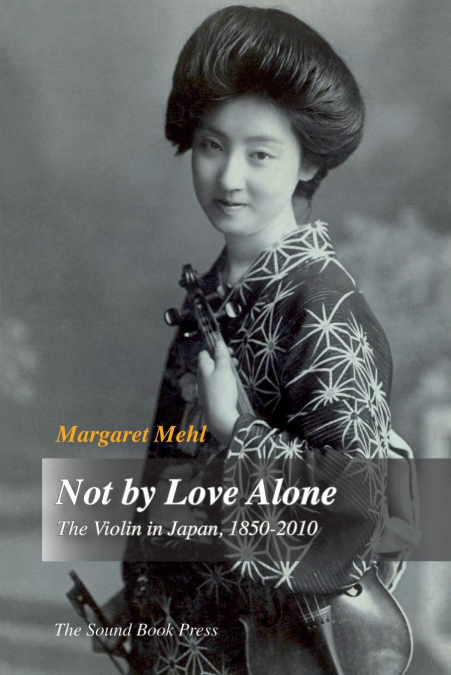
  • Not by Love Alone
    Margaret Mehl
    Suzuki Shin'ichi, the Tokyo String Quartet, Midori - How did Japanese violinists manage to revolutionize violin teaching, win international competitions, conquer Western concert stages, study at world-famous conservatoires and take up positions in leading orchestras and prestigious music faculties? What enabled the Japanese to master Western classical music within a few decades...
    Disponible

    29,32 €

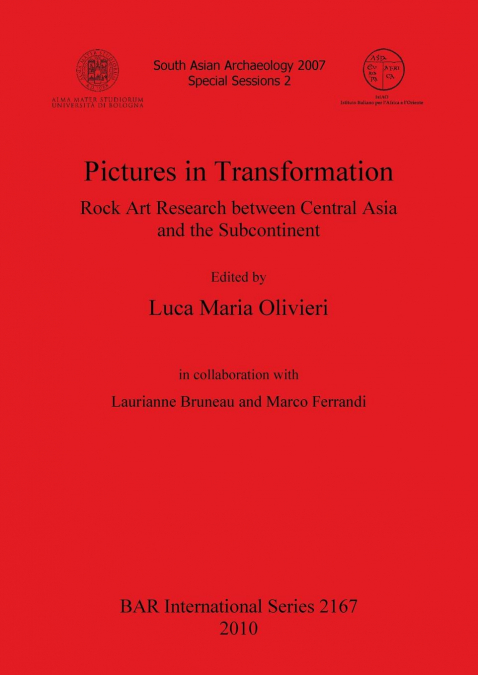
  • Pictures in Transformation
    Luca Maria Olivieri
    ...
    Disponible

    54,79 €

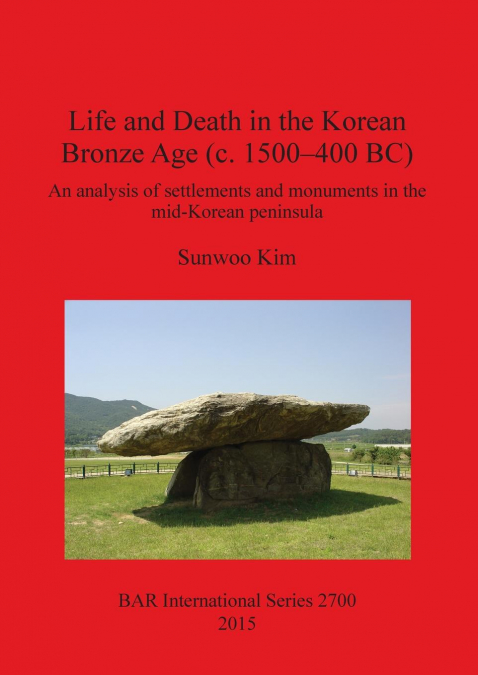
  • Life and Death in the Korean Bronze Age (c. 1500-400 BC)
    Sunwoo Kim
    This research focuses on the Bronze Age in selected areas of Korea; Seoul, Incheon, and Gyeonggi province. Two forms of evidence - settlements and monuments - are taken into account to identify their relationship with landscape and the social changes occurring between ca. 1500 to 400 cal BC. Life and death in the Bronze Age in Korea has not been synthetically investigated befor...
    Disponible

    108,34 €

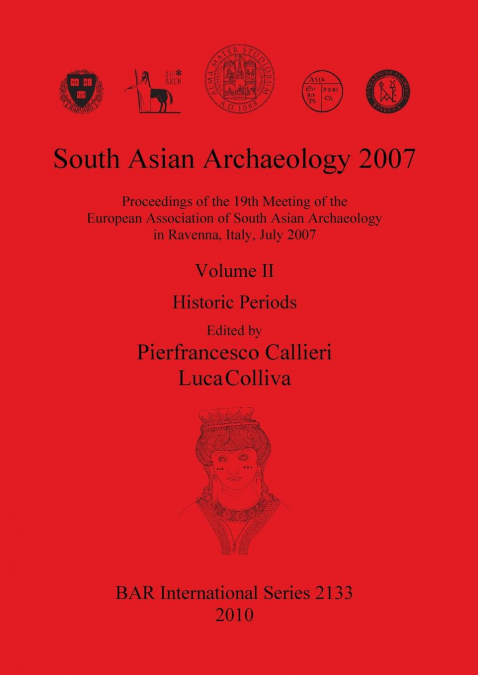
  • South Asian Archaeology 2007
    Proceedings of the 19th Meeting of the European Association of South Asian Archaeology in Ravenna, Italy, July 2007.                     ...
    Disponible

    182,04 €

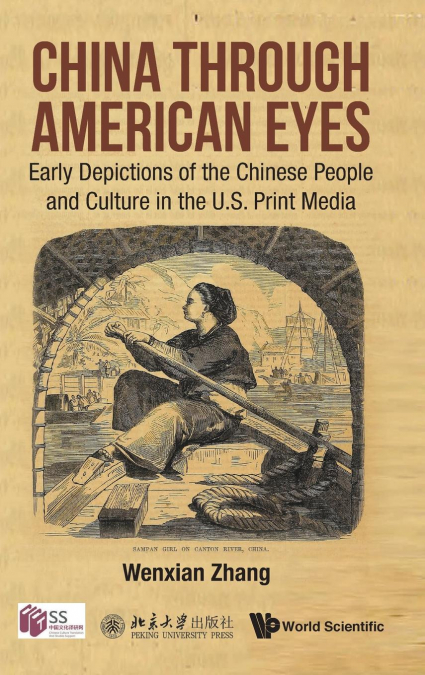
  • CHINA THROUGH AMERICAN EYES
    Wenxian Zhang / ZHANG WENXIAN
    Cultural understanding between the United States and China has been a long and complex process. The period from the mid-nineteenth century to the early twentieth century is not only a critical era in modern Chinese history, but also the peak time of illustrated news reporting in the United States. Besides images from newspapers and journals, this collection also contains pictur...

Otros libros del autor

  • Ancient Rome
    Hui Wang
    Ancient Rome: Europe in History, PART TWO, is the book I wish I’d had when I first tried to make sense of Rome’s long slide from republic to empire. I start with Gaius Marius - the reformer whose changes to recruitment and the structure of the legions quietly altered the balance of power in Rome - and then press on to the hard question of why the Republic broke down at all.From...
    Disponible

    24,28 €

  • Ancient Rome
    Hui Wang
    Ancient Rome: Europe in History, PART ONE, is the book I wrote to tell Rome’s story from the ground up, starting with Romulus and Numa and the fragile order they tried to build. These early figures were not just legends; they shaped how Romans thought about law, religion, violence, and authority. From sacred rituals to kingship, from fear to discipline, this opening part shows ...
    Disponible

    25,39 €

  • Ancient Greece
    Hui Wang
    Ancient Greece: Europe in History, PART TWO, is my attempt to tell the Greek story the way it actually felt to live it-tense, unstable, and full of agonizing choices. I open the book with two competing roads to power, Athens and Sparta, and trace how their very different ideas about freedom, discipline, and leadership pushed the Greek world toward confrontation. What begins as ...
    Disponible

    24,40 €

  • Ancient Greece
    Hui Wang
    Ancient Greece: Europe in History, PART ONE, is the book I wrote to chase one question that kept bothering me: where did Europe really start to take shape? Not Europe as a modern idea, but Europe as a lived experience - a mosaic of places, practices, and habits people actually inhabited and remembered.The story opens before written records, threads through prehistory, and final...
    Disponible

    24,34 €

  • Iraq and the Age of Intervention
    Hui Wang
    Iraq and the Age of Intervention: The Middle East in History, is my attempt to make sense of how a single country kept drifting from one war into the next-and why outside powers kept stepping in. I start at the Shatt al‑Arab, that contested waterway where borders, currents, and national pride conspire to make conflict almost inevitable. From there the story moves into the bitte...
    Disponible

    25,34 €

  • From Shah to Revolution
    Hui Wang
    From Shah to Revolution: The Middle East in History, is my attempt to tell the modern Middle East as it actually unfolded - not as tidy abstractions, but through the messy, human forces of people, pressure, and hard choices. I start in Iraq, not Iran: with oil and power, and with the slow, relentless rise of Saddam Hussein. Moving from the chapter 'Iraq First' to 'Saddam Hussei...
    Disponible

    24,30 €