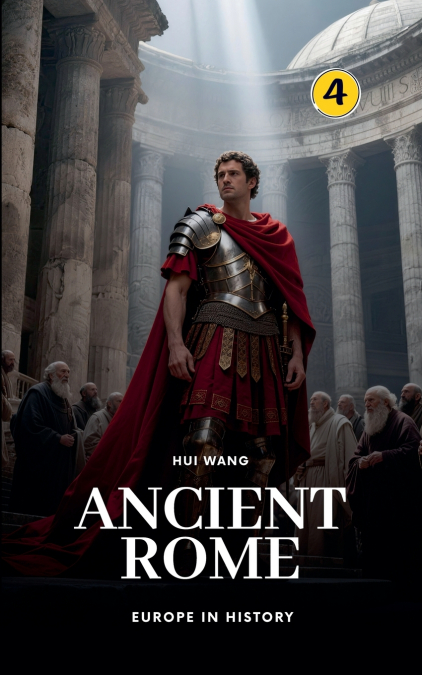

Ancient Rome

Ancient Rome

Hui Wang

24,28 €
IVA incluido
Disponible
Editorial:
Hui Wang
Año de edición:
2026
Materia
Historia antigua: hasta c. 500 e. c.
ISBN:
9789190150191
24,28 €
IVA incluido
Disponible

Selecciona una librería:

  • Librería Samer Atenea
  • Kálamo Books
  • Librería Elías (Asturias)
  • Librería Kolima (Madrid)
  • Librería Proteo (Málaga)

Ancient Rome: Europe in History, PART TWO, is the book I wish I’d had when I first tried to make sense of Rome’s long slide from republic to empire. I start with Gaius Marius - the reformer whose changes to recruitment and the structure of the legions quietly altered the balance of power in Rome - and then press on to the hard question of why the Republic broke down at all.From there, Sulla steps onto the stage, a living example of how violence and the pursuit of personal power became routine tools of Roman politics long before Caesar ever crossed the Rubicon. As the story unfolds I lead you into the world of Pompey and Crassus and a Senate that clung to the illusion of control even as it was losing its grip.The First Triumvirate - Caesar, Pompey, and Crassus - looks formidable from the outside, but it is built on rivalry, mutual suspicion, and fragile convenience. That tension ultimately explodes into open civil war between Julius Caesar and Pompey, culminating in Caesar’s victory and the effective end of the old Republic. His assassination closes one chapter of Roman history, but it precipitates a far darker and more chaotic one.The next act belongs to the Second Triumvirate - the brutal rivalry that boiled down to Octavian and Mark Antony. I follow how Octavian outmaneuvered every rival, co-opted institutions and loyalties, and built an imperial machine step by patient step - all while refusing the title of king. He styled himself Princeps and, when he accepted the honorific Augustus in 27 BC, transformed the republic’s forms into a working mask for a new, hidden monarchy.Under Augustus, Rome learned to live with that disguise: dynastic maneuvering, emperors who ruled from behind the language of the old republic, and an official reverence that could slide into emperor-worship. From there, the story moves through the empire’s high water and its long, slow erosion. I examine the rise of the imperial cult and the long calm under the Five Good Emperors (Nerva, Trajan, Hadrian, Antoninus Pius, Marcus Aurelius), then the sharp turn under Caracalla and into the era of the barracks emperors - the soldier-kings who made the purple a prize seized by the army. Stability gave way to military politics, short reigns, and an empire always on edge.The final chapters follow Rome through its last great experiments. Diocletian’s Tetrarchy - a divided rule of two Augusti and two Caesars - was a desperate bid to save the empire with rigid structure, sweeping administrative and fiscal reforms, and an iron discipline meant to end the chaos of the third-century crisis. Constantine reshaped the map again: he re-founded Byzantium as Constantinople in 330 and, with the 313 Edict of Milan (issued alongside Licinius), put Christianity on a new footing by legalizing it and ending imperial persecution. That shift set Christianity on a path to imperial favor - though it would only become the empire’s official religion later, under Theodosius. I close by confronting the biggest question of all: why did the Western Roman Empire collapse while the East endured?
Artículos relacionados

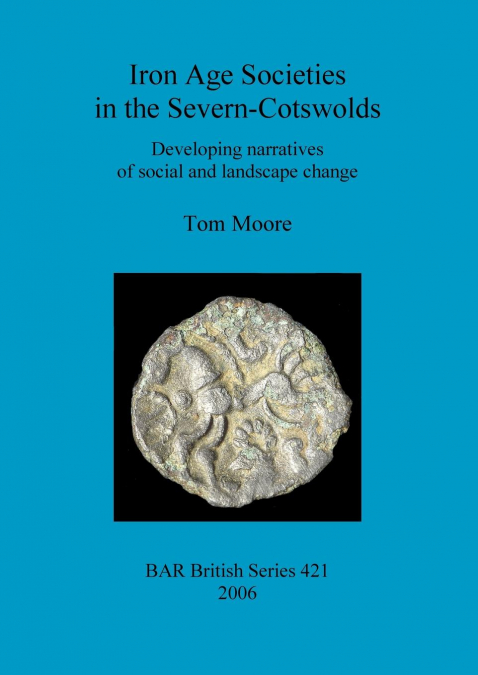
  • Iron Age Societies in the Severn-Cotswolds
    Tom Moore
    The central theme of this study is an examination of the processes of change in Iron Age social organisation and identity on a regional scale using the Severn-Cotswolds area in England as a case study. It aims to provide a coherent narrative of the period in the region based on the wealth of current data now available, providing a basic storyboard against which future studies c...
    Disponible

    144,57 €

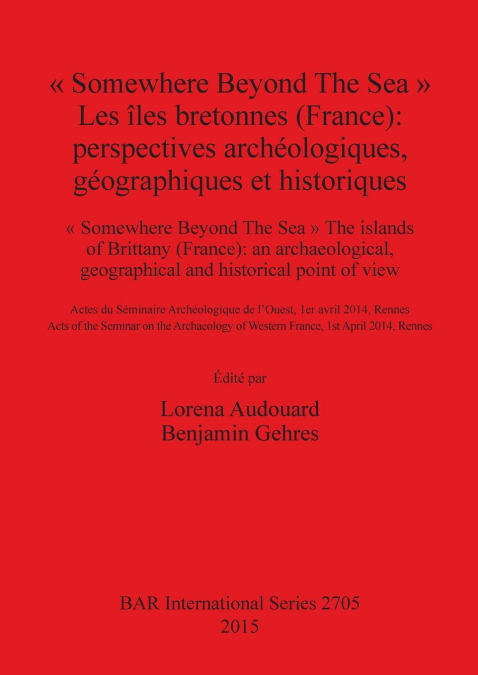
  • Somewhere Beyond The Sea Les îles bretonnes (France)
    The Seminar on the Archaeology of Western France, which focused on the islands of Brittany, was held on 1 April 2014 at the University of Rennes 1. The desire to organize this seminar arose spontaneously from the dynamism which currently animates archaeological research on island spaces of the western seaboard of France. Indeed, the seminar took place during a pivotal period of...
    Disponible

    86,11 €

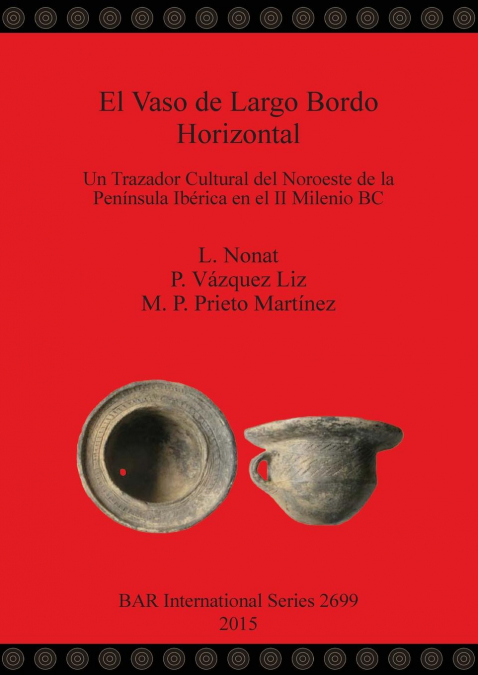
  • El Vaso de Largo Bordo Horizontal
    L. Nonat / LNonat / M. P. Prieto Martínez / MPPrieto Martínez / P. Vázquez Liz / PVázquez Liz
    In this paper the authors study a specific type of pottery from the northwest Iberian Peninsula, known as the Wide Horizontal Rim (WHR) vessel. One of its distinctive aspects is precisely the fact that it is exclusively found in this region, which now comprises the Spanish region of Galicia and northern Portugal, as far south as the River Duero. This type of pottery, of which t...
    Disponible

    115,71 €

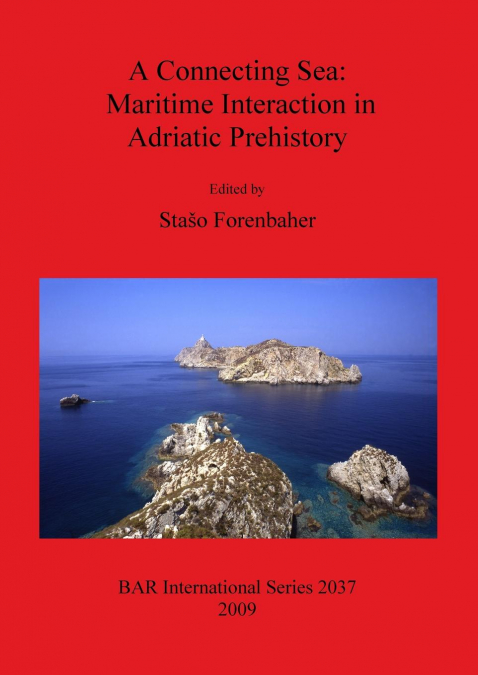
  • A Connecting Sea
    Stašo Forenbaher
    This book includes papers stemming from a session at the EAA conference held in Zadar in September 2007.                          ...
    Disponible

    79,97 €

  • The Roman Pottery Production Site at Wickham Barn, Chiltington, East Sussex
    Chris Butler / Malcolm Lyne
    The excavations undertaken at Chiltington in East Sussex revealed two Roman pottery kilns, as well as remains from prehistory and from medieval period.The kilns are well documented, and all the finds were examined and catalogued. Three phases were identified. The pottery produced on the site indicate a strong New Forest influence. ...
    Disponible

    55,62 €

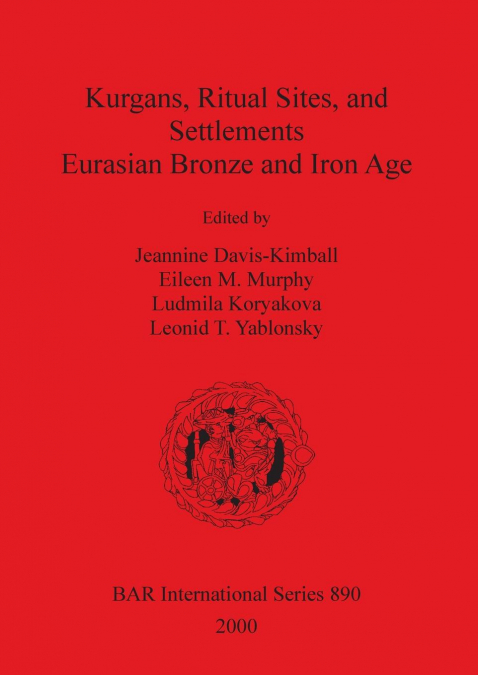
  • Kurgans, Ritual Sites, and Settlements
    Edited by: Jeannine Davis-Kimball, Eileen M. Murphy, Ludmila Koryakova and Leonid T. YablonskyThis richly illustrated volume adds immensely to the small but growing corpus of Eurasian Archaeology published in the English language. Comprised of thirty articles, the authors have focused on the Bronze Age, continuing to include the first millennium BC Early Iron Age, with a termin...
    Disponible

    158,26 €

Otros libros del autor

  • The Sunken City
    Hui Wang
    Atlantis was built to endure. Beneath its towers, temples, and royal chambers, an older machinery still breathes-one tied to forbidden gates, buried protocols, and a promise of survival that no one dares examine too closely. When Lacian Viseran, a structural apprentice from the Harbor District, uncovers what the city is truly feeding on, the question is no longer how Atlantis s...
    Disponible

    24,52 €

  • The Sunken City
    Hui Wang
    Atlantis hangs above the abyss on pillars of stone and calibrated light, a city of law, ritual, and colossal engineering where every failure is recorded, explained, and buried. When structural calibration apprentice Lacian Viseran witnesses a cold white light rising from beneath the sea-and then finds a gap in the city’s own physical readings that should be impossible-he makes ...
    Disponible

    27,62 €

  • The Sunken City
    Hui Wang
    Atlantis was built to defy death-and to make its bargains look holy.Beneath its white towers and ritual law, the city runs on older machinery: sealed vaults, revised oaths, vanished records, and a promise no one dares examine too closely. When Lacian Viseran slips into the Royal Vault on a covert errand, he expects danger. He does not expect to uncover evidence that the most sa...
    Disponible

    27,72 €

  • Modern Europe
    Hui Wang
    Modern Europe: Europe in History, PART TWO, is my attempt to trace one of the most dramatic transformations in political history - the long, turbulent arc by which Europe moved from revolutions and empires toward systems of representation and the idea of universal suffrage. The story opens amid the chaos of the French Revolution: from the fall of Maximilien Robespierre in the T...
    Disponible

    23,30 €

  • Modern Europe
    Hui Wang
    Modern Europe: Europe in History, PART ONE, is my attempt to guide readers through the dramatic transformation of France from a Bourbon monarchy into a revolutionary republic. I begin with Henry IV (reigned 1589-1610 CE), the founder of Bourbon rule in France, then turn to Cardinal Richelieu-chief minister to Louis XIII (serving roughly 1624-1642 CE)-and the early consolidation...
    Disponible

    23,34 €

  • Early Modern Europe
    Hui Wang
    Early Modern Europe: Europe in History, PART TWO, is where I guide you into the turning point of a continent caught between empire and belief. The story opens with giants of the age-Charles V, Ferdinand, and Philip II-rulers who straddled old feudal orders and rising confessional conflicts. These were men who tried to hold together a fragile world of layered loyalties even as r...
    Disponible

    26,44 €