 Librería Samer Atenea
 Kálamo Books
 Librería Elías (Asturias)
 Librería Kolima (Madrid)
 Librería Proteo (Málaga)
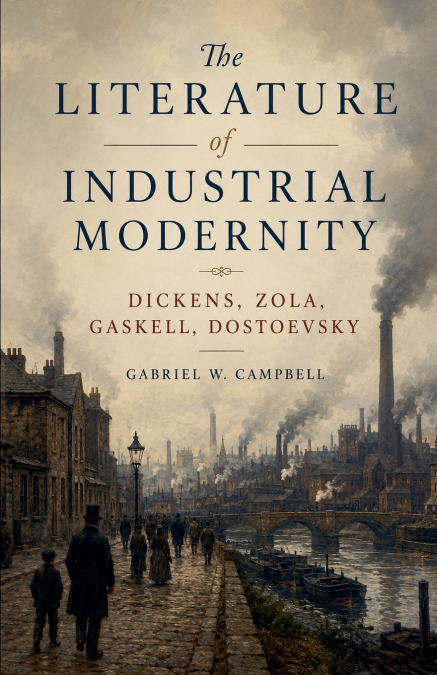
Industrial modernity announces itself not as a single event but as a profound reorientation of human experience, a transformation so extensive that it reshapes how societies imagine themselves and how individuals understand their place within the world. The nineteenth century becomes the crucible of this transformation, the moment when mechanization, urban expansion, new class formations, and shifting moral and epistemological frameworks converge to produce a radically altered social landscape. Literature, always sensitive to the tremors of historical change, becomes one of the most powerful instruments for registering, interpreting, and contesting these developments. The novel in particular-flexible, capacious, and attuned to the textures of everyday life-emerges as a privileged site for exploring the contradictions and possibilities of industrial modernity. This book examines four writers who, in different national contexts and through distinct aesthetic strategies, grapple with the upheavals of the industrial age: Charles Dickens, Elizabeth Gaskell, Émile Zola, and Fyodor Dostoevsky. Each stands at a critical juncture in the literary history of modernity.