
Inicio > Humanidades > Historia > The Emergence of Scientific Societies in the Seventeenth Century
The Emergence of Scientific Societies in the Seventeenth Century

The Emergence of Scientific Societies in the Seventeenth Century

Gabriel W. Campbell

21,26 €
IVA incluido
Disponible
Editorial:
Colloquium
Año de edición:
2026
Materia
Historia
ISBN:
9798235601284
21,26 €
IVA incluido
Disponible

Selecciona una librería:

  • Librería Samer Atenea

  • Kálamo Books
  • Librería Elías (Asturias)
  • Librería Kolima (Madrid)
  • Librería Proteo (Málaga)

The emergence of scientific societies in the seventeenth century marked a profound transformation in the organization of knowledge, yet this development cannot be understood without first appreciating the intellectual world that preceded it. Before formal institutions such as the Royal Society or the Académie Royale des Sciences appeared, the pursuit of natural knowledge unfolded within a mosaic of traditions-humanist scholarship, artisanal expertise, courtly inquiry, and scholastic philosophy-each with its own norms, authorities, and social structures. These traditions were vibrant and often sophisticated, but they lacked the durable, collective, and self-conscious institutional forms that later became emblematic of scientific culture. To understand why scientific societies emerged when they did, one must begin with the problem of scientific community itself: how knowledge was produced, shared, validated, and preserved in a world without stable scientific institutions.


Artículos relacionados

  • Raising Freedom's Banner
    Paul Harris
    World wide history of peaceful street demonstrations from their earliest beginning in eighteenth century England to their use throughout the world in the twenty-first century. Describes why some demonstration movements succeeded and others failed. Contrasts demonstrations within the law with civil disobedience demonstrations. Describes Peterloo, the Chartists, the Suffragettes,...
    Disponible

    23,59 €

  • Waipi’o Valley
    Jeffrey L. Gross
    Waipi’o Valley: A Polynesian Journey from Eden to Eden recounts the remarkable migrations of the Polynesians across a third of the circumference of the earth. Their amazing journey began from Kalana i Hau’ola, the biblical “Garden of Eden” located along the shore of the Persian Gulf, extended to the Indus River Valley of ancient Vedic India, to Egypt where some ancestors of the...
  • Floralia
    June Rainsford Butler
    A century characterized by a growing interest in science, the opportunity for travel, and leisure for gardening furnishes the setting for Butler’s book. The rise of landscape gardening in England is traced, and the origin and history of its most famous gardens are given. The close relation between England and America in the field of horticulture is also discussed.Originally pub...
    Disponible

    61,20 €

  • President Wilson’s Addresses
    Woodrow Wilson
    'These addresses of President Woodrow Wilson are almost entirely concerned with political affairs, and more specifically with defining Americanism. Yet they also show that even as he moved from academia to the heights of politics, Wilson retained something of the teacher’s interest in showing the relation between specific instances and the general forms of thought or action of ...
  • The Story of my Life
    John Albert Macy
    The Story of My Life, is Helen Keller’s autobiography detailing her early life, especially her experiences with Anne Sullivan. The book is dedicated to inventor Alexander Graham Bell. The dedication reads, 'To ALEXANDER GRAHAM BELL Who has taught the deaf to speak and enabled the listening ear to hear speech from the Atlantic to the Rockies, I dedicate this Story of My Life.' ...
  • The Story of My Life Vol. 6 Spanish Passions
    Giacomo Casanova
    Casanova was an Italian adventurer and author from the Republic of Venice. His autobiography, Histoire de ma vie (Story of My Life), is regarded as one of the most authentic sources of the customs and norms of European social life during the 18th century. He has become so famous for his often complicated and elaborate affairs with women that his name is now synonymous with 'wom...

Otros libros del autor

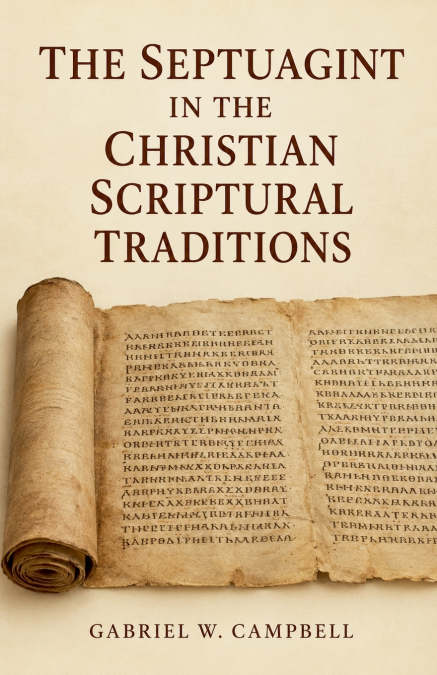
  • The Septuagint in the Christian Scriptural Traditions
    Gabriel W. Campbell
    Among the many texts that have shaped the history of Judaism and Christianity, few have exercised an influence as profound and enduring as the Septuagint. Often designated by the Roman numeral LXX, in reference to the ancient tradition that seventy or seventy-two translators participated in its creation, the Septuagint represents the earliest substantial translation of Hebrew s...
    Disponible

    20,99 €

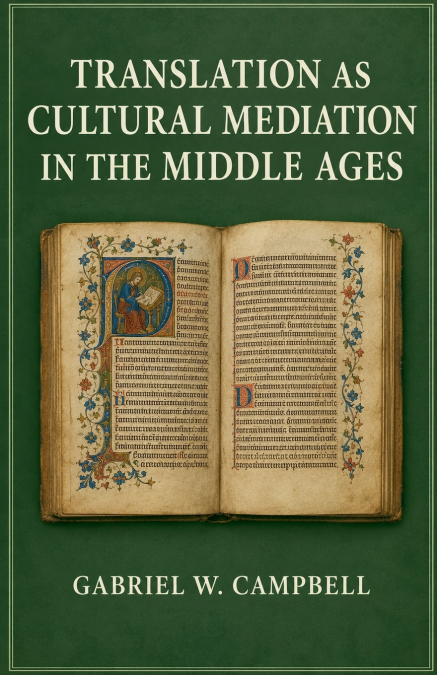
  • Translation as Cultural Mediation in the Middle Ages
    Gabriel W. Campbell
    For much of modern scholarship, translation has been understood primarily as the act of rendering a text from one language into another. Such a definition, while useful in its simplicity, proves inadequate when applied to the complex realities of the medieval world. Between the fifth and the fifteenth centuries, translation functioned not merely as a linguistic operation but as...
    Disponible

    20,90 €

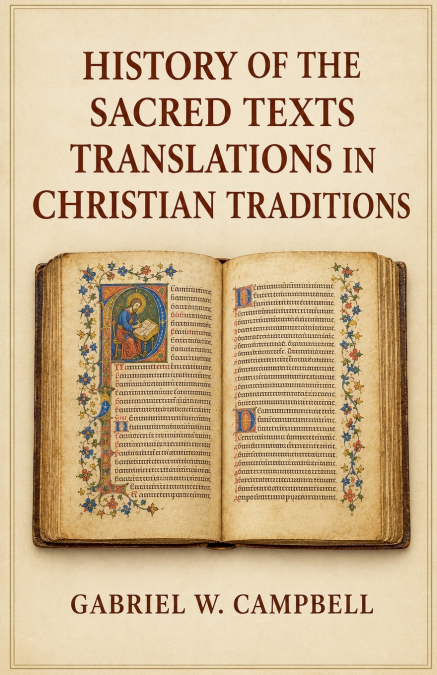
  • History of the Sacred Texts Translations in Christian Traditions
    Gabriel W. Campbell
    The history of Christianity is inseparable from the history of translation. From its earliest centuries, the Christian faith developed as a multilingual movement that crossed ethnic, geographic, and cultural boundaries with remarkable speed. Unlike religious traditions that remained closely tied to a single sacred language, Christianity emerged at the intersection of several li...
    Disponible

    21,00 €

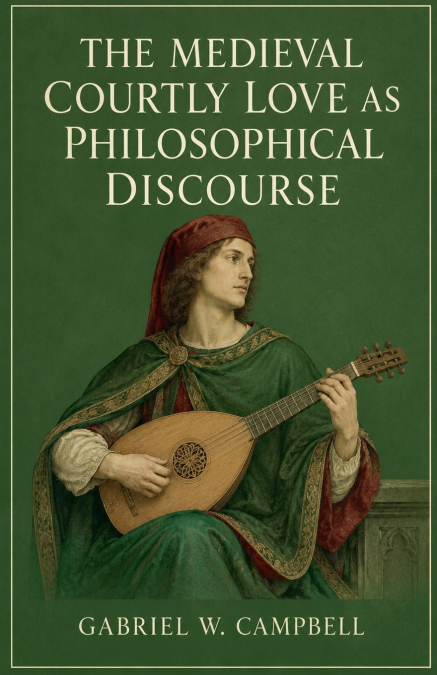
  • The Medieval Courtly Love as Philosophical Discourse
    Gabriel W. Campbell
    For more than two centuries, scholars have debated the nature and significance of medieval courtly love. Was it merely a literary convention developed for aristocratic entertainment? Was it a social code governing relations between noble men and women? Was it an elaborate poetic fiction, detached from lived experience? Or did it embody a deeper intellectual project, one that so...
    Disponible

    21,03 €

  • Medieval Catalan Literature Between Beauty and Wisdom
    Gabriel W. Campbell
    The literature produced in the territories of the medieval Crown of Aragon occupies a singular position within the cultural history of Europe. Situated at the crossroads of Latin Christendom, the Islamic Mediterranean, and the Jewish intellectual world, medieval Catalan literature emerged from a dynamic environment in which political expansion, commercial activity, religious di...
    Disponible

    21,00 €

  • The Lady as Moral Authority in the Middle Ages
    Gabriel W. Campbell
    The history of authority in medieval Europe has often been written in the language of offices, institutions, jurisdictions, and legally recognized powers. Kings ruled kingdoms, bishops governed dioceses, lords exercised jurisdiction over lands and dependents, and clerics occupied positions within an ecclesiastical hierarchy that generally excluded women from sacramental office....
    Disponible

    22,96 €