 Librería Samer Atenea
 Kálamo Books
 Librería Elías (Asturias)
 Librería Kolima (Madrid)
 Librería Proteo (Málaga)
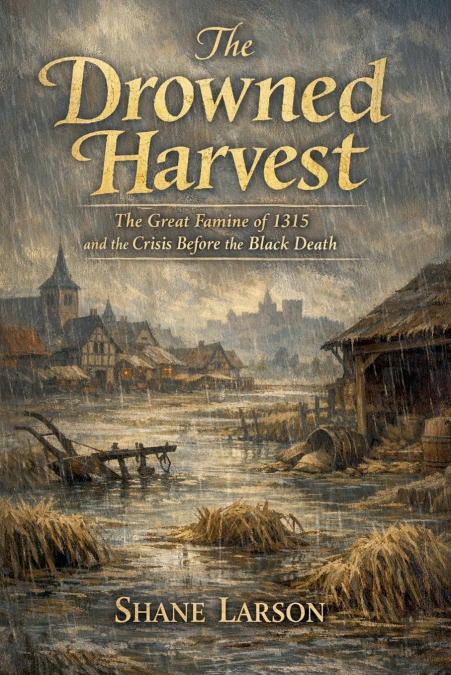
On 10 August 1315 the king of England stopped at St Albans, and his household could not find bread to buy.Edward II was not poor. His officers had money, authority and the right to take food for the court at a price they set. They were in a market town on the main road out of London, in the week the harvest should have come in. There was no bread because there was very nearly no harvest. It had been raining since the middle of May, across northern Europe from Ireland to Poland, and it did not properly stop for two years.The Great Famine of 1315-1317 struck the richest, most commercial, best-documented Europe there had ever been: a continent of cloth towns, letters of credit and manorial accountants who recorded every bushel. None of it helped. Grain rotted standing in the fields, hay could not be dried, salt pans would not evaporate, and a French army invading Flanders sank into the mud and went home. In six months of 1316 the town of Ypres paid to clear 2,794 bodies from its streets, perhaps a tenth of its people. Then the sheep died, and from 1319 the cattle. Across the northern zone something like one person in ten may have died. That figure is built from fragments, and the book says so every time it uses one.Thirty-two years after the rain began, the plague reached Messina. The skeletons from London’s emergency plague cemetery now suggest it killed hardest among the adults who had been hungry children in 1316. The famine is usually a paragraph at the start of a Black Death book. This is the book that paragraph stands in for.What you’ll learn:Why a market economy spread the shortage faster than it could cure it, and why fixing prices by royal decree emptied the stalls within monthsHow the famine is counted: Flemish burial payments, a Yorkshire priory’s account rolls, English price series and gaol records, weighed against the chroniclers’ set-piecesHow a Scottish invasion of Ireland and the raiding of northern England fed on the hunger, and the hunger on the warWhy the cattle plague of 1319 may have done more lasting damage than the failed harvestsHow fear found its targets in the Shepherds’ Crusade of 1320 and the well-poisoning panic of 1321What tree rings, ice cores and a solar minimum can and cannot say about why it rainedWhy Europe never regained the ground it lost, and what the bones of East Smithfield record about the famine generationThis book is for you if:You have read about the Black Death and wondered what Europe looked like in the thirty years before itYou want medieval history told through ordinary people and their account books, not only kings and battlesYou read climate history and want the end of the medieval warm centuries as the people under the rain lived itYou prefer a writer who tells you which numbers are solid and which are a monk’s guessThe children who survived the famine were the adults the plague killed. This is where the Black Death begins.