 Librería Samer Atenea
 Kálamo Books
 Librería Elías (Asturias)
 Librería Kolima (Madrid)
 Librería Proteo (Málaga)
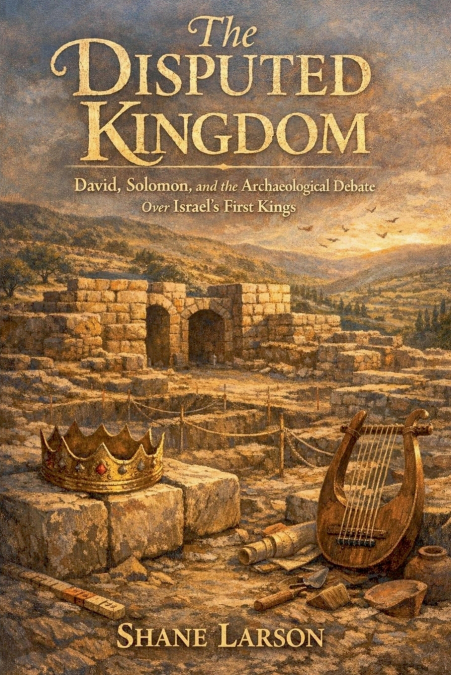
The first evidence outside the Bible that King David existed was carved by an enemy, boasting that he had killed two of David’s descendants.In July 1993 a surveyor at Tel Dan noticed letters on a basalt stone built into a wall. It was a victory inscription in Aramaic, set up by a king of Damascus, almost certainly Hazael, in the 840s or 830s BC, and among its surviving words was one no one had seen outside scripture: bytdwd, the House of David. Until then, no text anywhere had named him. The stone settled one argument: a dynasty in Jerusalem traced itself to a founder called David, and its enemies took the name for granted.It opened a larger one. The Bible describes a kingdom from Dan to Beersheba, with a palace, a temple, and fortified cities at Hazor, Megiddo and Gezer. One school of archaeologists found that kingdom in the six-chambered gates and ashlar palaces of the north. In 1996 another redated those gates by about a century, gave them to the later kings of Omri’s house, and read David’s Jerusalem as a highland town. Radiocarbon was supposed to decide it, and instead narrowed the gap to a few decades, and a few decades is the whole fight: a gate founded in the 950s belongs to a king of Jerusalem, the same gate founded in the 880s to a king of Samaria. Then a fortified town above the Valley of Elah, dated by olive pits to around 1000 BC, gave both sides something new to argue about. Everyone agrees on its date. No one agrees on who built it.This book reports that debate rather than joining it. It tells the story as the books of Samuel and Kings tell it, then follows the evidence site by site: the inscriptions from Dan, Moab and Karnak; the stables that may not be stables; the palace that may not be a palace; the calibration curve that flattens in the wrong century; the copper camps run by people who lived in tents; and the forged inscriptions bought on the antiquities market. Each camp is presented at full strength, with no proof framing and no debunking framing. The religious meaning of David does not stand or fall on a gate at Megiddo.What you’ll learn:What the Tel Dan stele says, which words are restored, and why 'House of David' became the consensus readingWhy the same gate at Megiddo is Solomon’s or Ahab’s depending on where a century of pottery is placedWhy radiocarbon narrowed the dispute to decades without ending itWhy ancient Jerusalem is the hardest site to read, and what a 2024 radiocarbon program changedWhy Khirbet Qeiyafa can be dated to within a generation and still not given a builderHow copper camps at Timna, with almost no buildings, changed what counts as evidence of a kingdomWhat the forgery findings, and the trial that ended in acquittal in 2012, did to a field that wants written evidence badlyThis book is for you if:You read the Bible and want to know what archaeology has found, from a book that respects the text and the evidenceYou have seen 'archaeologists prove' or 'disprove' King David headlines and want the real state of the argumentYou like a scholarly feud with named sites, dated evidence and real stakesYou read ancient history and want the dating explained rather than assertedNot whether there was a David. What he ruled: a kingdom, or a hill town with a long memory.