
Inicio > Humanidades > Arqueología > The Burning of the Codices
The Burning of the Codices

The Burning of the Codices

Shane Larson

20,82 €
IVA incluido
Disponible
Editorial:
Peak Grizzly Publishing
Año de edición:
2026
Materia
Arqueología
ISBN:
9798907140653
20,82 €
IVA incluido
Disponible

Selecciona una librería:

  • Librería Samer Atenea

  • Kálamo Books
  • Librería Elías (Asturias)
  • Librería Kolima (Madrid)
  • Librería Proteo (Málaga)

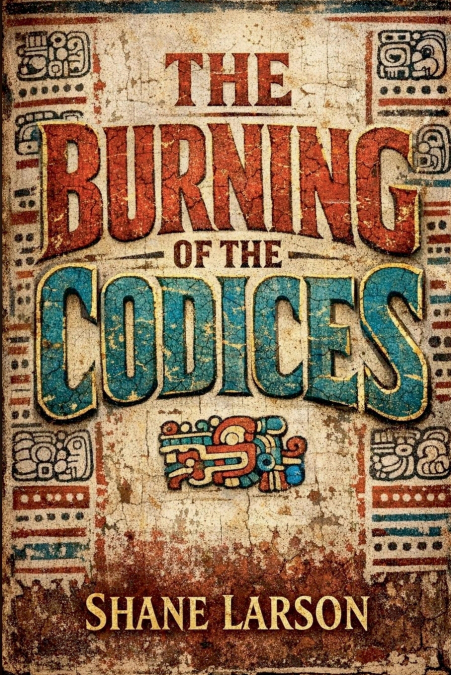
Four Maya books survive. He burned the rest-and then wrote the key that let us read them.The Maya wrote books. Real books: bark paper coated in white gesso, folded into screenfolds between wooden or jaguar-skin covers, painted in red, black, and Maya blue in a full writing system that recorded astronomy, prophecy, medicine, genealogy, and history. This was a civilisation with a paper industry, professional scribes, and books in the households of its priests and lords. Most readers have no idea-and that gap in common knowledge is itself the measure of how completely the erasure worked.In July 1562, in the Yucatán town of Maní, a Franciscan friar named Diego de Landa held an auto de fe. At the end of proceedings against Maya converts he believed were still practicing the old religion, the idols went into the fire-and so did the books. The great losses of written knowledge are usually legends: Alexandria has no arsonist, Baghdad has a myth. Maní has a date, a place, a named man, an inquiry file, and a written statement from the perpetrator himself, who recorded that the Maya regretted the burning 'to an amazing degree.'Then the story turns. Recalled to Spain to answer for the affair, Landa defended himself by writing the most detailed account of Maya life, religion, and calendar in existence-the Relación-and in it he recorded a garbled 'alphabet' dictated by an informant who was actually giving him syllables. Three centuries later, a linguist in Moscow read that list correctly and cracked the script. The man who burned the library also wrote the key to it.What you’ll learn:How Maya codices were made, who wrote them, and what a literate Mesoamerican civilisation kept in its booksWhat happened at Maní in July 1562, drawn from the colonial inquiry documents-and what Landa is and is not responsible forWhy only four codices survive-Dresden, Madrid, Paris, and the long-disputed Grolier-and how each reached the modern worldHow the Dresden Codex tracks Venus and predicts eclipses-and how close 1945 came to making four books threeWhy Landa’s 'alphabet' was nonsense as an alphabet and gold as a syllabaryHow Knorozov and Proskouriakoff overturned decades of expert consensus and pulled real kings, wars, and dynasties out of the stonesWhy six million people speak Mayan languages today-and how Maya epigraphers now read their ancestors’ inscriptionsThis book is for you if:You’re drawn to lost libraries, destroyed knowledge, and the question of what survivesYou love a decipherment story-a dead script slowly forced to speak againYou want conquest-era history told from the evidence, without apologia or polemicYou’ve wondered what the Maya actually wrote, beyond the calendar mythsYou prefer history that gives you the honest number instead of the dramatic oneA library burned in an afternoon. A language survived five centuries. This is the story of both-and of the strange, flawed document that let a civilisation’s voice be heard again.
Artículos relacionados

  • PHAROS
    Branko Kirigin
    This is the first detailed study in English of the Greek settlement of Pharos (Stari Grad) on the Croatian island of Hvar. This book presents life in Stari Grad (a Parian colony of the 4th c BC) and its nearby vicinity in the period occurring more than two millennia ago. The author employs methods used in prehistoric and classical archaeology, as well as data known from written...
    Disponible

    90,79 €

  • Paleolithic Zooarchaeology in Practice
    Understanding Paleolithic animal exploitation requires a multifaceted approach. Inferences may derive from research on paleoenvironments and taphonomy, the development of new methods for interpreting seasonality patterns, and ethnoarchaeological observations. A full understanding of Paleolithic economies also requires a multiregional perspective. This volume brings together a g...
    Disponible

    55,20 €

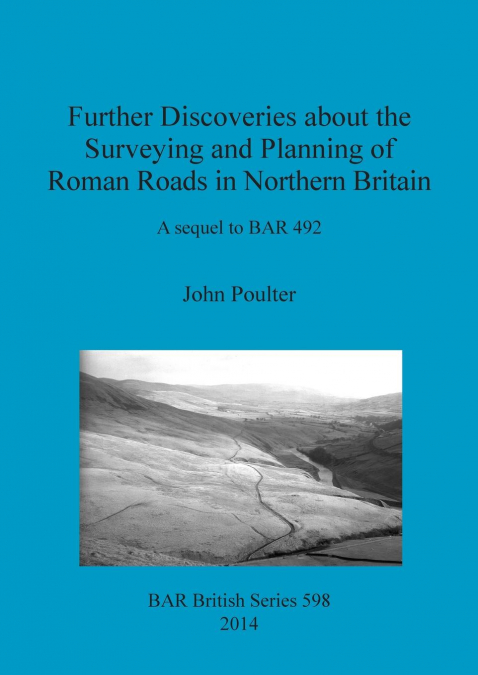
  • Further Discoveries about the Surveying and Planning of Roman Roads in Northern Britain
    John Poulter
    The research reported in this monograph follows on directly from the findings that were reported in BAR 492, in which, among many other discoveries, the author recognised that the courses of both Roman Dere Street and Hadrian’s Wall had been underpinned by frameworks of long-distance alignments. Stimulated by the detection of several more of these alignments across northern Eng...
    Disponible

    65,21 €

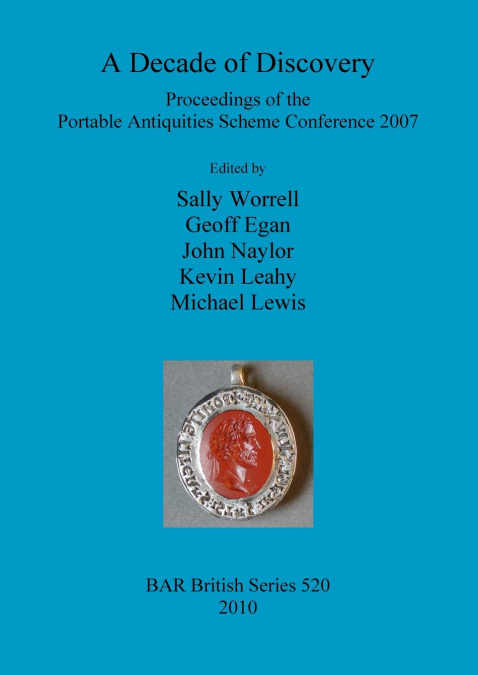
  • A Decade of Discovery
    Edited by Sally Worrell, Geoff Egan, John Naylor, Kevin Leahy and Michael Lewis.In 2007 the Portable Antiquities Scheme (PAS) marked its tenth anniversary by holding a conference at which speakers, both from within the Scheme and outside gave a series of papers that demonstrated the research potential of recording finds of archaeological objects made by members of the public. T...
    Disponible

    117,84 €

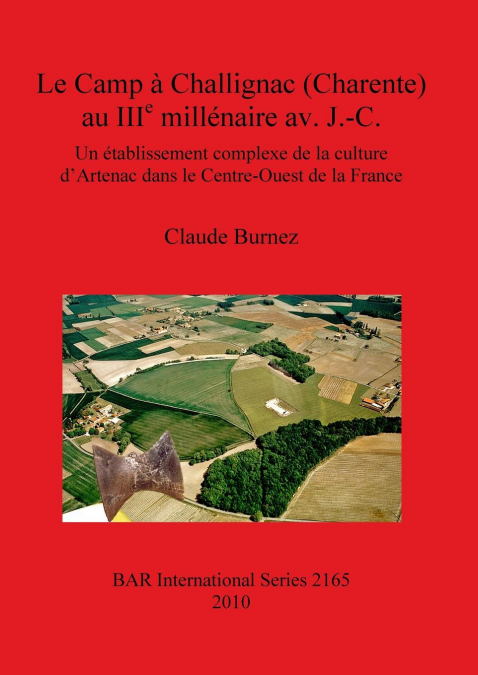
  • Le Camp à Challignac (Charente) au IIIe millénaire av. J.-C.
    Claude Burnez
    Un établissement complexe de la culture d’Artenac dans le Centre-Ouest de la FranceThis fortified enclosure has been known since the middle of the 19th century, but the size and the state of preservation (with the height of the rampart estimated optimistically at 10 metres!) suggested an attribution to the Gallo-Romans or a 'Camp des Anglais'. Extensive woodland covered...
    Disponible

    238,69 €

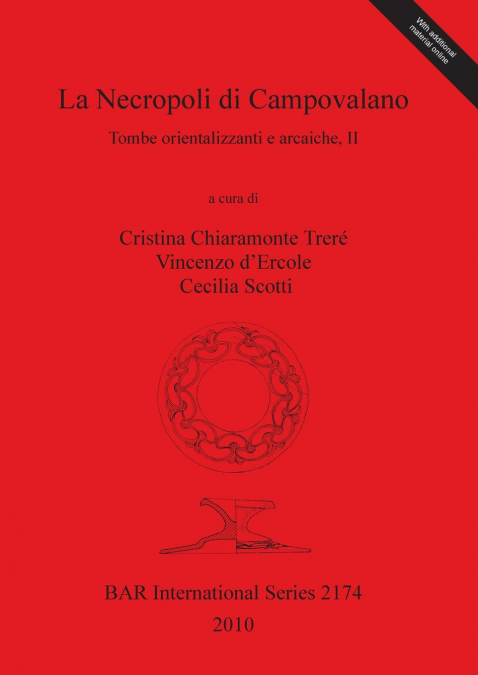
  • La Necropoli di Campovalano
    This volume, investigating the necropolis and sequences of 607 tombs, completes the publication of the site of Campovalano (predominately Late BA to 5th BC) in the region of Teramo, the northernmost province of Abruzzo, Italy (see BAR 1177, 2003). The finds include important oriental style archaic material.Contributions from: Giorgio Baratti, Carla Buoite, Cristina Chiaramonte ...
    Disponible

    220,16 €

Otros libros del autor

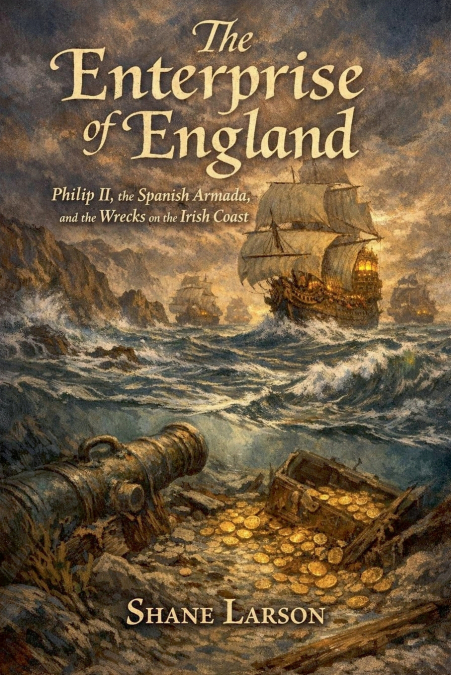
  • The Enterprise of England
    Shane Larson
    The English did not sink the Spanish Armada. Nine days of fighting up the Channel and the battle off Gravelines cost the fleet three ships to English gunnery, perhaps four. Most of its losses came afterwards, on the way home, and more Spaniards died on the coast of Ireland than in every engagement of the campaign put together.The story everyone knows ends at Gravelines, with Dr...
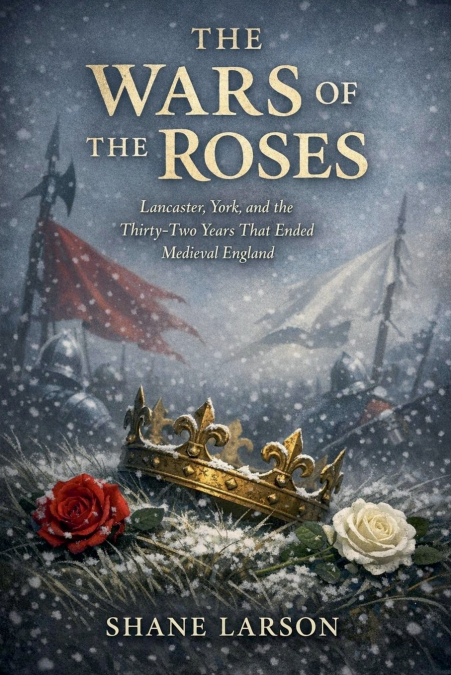
  • The Wars of the Roses
    Shane Larson
    Nobody who fought in the Wars of the Roses called them that. The name was settled by the Victorians, the red rose was supplied after the fighting was over, and the garden where the nobles pluck their roses was written by Shakespeare.What happened was harder and stranger. In August 1453 Henry VI, a gentle, devout king who could not decide things, stopped responding to the world ...
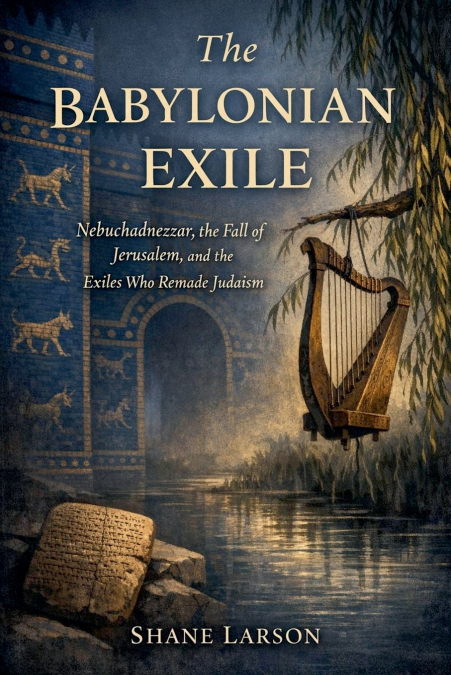
  • The Babylonian Exile
    Shane Larson
    The last king of Judah turns up, in the archaeological record, on a Babylonian ration list: oil for himself and his five sons.In 597 BC Nebuchadnezzar took Jerusalem and carried off its king, its craftsmen and a young priest named Ezekiel. Ten years later the city rebelled, was starved, breached and burned, and the temple of Solomon went with it. The exile is usually told as a ...
  • White Island
    Shane Larson
    They tried to fly a balloon to the North Pole in 1897. Their film was developed in 1930.On 11 July 1897 three Swedes rose from an island off Spitsbergen in a hydrogen balloon named the Eagle. The drag ropes that were supposed to steer it unscrewed and fell off in the first minutes. Sixty-five hours later S. A. Andrée, Nils Strindberg and Knut Frænkel were down on the pack ice, ...
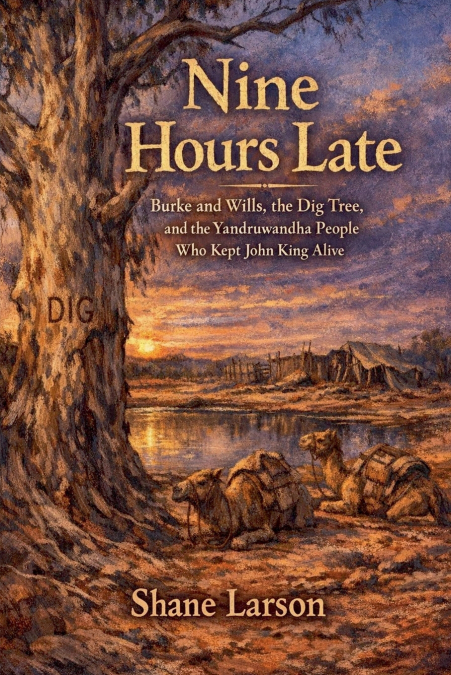
  • Nine Hours Late
    Shane Larson
    The best-equipped expedition in Australian history starved to death in a place where people were living well.On the evening of 21 April 1861, Robert O’Hara Burke, William John Wills and John King reached their depot on Cooper Creek after four months and more than 1,500 miles, most of it on foot. They had reached the tidewater of the Gulf of Carpentaria and come back. The camp w...
    Disponible

    20,99 €

  • The Borgia Legend
    Shane Larson
    The Borgias are the most famous poisoners in history. Not one poisoning can be proved against them.The incest rumour began with a husband the family was forcing to swear, in public, that he was impotent. The legendary poison, cantarella, is first named by a writer working decades after the pope who supposedly used it was dead. Lucrezia Borgia, history’s emblematic murderess, ca...
    Disponible

    20,91 €