
The Book of Tea

The Book of Tea

Okakura Kakuzō

22,02 €
IVA incluido
Disponible
Editorial:
Les prairies numériques
Año de edición:
2026
Materia
Historia de Asia
ISBN:
9791043136924
22,02 €
IVA incluido
Disponible

Selecciona una librería:

  • Librería Samer Atenea

  • Kálamo Books
  • Librería Elías (Asturias)
  • Librería Kolima (Madrid)
  • Librería Proteo (Málaga)

The Book of Tea (茶の本, Cha no Hon)[1] by Okakura Kakuzō is a long 1906 essay linking the role of chadō (teaism) to the aesthetic and cultural aspects of Japanese life and protesting Western caricatures of 'the East'.Addressed to a Western audience, it was originally written in English and is one of the great English tea classics. Okakura had been taught at a young age to speak English and was proficient at communicating his thoughts to the Western mind. In his book, he discusses such topics as Zen and Taoism, but also the secular aspects of tea and Japanese life. The book emphasizes how Teaism - a term he coined as an analogue to chadō - taught the Japanese many things, the most important of which were simplicity and humility:It (Teaism) inculcates purity and harmony, the mystery of mutual charity, the romanticism of the social order. It is essentially a worship of the Imperfect, as it is a tender attempt to accomplish something possible in this impossible thing we know as life.[This, Okakura believed, was an aesthetic that should inform everything from the arts and architecture to daily life and was already informing them in Japan.In his 'sleek complacency', however, the Westerner tended to see in the tea ceremony only 'another instance of the thousand and one oddities which constitute the quaintness and childishness of the East to him'. Writing in the aftermath of the Russo-Japanese War, Kakuzō commented that the Westerner regarded Japan as 'barbarous while she indulged in the gentle arts of peace', and began to call her civilized only when 'she began to commit wholesale slaughter on the Manchurian battlefields'.[3]In the book, Kakuzō states that Teaism, in itself, is one of the profound universal remedies in which conflicting parties might find reconciliation. He ends the book with a chapter on Tea Masters and spends some time talking about Sen no Rikyū and his contribution to the Japanese tea ceremony.[4]According to Tomonobu Imamichi, Heidegger’s concept of Dasein in Sein und Zeit was inspired - although Heidegger remained silent on this - by Okakura Kakuzō’s concept of das-in-der-Welt-sein (being-in-the-worldness) expressed in The Book of Tea to describe Zhuangzi’s philosophy, which Imamichi’s professor Ito Kichinosuke had offered to Heidegger in 1919, after having followed private lessons with him the year before:[Ito Kichinosuke, one of my teachers at university, studied in Germany in 1918 immediately after the First World War and hired Heidegger as a private tutor. Before moving back to Japan at the end of his studies, Professor Ito handed Heidegger a copy of Das Buch vom Tee, the German translation of Okakura Kakuzo’s The Book of Tea, as a token of his appreciation. That was in 1919. Sein und Zeit (Being and Time) was published in 1927 and made Heidegger famous. Mr. Ito was surprised and indignant that Heidegger used Zhuangzi’s concept without giving him credit. Years later in 1945, Professor Ito reminisced with me and, speaking in his Shonai dialect, said, 'Heidegger did a lot for me, but I should’ve laid into him for stealing'. There are other indications that Heidegger was inspired by Eastern writings, but let’s leave this topic here. I have heard many stories of this kind from Professor Ito and checked their veracity. I recounted this story at a reception held after a series of lectures I gave in 1968 at the University of Heidelberg at the invitation of Hans-Georg Gadamer. Japanese exchange students attended these lectures, and I explained that there were many other elements of classical Eastern thought in Heidegger’s philosophy and gave some examples. I must have said too much and may even have said that Heidegger was a plagiarist (Plagiator).
Artículos relacionados

  • Understanding Aikido
    Jan J Sunderlin
    Understanding Aikido: Essential Information and Perceptions (Special Edition) presents an historical, cultural, and philosophical look at the development of the Japanese martial art of Aikido. Sunderlin focuses on the influences brought to bear on Morihei Ueshiba, the founder of Aikido, and the subsequent cultivation of the latter's martial art as a vessel of Budo. The author a...
  • Not by Love Alone
    Margaret Mehl
    Suzuki Shin'ichi, the Tokyo String Quartet, Midori - How did Japanese violinists manage to revolutionize violin teaching, win international competitions, conquer Western concert stages, study at world-famous conservatoires and take up positions in leading orchestras and prestigious music faculties? What enabled the Japanese to master Western classical music within a few decades...
    Disponible

    29,32 €

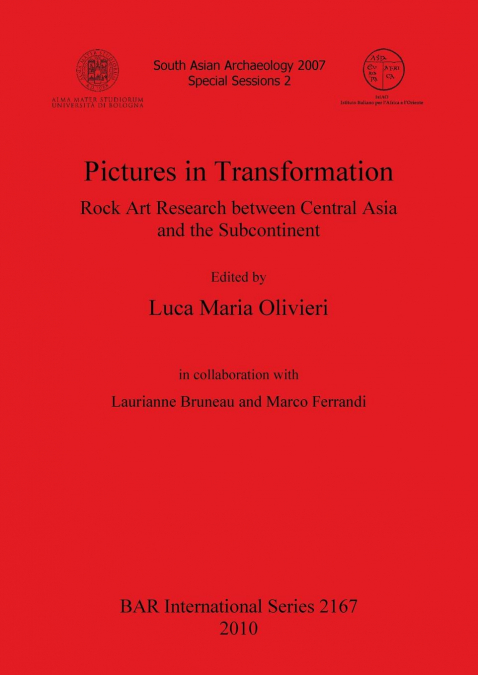
  • Pictures in Transformation
    Luca Maria Olivieri
    ...
    Disponible

    54,79 €

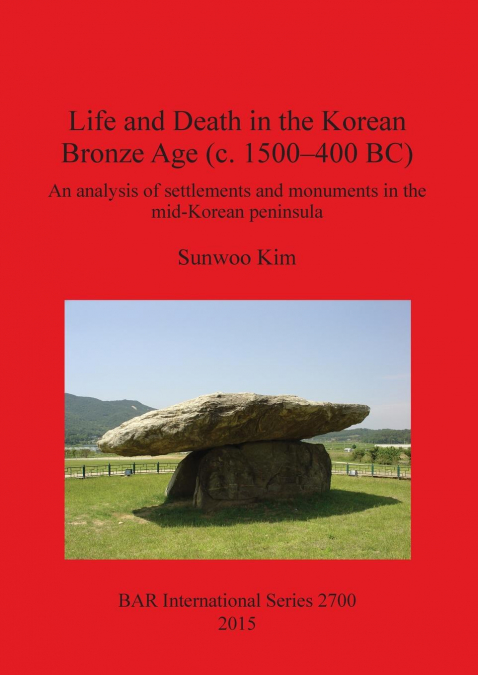
  • Life and Death in the Korean Bronze Age (c. 1500-400 BC)
    Sunwoo Kim
    This research focuses on the Bronze Age in selected areas of Korea; Seoul, Incheon, and Gyeonggi province. Two forms of evidence - settlements and monuments - are taken into account to identify their relationship with landscape and the social changes occurring between ca. 1500 to 400 cal BC. Life and death in the Bronze Age in Korea has not been synthetically investigated befor...
    Disponible

    108,34 €

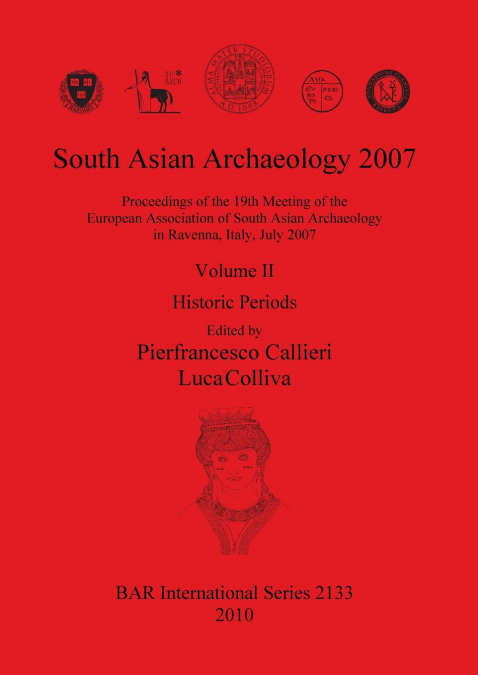
  • South Asian Archaeology 2007
    Proceedings of the 19th Meeting of the European Association of South Asian Archaeology in Ravenna, Italy, July 2007.                     ...
    Disponible

    182,04 €

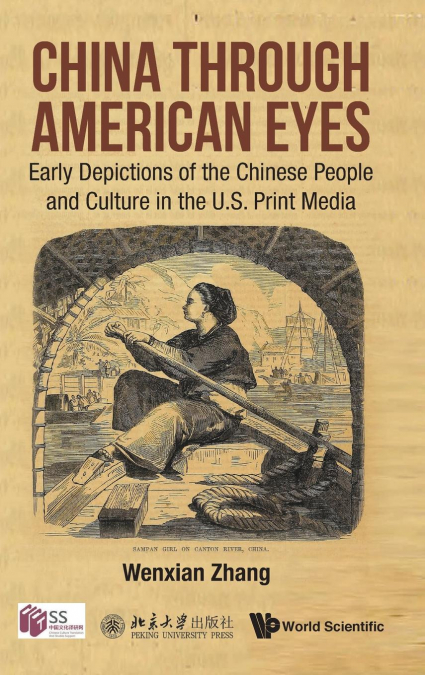
  • CHINA THROUGH AMERICAN EYES
    Wenxian Zhang / ZHANG WENXIAN
    Cultural understanding between the United States and China has been a long and complex process. The period from the mid-nineteenth century to the early twentieth century is not only a critical era in modern Chinese history, but also the peak time of illustrated news reporting in the United States. Besides images from newspapers and journals, this collection also contains pictur...

Otros libros del autor

  • The Book of Tea
    Okakura Kakuzō
    This illustrated edition includes carefully selected illustrations, a detailed summary, an author biography, and a comprehensive character list.The Book of Tea by Okakura Kakuzō, first published in 1906, is a philosophical essay that explores the aesthetic and cultural significance of the Japanese tea ceremony, known as 'chanoyu.' The book examines tea culture as a way of life ...
    Disponible

    22,82 €

  • The Book of Tea
    Okakura Kakuzo
    The Book of Tea by Okakura Kakuzō is a reflective essay that uses the Japanese tea ceremony to explain East Asian philosophy and aesthetics. Okakura contrasts Eastern values-simplicity, harmony with nature, imperfection, and spiritual depth-with Western materialism and rationalism. Through discussions of art, architecture, Zen Buddhism, and daily life, he presents tea as a way ...
    Disponible

    7,30 €

  • The Book of Tea
    Okakura Kakuzo
    The Book of Tea by Okakura Kakuzō is a reflective essay that uses the Japanese tea ceremony to explain East Asian philosophy and aesthetics. Okakura contrasts Eastern values-simplicity, harmony with nature, imperfection, and spiritual depth-with Western materialism and rationalism. Through discussions of art, architecture, Zen Buddhism, and daily life, he presents tea as a way ...
  • The Little Book of Tea
    Okakura Kakuzō
    An exquisite meditation on the Japanese tea ceremony, The Little Book of Tea by Okakura Kakuzō explores how something as simple as tea can express the deepest values of Japanese culture.What begins as an essay on the tea ceremony unfolds into a graceful philosophy of beauty, simplicity, and compassion. With each page, Kakuzō invites us to slow down, to see the sacred in the eve...
    Disponible

    22,68 €

  • The Book of Tea
    Okakura Kakuzō
    'The Book of Tea' by Okakura Kakuzō is a timeless classic that transcends cultural boundaries to offer profound insights into the art and philosophy of tea. Originally published in 1906, this elegant and thought-provoking work explores the significance of tea in Japanese culture and its influence on the world at large.Through eloquent prose and rich historical anecdotes, Okakur...
    Disponible

    8,08 €

  • The Book of Tea (Hardcover Library Edition)
    Okakura Kakuzo
    N/A ...