Inicio > Matemáticas y ciencia > Biologia, ciencias de la vida > Botánica y ciencias de las plantas > Technologischer Rückstand bei der Einführung des Anbaus von grünem Gras in Indien
Technologischer Rückstand bei der Einführung des Anbaus von grünem Gras in Indien

Technologischer Rückstand bei der Einführung des Anbaus von grünem Gras in Indien

Arvind Pratap Singh / R. K. Doharey / Rahul Kumar Singh

61,84 €
IVA incluido
Disponible
Editorial:
KS OmniScriptum Publishing
Año de edición:
2024
Materia
Botánica y ciencias de las plantas
ISBN:
9786207606405
61,84 €
IVA incluido
Disponible

Selecciona una librería:

  • Librería Samer Atenea
  • Librería Aciertas (Toledo)
  • Kálamo Books
  • Librería Perelló (Valencia)
  • Librería Elías (Asturias)
  • Donde los libros
  • Librería Kolima (Madrid)
  • Librería Proteo (Málaga)

Die Rolle von Hülsenfrüchten in der indischen Landwirtschaft muss kaum hervorgehoben werden Indien ist ein führendes Land im Anbau von Hülsenfrüchten. Hülsenfrüchte sind ein wichtiger Bestandteil der indischen Ernährung und decken einen großen Teil des Eiweißbedarfs ab. Hülsenfrüchte sind nicht nur reich an Proteinen und einigen essentiellen Aminosäuren, sondern bereichern auch den Boden durch symbiotische Stickstofffixierung aus der Atmosphäre. Moong (Green gram) ist hierzulande schon seit langem bekannt. Es soll eine der ältesten Hülsenfrüchte sein, die seit der Antike sowohl in Asien als auch in Europa angebaut wird. Nach Vavilov (1926) ist die Grüne Kichererbse in Indien und Zentralasien beheimatet. Trotz aller Bemühungen beklagt die Grüne Kichererbse ihre geringe Rentabilität. Dies könnte auf die Tatsache zurückzuführen sein, dass die benötigte Menge an grünem Gras aufgrund der niedrigen Produktivität geringer ist. Daher ist es dringend erforderlich, die Produktivität von Grünem Gras zu erhöhen, um einerseits die Bevölkerung in dem erforderlichen Umfang zu versorgen und andererseits seinen Wert im Vergleich zu den vorherrschenden Kulturen in dem Gebiet zu beweisen. Daher sollte die Technologie entwickelt und die Beschränkungen für die verschiedenen Kategorien von Landwirten verringert werden.

Artículos relacionados

  • The Green Architecture
    Ali Mirshafieyan / Ghazal Yeganeh / Maryam Zamani Motlagh
    Protecting green energy as well as non-renewable energy, as well as their sustainable use, many advances in the technology of extracting oil products and other reserves under the ground have caused many improvements. In this regard, proposing the design of buildings in which the consumption of fossil fuels reaches its lowest level is considered one of the important solutions in...
    Disponible

    82,54 €

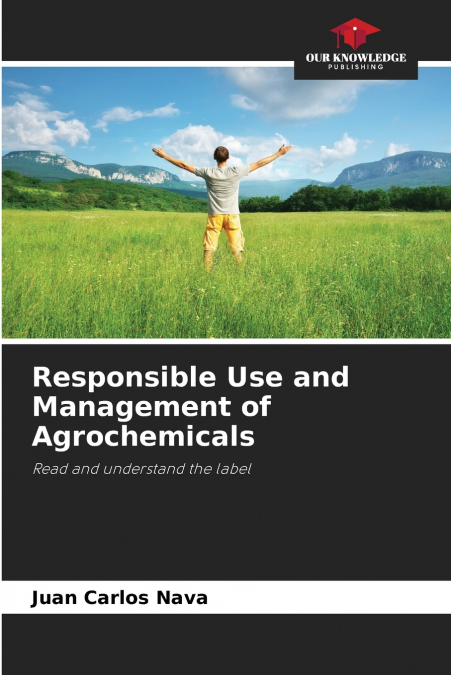
  • Responsible Use and Management of Agrochemicals
    Juan Carlos Nava
    Uso y manejo responsable de agroquímicos is a work product of the author’s experiences (undergraduate and graduate professor, with research and extension projects), aimed at producers, companies, professionals, students, advisors, researchers, among others.Due to its structure and content, it is expected to be a valuable aid to all people directly or indirectly involved in the ...
    Disponible

    49,45 €

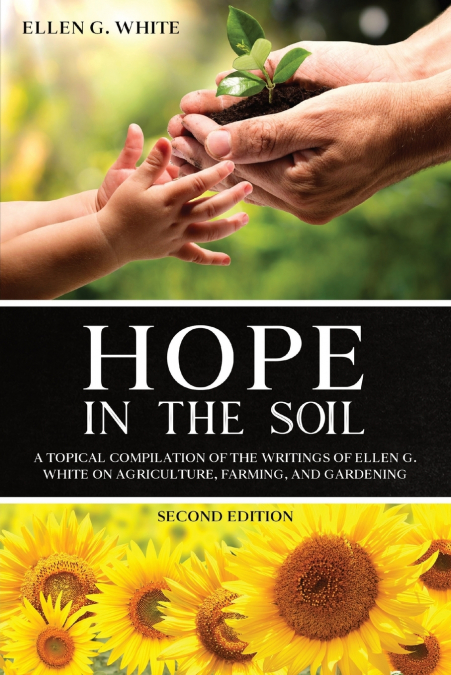
  • Hope in the Soil
    Ellen G White
    Before edible classrooms began 'sprouting' in elementary schools, before buzzwords like 'sustainable agriculture', 'organic,' or 'veganic' came into existence, an exceptional woman named Ellen G. White penned numerous letters and articles on the importance of farming, an outdoor life, and manual labor. Though often remembered for other things, Mrs. White was actively engaged in...
    Disponible

    18,38 €

  • The Green Revolution
    Binitha Sophine Emmanuel
    The Green Revolution, a transformative era in the annals of agriculture, emerged as a game-changing force during the mid-20th century, fundamentally reshaping the methodology of food production and steering the trajectory of global food security. Characterized by a sequence of technological breakthroughs, the Green Revolution aimed to substantially augment agricultural producti...
    Disponible

    53,23 €

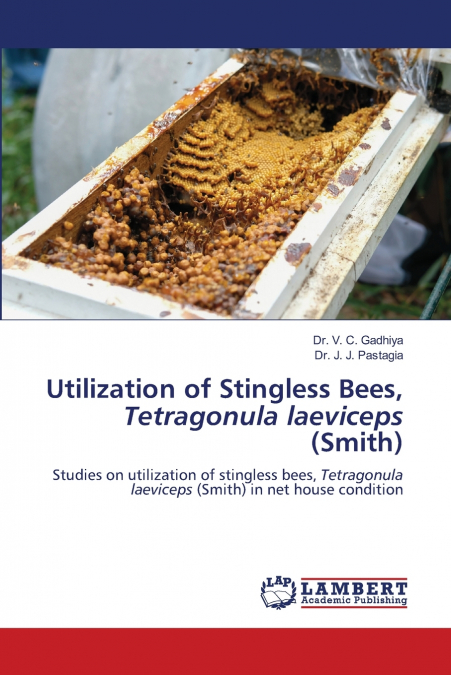
  • Utilization of Stingless Bees, Tetragonula laeviceps (Smith)
    Dr. J. J. Pastagia / Dr. V. C. Gadhiya
    The present investigations on utilization of stingless bees, T. laeviceps Smith in net house condition carried out with the broad aspects like flowers visited by stingless bees, T. laeviceps Smith, toxicity of insecticides to T. laeviceps Smith workers, floral biology of musk melon, foraging behavior of stingless bees, T. laeviceps Smith in net house condition, effect of pollin...
    Disponible

    84,80 €

  • La révolution verte
    Binitha Sophine Emmanuel
    La révolution verte, une ère transformatrice dans les annales de l’agriculture, est apparue comme une force qui a changé la donne au milieu du 20e siècle, remodelant fondamentalement la méthodologie de la production alimentaire et orientant la trajectoire de la sécurité alimentaire mondiale. Caractérisée par une série de percées technologiques, la révolution verte visait à augm...
    Disponible

    53,29 €

Otros libros del autor

  • Écart technologique dans l’adoption de la culture du gramme vert en Inde
    Arvind Pratap Singh / R. K. Doharey / Rahul Kumar Singh
    Le rôle des légumineuses dans l’agriculture indienne n’a guère besoin d’être souligné L’Inde est l’un des premiers pays producteurs de légumineuses. Les légumineuses sont des éléments importants du régime alimentaire indien et couvrent une grande partie des besoins en protéines. Les cultures de légumineuses sont riches en protéines et en certains acides aminés essentiels et enr...
    Disponible

    61,84 €

  • Lacuna tecnológica na adoção da cultura da grama verde na Índia
    Arvind Pratap Singh / R. K. Doharey / Rahul Kumar Singh
    O papel das leguminosas secas na agricultura indiana quase não precisa de ser realçado A Índia é um dos principais países produtores de leguminosas secas. As leguminosas secas são componentes importantes da dieta indiana e fornecem uma parte importante das necessidades em proteínas. Para além de serem ricas em proteínas e alguns dos aminoácidos essenciais, as leguminosas enriqu...
    Disponible

    61,84 €

  • Divario tecnologico nell’adozione della coltivazione del gram verde in India
    Arvind Pratap Singh / R. K. Doharey / Rahul Kumar Singh
    Il ruolo dei legumi nell’agricoltura indiana non ha bisogno di essere sottolineato L’India è uno dei principali Paesi produttori di legumi. I legumi sono componenti importanti della dieta indiana e forniscono una parte importante del fabbisogno proteico. Le colture di legumi, oltre a essere ricche di proteine e di alcuni aminoacidi essenziali, arricchiscono il suolo attraverso ...
    Disponible

    61,84 €