 Librería Samer Atenea
 Kálamo Books
 Librería Elías (Asturias)
 Librería Kolima (Madrid)
 Librería Proteo (Málaga)
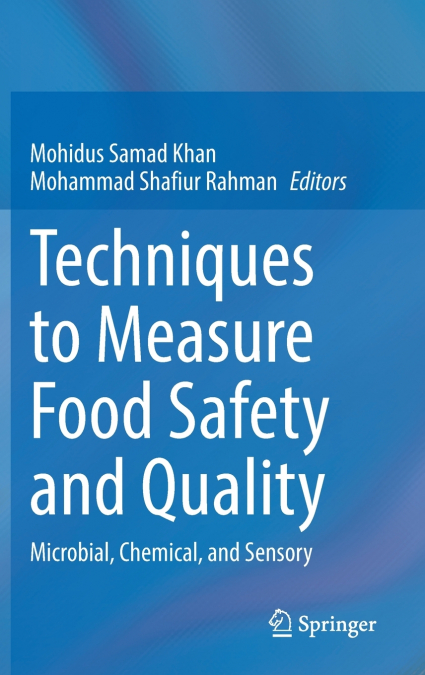
This book addresses the basic understanding of food contaminants and their sources, followed by the techniques to measure food safety and quality. It is divided into four parts: Part A - sources of contaminants in foods, their associated health risks, and integrated management and alternative options to minimize contaminants; Part B - Technological assessment of conventional methods and selected advanced methods for the detection, identification and enumeration of microbial contaminates; Part C - Technological assessment of different chemical measurements techniques; and Part D - Technological assessment of different instrumental techniques to assess sensory properties of foods.Food safety is a growing concern due to the increase in food-borne illnesses caused by food adulteration, excessive use of pesticides, use of chemical preservatives and artificial fruit ripening agents, microbial contaminations, and improper food handling. Chemical contaminants in food could be transferred from environmental or agrochemical sources, personal care products, and other by-products of water disinfects. In addition, microbial food safety can be threatened due to the presence of many pathogens, such as Salmonella, Escherichia coli, Clostridium botulinum, Staphylococcus aureus, and Listeria monocytogenes in foods. Globally, strict regulations are imposed to limit the potential contaminants in foods. Development of accurate, rapid, and inexpensive approaches to test food contamination and adulteration would be highly valued to ensure global food safety. There are existing processes to ensure safety of food products from chemical and microbial contaminants. Apart from the existing measurement technologies, varieties of new techniques are also being emerged and these could be potential to ensure food safety and quality. In addition to chemical and microbial properties, sensory properties such as texture, mouth feel, flavor, and taste, are among the most important attributes of food products to ensure their acceptability by consumers. Two approaches are available to evaluate sensory properties of food products, namely subjective and objective analyses. The responses are perceived by all five senses: smell, taste, sight, touch, and hearing. The approach used in sensory evaluation varies depending on the types of foods and the ultimate goal of the testing. Sensory attributes are the most important quality parameters after ensuring the safety of foods.