Studio dei foraminiferi bentonici nei sedimenti del Mar Caspio meridionale

Studio dei foraminiferi bentonici nei sedimenti del Mar Caspio meridionale

Fatemeh Ghane / Hame Manouchehri / Mina Sadough

83,74 €
IVA incluido
Disponible
Editorial:
KS OmniScriptum Publishing
Año de edición:
2026
Materia
Ecología, la biosfera
ISBN:
9786630070774
83,74 €
IVA incluido
Disponible

Selecciona una librería:

  • Librería Samer Atenea
  • Kálamo Books
  • Librería Elías (Asturias)
  • Librería Kolima (Madrid)
  • Librería Proteo (Málaga)

Il Mar Caspio è il più grande bacino idrico chiuso della Terra, con una superficie di 371.000 km². È considerato il lago più grande del mondo e si trova tra l’Europa e l’Asia. Oltre a possedere preziose risorse naturali come petrolio e gas, l’importanza di questo lago è accresciuta dal fatto che costituisce l’habitat di preziose specie di storioni e delle loro uova, che vengono trasformate in caviale. Esistono inoltre vari tipi di forme di vita, da un gran numero di animali e organismi acquatici a minuscoli microrganismi bentonici. I foraminiferi bentonici sono uno di questi gruppi che possono essere utilizzati come preziosi bioindicatori negli ambienti acquatici e nell’esplorazione petrolifera. La loro distribuzione può essere fortemente influenzata dalle condizioni ambientali della zona bentonica e i loro fossili sono strumenti utili per gli studi di biostratigrafia. Questo libro, quindi, identifica le specie di foraminiferi e studia la relazione tra la loro abbondanza e i fattori ambientali della zona bentonica nella parte meridionale del Mar Caspio. L’analisi può permetterci di conoscere meglio l’ecosistema del Mar Caspio per avere programmi di gestione più adeguati e raggiungere uno sviluppo sostenibile.
Artículos relacionados

  • Water from a Transdisciplinary Perspective
    Ana Isabel Pereira Cardoso / Teresinha M. Gonçalves
    Life in cities has distanced human beings from nature and made it difficult to understand the ecology of life dependent on the environment. Urban water collection and distribution processes contribute significantly to the fragmentation of knowledge and the vital recognition of the water cycle. Without the effective participation of the subject in environmental actions, it is no...
    Disponible

    49,78 €

  • Modeling Populations of Adaptive Individuals
    Bret C. Harvey / Steven F. Railsback
    Ecologists now recognize that the dynamics of populations, communities, and ecosystems are strongly affected by adaptive individual behaviors. Yet until now, we have lacked effective and flexible methods for modeling such dynamics. Traditional ecological models become impractical with the inclusion of behavior, and the optimization approaches of behavioral ecology cannot be use...
    Disponible

    72,92 €

  • Scaling in Ecology with a Model System
    Aaron Ellison / Aaron M. Ellison / Nicholas J. Gotelli
    A groundbreaking approach to scale and scaling in ecological theory and practiceScale is one of the most important concepts in ecology, yet researchers often find it difficult to find ecological systems that lend themselves to its study. Scaling in Ecology with a Model System synthesizes nearly three decades of research on the ecology of Sarracenia purpurea-the northern pitcher...
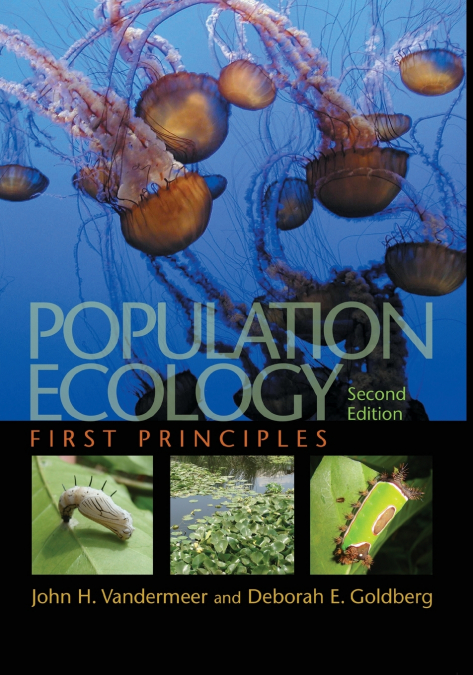
  • Population Ecology
    Deborah E. Goldberg / John H. Vandermeer
    The essential introduction to population ecology-now expanded and fully updatedEcology is capturing the popular imagination like never before, with issues such as climate change, species extinctions, and habitat destruction becoming ever more prominent. At the same time, the science of ecology has advanced dramatically, growing in mathematical and theoretical sophistication. He...
    Disponible

    132,64 €

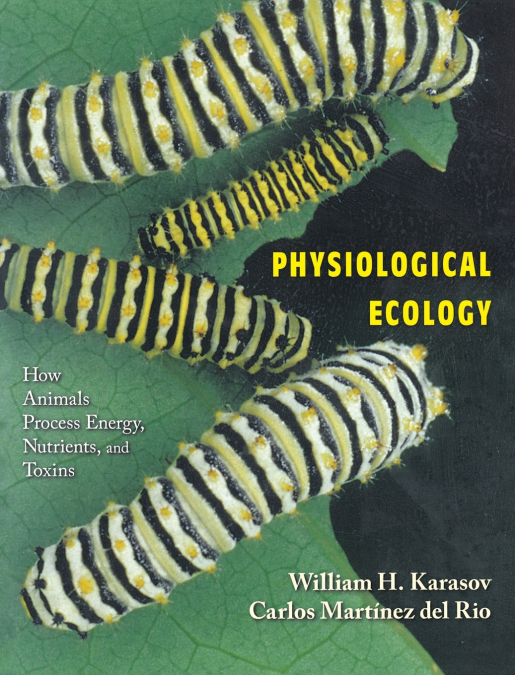
  • Physiological Ecology
    Carlos Martínez del Rio / William H. Karasov
    Unlocking the puzzle of how animals behave and how they interact with their environments is impossible without understanding the physiological processes that determine their use of food resources. But long overdue is a user-friendly introduction to the subject that systematically bridges the gap between physiology and ecology. Ecologists--for whom such knowledge can help clarif...
  • Critical Transitions in Nature and Society
    Marten Scheffer
    How do we explain the remarkably abrupt changes that sometimes occur in nature and society--and can we predict why and when they happen? This book offers a comprehensive introduction to critical transitions in complex systems--the radical changes that happen at tipping points when thresholds are passed. Marten Scheffer accessibly describes the dynamical systems theory behind cr...
    Disponible

    99,51 €