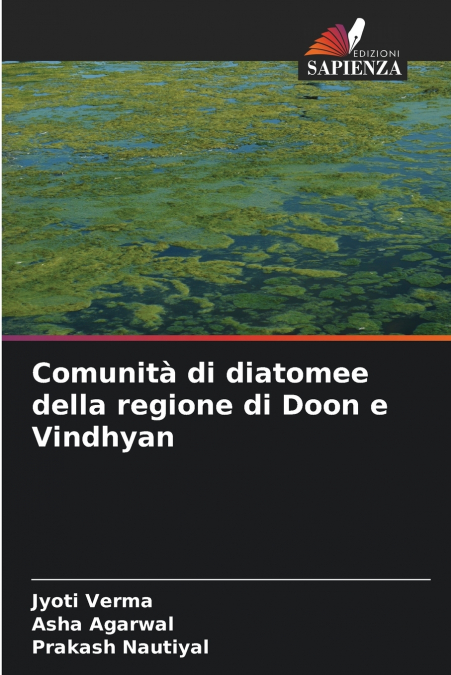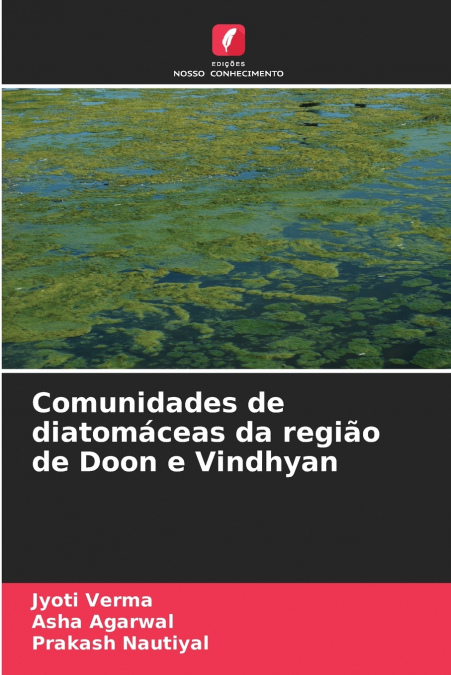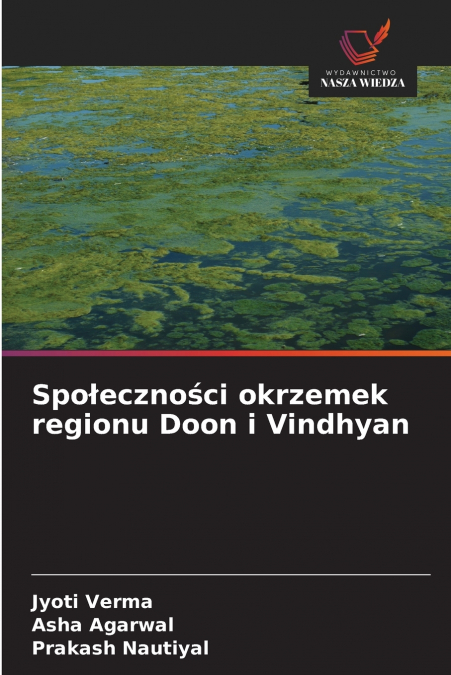
Społeczności okrzemek regionu Doon i Vindhyan

Społeczności okrzemek regionu Doon i Vindhyan

Asha Agarwal / Jyoti Verma / Prakash Nautiyal

105,30 €
IVA incluido
Disponible
Editorial:
KS OmniScriptum Publishing
Año de edición:
2026
Materia
Ecología, la biosfera
ISBN:
9786209617157
105,30 €
IVA incluido
Disponible

Selecciona una librería:

  • Librería Samer Atenea
  • Kálamo Books
  • Librería Elías (Asturias)
  • Librería Kolima (Madrid)
  • Librería Proteo (Málaga)

Przez większość historii życia na Ziemi okrzemki są mikroskopijne, ale nadal niezwykle ważne. Znanych jest ponad 10 000 żyjących gatunków okrzemek, a mniej więcej tyle samo nazwanych form skamieniałych. Ponad dziewięćdziesiąt procent biosfery stanowią rośliny, z czego okrzemki stanowią około jednej czwartej masy. Występują one w ogromnych ilościach w górnych warstwach oceanów, dostarczając wysokiej jakości pożywienie dla tak różnorodnych stworzeń, jak pierwotniaki i wieloryby, a także dostarczając atmosferze około jednej czwartej tlenu. Większość okrzemek ma rozmiar znacznie mniejszy niż pół milimetra, ale ich bogate w olej, pokryte krzemionką ciała, opadające w ogromnych ilościach na dno oceanu przez długi czas, przekształciły się w światowe złoża ropy naftowej, a ich szkielety utworzyły grube warstwy ziemi okrzemkowej, która znalazła zastosowanie w tak różnorodnych produktach dla ludzi, jak dynamit i (w dawnych czasach) pasta do zębów.
Artículos relacionados

  • Water from a Transdisciplinary Perspective
    Ana Isabel Pereira Cardoso / Teresinha M. Gonçalves
    Life in cities has distanced human beings from nature and made it difficult to understand the ecology of life dependent on the environment. Urban water collection and distribution processes contribute significantly to the fragmentation of knowledge and the vital recognition of the water cycle. Without the effective participation of the subject in environmental actions, it is no...
    Disponible

    43,82 €

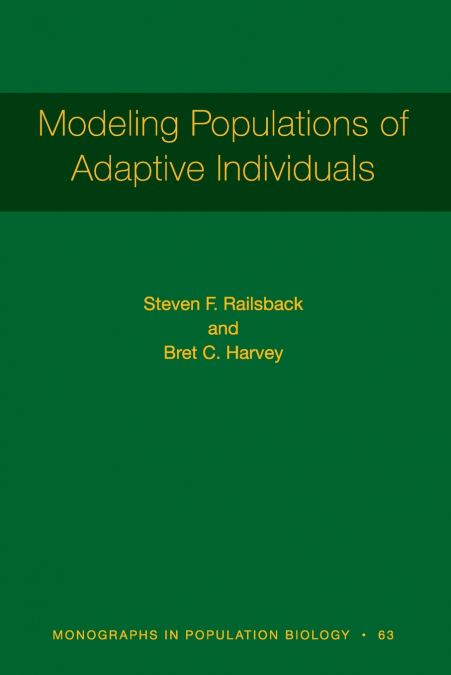
  • Modeling Populations of Adaptive Individuals
    Bret C. Harvey / Steven F. Railsback
    Ecologists now recognize that the dynamics of populations, communities, and ecosystems are strongly affected by adaptive individual behaviors. Yet until now, we have lacked effective and flexible methods for modeling such dynamics. Traditional ecological models become impractical with the inclusion of behavior, and the optimization approaches of behavioral ecology cannot be use...
    Disponible

    64,30 €

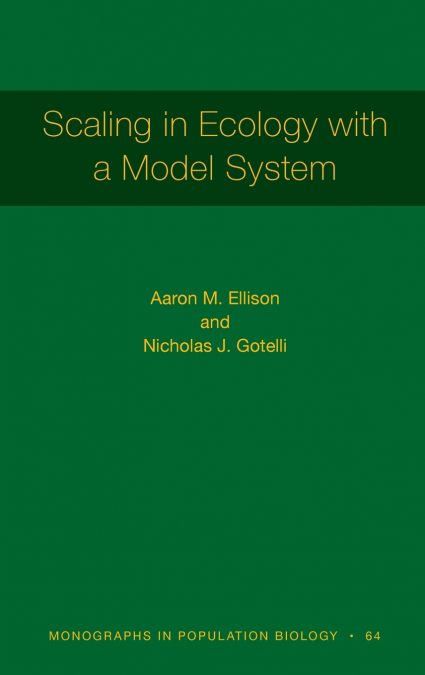
  • Scaling in Ecology with a Model System
    Aaron Ellison / Aaron M. Ellison / Nicholas J. Gotelli
    A groundbreaking approach to scale and scaling in ecological theory and practiceScale is one of the most important concepts in ecology, yet researchers often find it difficult to find ecological systems that lend themselves to its study. Scaling in Ecology with a Model System synthesizes nearly three decades of research on the ecology of Sarracenia purpurea-the northern pitcher...
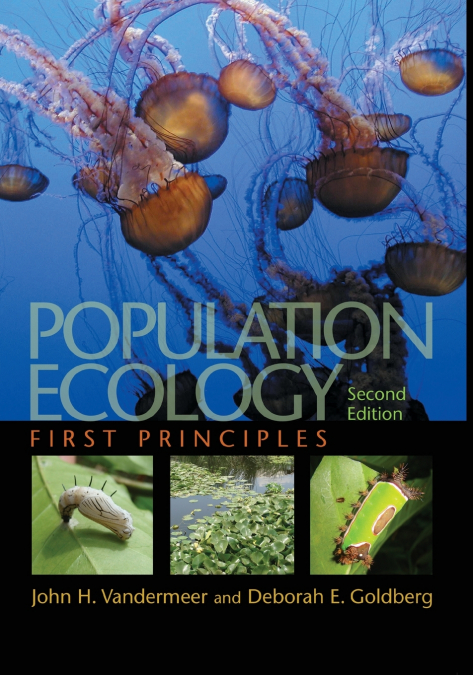
  • Population Ecology
    Deborah E. Goldberg / John H. Vandermeer
    The essential introduction to population ecology-now expanded and fully updatedEcology is capturing the popular imagination like never before, with issues such as climate change, species extinctions, and habitat destruction becoming ever more prominent. At the same time, the science of ecology has advanced dramatically, growing in mathematical and theoretical sophistication. He...
    Disponible

    117,24 €

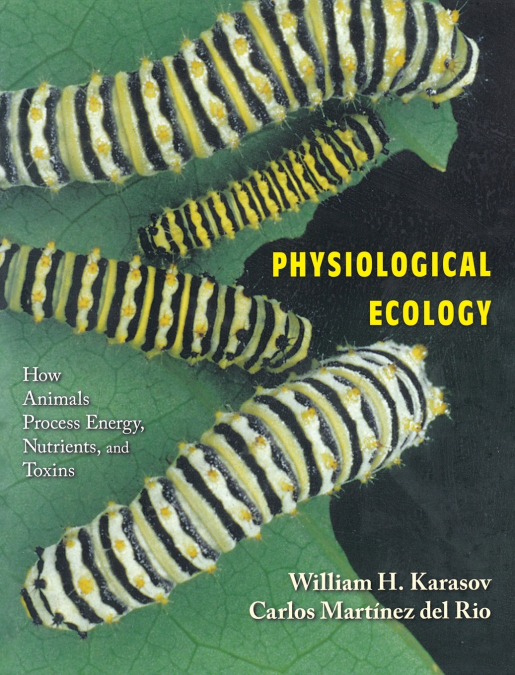
  • Physiological Ecology
    Carlos Martínez del Rio / William H. Karasov
    Unlocking the puzzle of how animals behave and how they interact with their environments is impossible without understanding the physiological processes that determine their use of food resources. But long overdue is a user-friendly introduction to the subject that systematically bridges the gap between physiology and ecology. Ecologists--for whom such knowledge can help clarif...
  • Critical Transitions in Nature and Society
    Marten Scheffer
    How do we explain the remarkably abrupt changes that sometimes occur in nature and society--and can we predict why and when they happen? This book offers a comprehensive introduction to critical transitions in complex systems--the radical changes that happen at tipping points when thresholds are passed. Marten Scheffer accessibly describes the dynamical systems theory behind cr...
    Disponible

    87,92 €

Otros libros del autor

  • Communautés de diatomées de la région de Doon et Vindhyan
    Asha Agarwal / Jyoti Verma / Prakash Nautiyal
    Pendant la majeure partie de l’histoire de la vie sur Terre, les diatomées sont microscopiques, mais elles restent extrêmement importantes. On connaît plus de 10 000 espèces de diatomées vivantes, et environ autant de formes fossiles nommées. Plus de 90 % de la biosphère est constituée de vie végétale, dont les diatomées représentent environ un quart en poids. Elles sont extrêm...
    Disponible

    105,29 €

  • Comunità di diatomee della regione di Doon e Vindhyan
    Asha Agarwal / Jyoti Verma / Prakash Nautiyal
    Per gran parte della storia della vita sulla Terra, le diatomee sono microscopiche, ma continuano ad essere estremamente importanti. Sono note più di 10.000 specie viventi di diatomee, con circa lo stesso numero di forme fossili denominate. Oltre il novanta per cento della biosfera è costituito da vita vegetale, di cui le diatomee costituiscono circa un quarto in peso. Sono est...
    Disponible

    105,30 €

  • Comunidades de diatomáceas da região de Doon e Vindhyan
    Asha Agarwal / Jyoti Verma / Prakash Nautiyal
    Durante grande parte da vida na Terra, as diatomáceas são microscópicas e ainda assim extremamente importantes. São conhecidas mais de 10 000 espécies vivas de diatomáceas, com aproximadamente o mesmo número de formas fósseis nomeadas. Mais de noventa por cento da biosfera é composta por vida vegetal, da qual as diatomáceas representam cerca de um quarto em peso. São extremamen...
    Disponible

    105,30 €

  • Diatomeengemeinschaften der Doon- und Vindhyan-Region
    Asha Agarwal / Jyoti Verma / Prakash Nautiyal
    Während eines Großteils der Geschichte des Lebens auf der Erde sind Diatomeen mikroskopisch klein und dennoch äußerst wichtig. Es sind mehr als 10.000 lebende Kieselalgenarten bekannt, mit etwa der gleichen Anzahl benannter fossiler Formen. Über neunzig Prozent der Biosphäre besteht aus Pflanzen, von denen Kieselalgen etwa ein Viertel des Gewichts ausmachen. Sie kommen in den o...
    Disponible

    105,29 €