 Librería Samer Atenea
 Kálamo Books
 Librería Elías (Asturias)
 Librería Kolima (Madrid)
 Librería Proteo (Málaga)
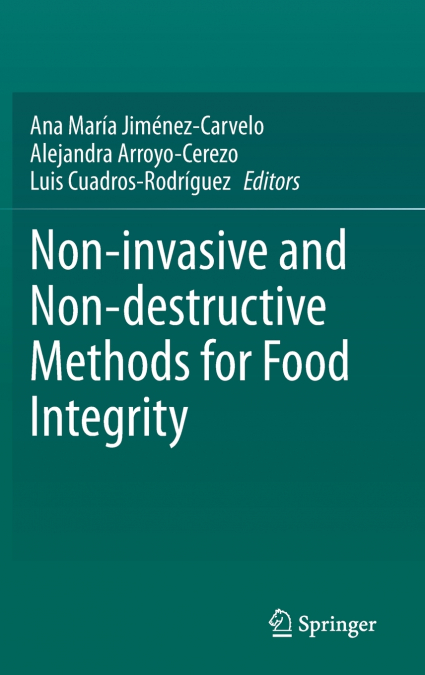
There is an increasing need for the food industry to provide information to ensure quality requirements and prevent the food fraud, applying in-situ and on-line technologies for full process control along the food chain. In today’s information age, consumers want to be able to have as much information as possible about products quickly and efficiently. Therefore, the rapid detection of indicators that determine food quality and safety risks helps to ensure an effective and comprehensive food sovereignty system. For this purpose, the most powerful and commonly used analytical techniques are liquid or gas chromatography, both coupled to different detection systems. The use of these analytical techniques involves long analysis times and prior procedures of fitness for measuring such as sample pre-treatment, in which the use of reagents and chemical solvents that may be hazardous or harmful to the environment is common. These facts highlight the need for the development of new analytical methods that offer the possibility of rapid, non-invasive, on-site, environmentally friendly analyses that can be carried out along the entire production chain. In addition, recent technological developments and advances in data mining and machine learning offer the opportunity to introduce changes that could transform the role of food integrity. Non-invasive and Non-destructive Methods for Food Integrity is dedicated to describing the fundamentals and applications of existing analytical technologies and the current state of these techniques at industrial level. The text utilizes reported studies and applications, differentiating by particular food and beverage groups, in order to provide a comprehensive and detailed overview of the current state of the art of non-invasive / non-destructive analytical techniques for food quality and integrity. For each technique covered, an introduction is included and thechemical information obtained and why this technology is useful for food analysis. Information on the instrumentation available for the application of each technique in food is also provided, as well as information on data processing, with reference to the treatment of the signal obtained and the use of chemometrics. Applications published in scientific literature are detailed for different categories of similar foods, based on the techniques that are already used for the routine control of food integrity. This book provides guidance for potential users in the food industries and quality control laboratories for choosing which technology to implement based on the type of product and the results to be obtained.