Neuroptera (Including Megaloptera)

Neuroptera (Including Megaloptera)

Charles W. Heckman / Charles WHeckman

241,57 €
IVA incluido
Consulta disponibilidad
Editorial:
Springer Nature B.V.
Año de edición:
2017
Materia
Ecología, la biosfera
ISBN:
9783319351247

Selecciona una librería:

  • Librería Samer Atenea
  • Librería Aciertas (Toledo)
  • Kálamo Books
  • Librería Perelló (Valencia)
  • Librería Elías (Asturias)
  • Donde los libros
  • Librería Kolima (Madrid)
  • Librería Proteo (Málaga)

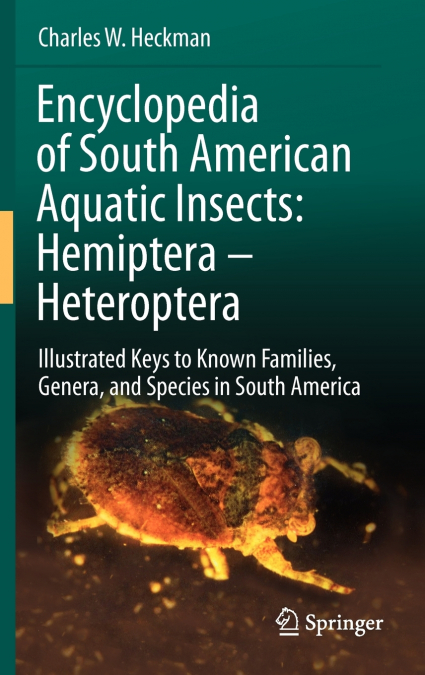
This order once encompassed all insects with a complex network of wing veins, regardless of whether their metamorphosis was incomplete or complete.  By the early 20th century, most of the species had been transferred to new orders, leaving only a small percentage of the insects once assigned to the Neuroptera remaining in that order.  By the second half of the 20th century, some of the taxonomists began to believe that the fragmentation of this order had gone too far, and that the order Megaloptera needed to be grouped in some way with Neuroptera, either by making them suborders of the same order or by creating a superorder to accommodate both.This volume provides a discussion of both taxa, tentatively regrouping both in the order Neuroptera.  While all known species of Megaloptera in South America have completely aquatic larval stages, few species in the suborder Planipennia, formerly called Neuroptera sensu stricto, are aquatic during any of their life stages.  The most interesting of the exceptions are species in the family Sisyridae, some of which develop as larvae inside freshwater sponges.Because only a relatively small number of species are still included in Neuroptera sensu lato, this book provides keys to all known South American species that have been described well enough to be identified with any degree of certainty.  Many species in the family Chloropidae, the neuropteran family with the greatest number of recognized species in South America, have proven to be valuable as biological controls for insect pests in agriculture.  Their importance for tropical agriculture is another reason for including terrestrial species in this book. The series will continue with volumes providing keys to identify species of other South American orders, but in most cases, only aquatic insects can be included in the keys to the species.

Artículos relacionados

  • Water from a Transdisciplinary Perspective
    Ana Isabel Pereira Cardoso / Teresinha M. Gonçalves
    Life in cities has distanced human beings from nature and made it difficult to understand the ecology of life dependent on the environment. Urban water collection and distribution processes contribute significantly to the fragmentation of knowledge and the vital recognition of the water cycle. Without the effective participation of the subject in environmental actions, it is no...
    Disponible

    43,82 €

  • Modeling Populations of Adaptive Individuals
    Bret C. Harvey / Steven F. Railsback
    Ecologists now recognize that the dynamics of populations, communities, and ecosystems are strongly affected by adaptive individual behaviors. Yet until now, we have lacked effective and flexible methods for modeling such dynamics. Traditional ecological models become impractical with the inclusion of behavior, and the optimization approaches of behavioral ecology cannot be use...
    Disponible

    65,53 €

  • Scaling in Ecology with a Model System
    Aaron Ellison / Aaron M. Ellison / Nicholas J. Gotelli
    A groundbreaking approach to scale and scaling in ecological theory and practiceScale is one of the most important concepts in ecology, yet researchers often find it difficult to find ecological systems that lend themselves to its study. Scaling in Ecology with a Model System synthesizes nearly three decades of research on the ecology of Sarracenia purpurea-the northern pitcher...
  • Population Ecology
    Deborah E. Goldberg / John H. Vandermeer
    The essential introduction to population ecology-now expanded and fully updatedEcology is capturing the popular imagination like never before, with issues such as climate change, species extinctions, and habitat destruction becoming ever more prominent. At the same time, the science of ecology has advanced dramatically, growing in mathematical and theoretical sophistication. He...
    Disponible

    124,92 €

  • Physiological Ecology
    Carlos Martínez del Rio / William H. Karasov
    Unlocking the puzzle of how animals behave and how they interact with their environments is impossible without understanding the physiological processes that determine their use of food resources. But long overdue is a user-friendly introduction to the subject that systematically bridges the gap between physiology and ecology. Ecologists--for whom such knowledge can help clarif...
  • Critical Transitions in Nature and Society
    Marten Scheffer
    How do we explain the remarkably abrupt changes that sometimes occur in nature and society--and can we predict why and when they happen? This book offers a comprehensive introduction to critical transitions in complex systems--the radical changes that happen at tipping points when thresholds are passed. Marten Scheffer accessibly describes the dynamical systems theory behind cr...
    Disponible

    89,46 €

Otros libros del autor

  • Encyclopedia of South American Aquatic Insects
    Charles W. Heckman / Charles WHeckman
    Hemiptera - Heteroptera encompasses the three well-defined suborders of the true bugs which are adapted to an aquatic or littoral habitat. The book begins with a section on the biology these insects and provides illustrations of the basic features of their morphology and outlines the larval development. Brief outlines of the ecological and zoogeographical peculiarities of the...