
Inicio > Matemáticas y ciencia > Biologia, ciencias de la vida > Microbiología (no médica) > Méthodes de décontamination microbienne des carcasses de porcs
Méthodes de décontamination microbienne des carcasses de porcs

Méthodes de décontamination microbienne des carcasses de porcs

CRISTHIANE Cattani

69,62 €
IVA incluido
Disponible
Editorial:
KS OmniScriptum Publishing
Año de edición:
2024
Materia
Microbiología (no médica)
ISBN:
9786208042899
69,62 €
IVA incluido
Disponible

Selecciona una librería:

  • Librería Desdémona
  • Librería Samer Atenea
  • Librería Aciertas (Toledo)
  • Kálamo Books
  • Librería Perelló (Valencia)
  • Librería Elías (Asturias)
  • Donde los libros
  • Librería Kolima (Madrid)
  • Librería Proteo (Málaga)

L’objectif de cette étude était d’évaluer l’application d’eau chaude entre 76°C et 78°C et de 1,5% d’acide lactique sur la surface des carcasses de porc en vue d’une réduction microbienne. Quatre traitements ont été utilisés, T1, T2, T3 et T4 avec de l’eau à différentes températures suivie ou non d’une aspersion d’acide lactique. Des écouvillons ont été prélevés sur des carcasses de porcs naturellement contaminées au cours du processus normal d’abattage et les micro-organismes suivants ont été recherchés : mésophiles aérobies, entérobactéries, Escherichia coli, Salmonella spp. et E. coli 0157 par la méthodologie conventionnelle et par les méthodes alternatives PETRIFILM™ et TEMPO® . Aucun résultat positif n’a été obtenu pour E. coli O157. Salmonella spp. a été détectée dans 5 (6,58%) des 76 carcasses échantillonnées, et les sérotypes trouvés étaient Thyphimurium, Agona et Derby. Le traitement qui a montré la meilleure réduction du nombre de carcasses contaminées est celui qui consistait à baigner les carcasses dans de l’eau à une température comprise entre 76°C et 78°C, puis à les asperger d’acide lactique à une concentration de 1,5 %.

Artículos relacionados

  • Acidophiles
    Acidophiles are life-forms that grow preferentially in natural or man-made environments where the pH is well below seven. Together with other categories of extremophiles, they have greatly expanded our knowledge of the diversity of life, our understanding on how microorganisms can adapt to seemingly hostile situations, and provided scenarios for the possibility that life-forms ...
  • Frontiers in Dengue Virus Research
    Dengue virus (DENV), a mosquito-borne flavivirus, is the causative agent of dengue fever, currently one of the most significant emerging disease challenges to global public health. Although dengue is an old disease, recent decades have seen an unprecedented increase in the geographic range, incidence, and severity of infection. The virus infects 100 million people annually and ...
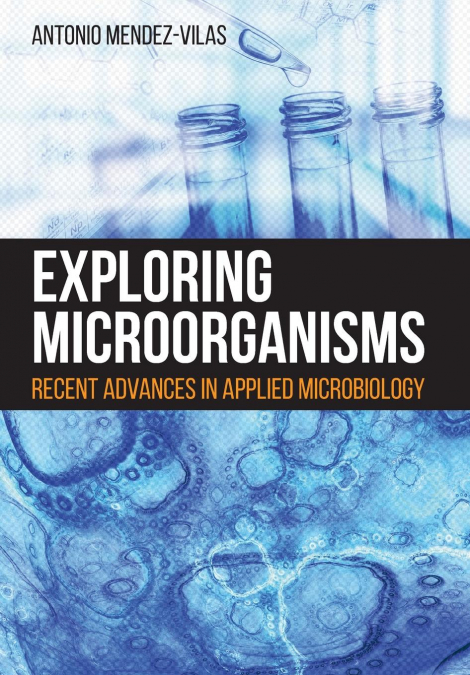
  • Exploring Microorganisms
    Antonio Mendez-Vilas
    Exploring Microorganisms: Recent Advances in Applied Microbiology, contains a selection of papers presented at the VII International Conference on Environmental, Industrial and Applied Microbiology - BioMicroWorld2017 (Madrid, Spain). This book offers the outcomes of completed and outgoing research works and experiences of several microbiology research groups across the world. ...
    Disponible

    45,55 €

  • The Cell Biology of Cyanobacteria
    In this book, leading senior scientists and young researchers review the current key topics in cyanobacterial cell biology to provide a timely overview. Topics covered include: historical background; cell division; the cell envelope; the thylakoid membrane; protein targeting, transport and translocation; chromatic acclimation; the carboxysome; glycogen as a dynamic storage of p...
  • Borrelia
    D Scott Samuels
    ...
  • Phage Therapy
    Jan Borysowski
    ...

Otros libros del autor

  • Mikrobielle Dekontaminierung von Schweineschlachtkörpern
    CRISTHIANE Cattani
    Ziel dieser Studie war es, die Anwendung von heißem Wasser zwischen 76°C und 78°C und 1,5%iger Milchsäure auf der Oberfläche von Schweineschlachtkörpern im Hinblick auf eine mikrobielle Reduzierung zu bewerten. Es wurden vier Behandlungen durchgeführt: T1, T2, T3 und T4 mit Wasser bei unterschiedlichen Temperaturen und anschließender oder fehlender Besprühung mit Milchsäure. Fü...
    Disponible

    69,68 €

  • Microbial decontamination methods for pig carcasses
    CRISTHIANE Cattani
    The aim of this study was to evaluate the application of hot water between 76°C and 78°C and 1.5% lactic acid on the surface of pork carcasses with a view to microbial reduction. Four treatments were used, T1, T2, T3 and T4 with water at different temperatures followed or not by sprinkling of lactic acid. Alternative and conventional microbiological diagnostic methods were used...
    Disponible

    69,62 €

  • Metodi di decontaminazione microbica delle carcasse suine
    CRISTHIANE Cattani
    Lo scopo di questo studio è stato quello di valutare l’applicazione di acqua calda tra 76°C e 78°C e di acido lattico all’1,5% sulla superficie delle carcasse di maiale ai fini della riduzione microbica. Sono stati utilizzati quattro trattamenti, T1, T2, T3 e T4 con acqua a diverse temperature seguita o meno da aspersione di acido lattico. Sono stati utilizzati e confrontati me...
    Disponible

    69,62 €

  • Métodos de descontaminação microbiana em carcaças suínas
    CRISTHIANE Cattani
    O presente estudo teve como objetivo avaliar a aplicação de água quente entre 76°C e 78°C e ácido lático a 1,5% na superfície de carcaças suínas visando a redução microbiana. Foram utilizados quatro tratamentos, T1,T2,T3 e T4 com água a diferentes temperaturas seguidos ou não de aspersão de ácido lático. Foram utilizados e comparados métodos diagnósticos microbiológicos alterna...