
Meteorologica

Meteorologica

Aristotle

31,79 €
IVA incluido
Disponible
Editorial:
Tradd Street Press
Año de edición:
2026
Materia
Filosofía occidental: antigua, hasta c. 500
ISBN:
9781025840390
31,79 €
IVA incluido
Disponible

Selecciona una librería:

  • Librería Samer Atenea

  • Kálamo Books
  • Librería Elías (Asturias)
  • Librería Kolima (Madrid)
  • Librería Proteo (Málaga)

'Meteorologica' is a foundational treatise by the philosopher Aristotle, representing one of the earliest systematic attempts to explain the natural phenomena of the physical world. Covering a vast range of subjects, the work delves into what Aristotle termed 'meteorology'-a broad field that includes not only weather patterns like rain, wind, and lightning but also celestial events such as comets and the nature of the Milky Way. The text explores the four elements-earth, water, air, and fire-and their interactions within the terrestrial sphere, providing a comprehensive framework for understanding the earth’s atmosphere and geological processes.Beyond atmospheric science, 'Meteorologica' examines the origins of rivers, the salinity of the sea, and the causes of earthquakes and volcanic activity. Aristotle’s observations extend into the realm of early chemistry and mineralogy, discussing the composition of metals and minerals. As a cornerstone of classical thought, this work reflects the ancient Greek pursuit of rational explanations for the mysteries of the natural world. It remains a vital text for students of the history of science and ancient philosophy, illustrating the intellectual rigor and observation-based inquiry that shaped the Western scientific tradition for centuries.This work has been selected by scholars as being culturally important, and is part of the knowledge base of civilization as we know it. This work was reproduced from the original artifact, and remains as true to the original work as possible. Therefore, you may see the original copyright references, library stamps (as most of these works have been housed in our most important libraries around the world), and other notations in the work.This work is in the public domain in the United States of America, and possibly other nations. Within the United States, you may freely copy and distribute this work, as no entity (individual or corporate) has a copyright on the body of the work.As a reproduction of a historical artifact, this work may contain missing or blurred pages, poor pictures, errant marks, etc. Scholars believe, and we concur, that this work is important enough to be preserved, reproduced, and made generally available to the public. We appreciate your support of the preservation process, and thank you for being an important part of keeping this knowledge alive and relevant.
Artículos relacionados

  • The Nature of Things
    Lucretius Lucretius
    De rerum natura (On the Nature of Things) is a 1st century BC didactic poem by the Roman poet and philosopher Lucretius with the goal of explaining Epicurean philosophy to a Roman audience. Lucretius presents the principles of atomism; the nature of the mind and soul; explanations of sensation and thought; the development of the world and its phenomena; and explains a variety o...
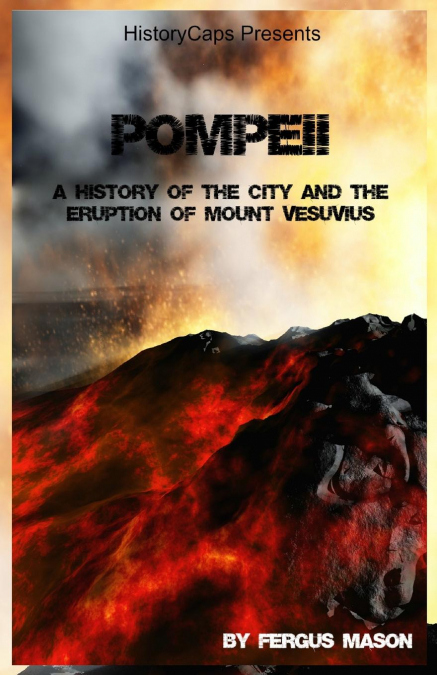
  • Pompeii
    Fergus Mason
    Pompeii was one of most advanced cities of its time; it had a complex water system, gymnasium, and an amphitheater. Despite it's advancements, there was one thing it wasn't ready for: Mount Vesuvius—the volcano that led to its ultimate doom.  The 79 AD eruption of Mount Vesuvius was one of the worst disasters in all of European history. In a near instant, over 15,000 p...
    Disponible

    12,45 €

  • Middle Platonism and Neoplatonism, Volume 1
    Stephen Gersh
    'It is generally agreed that those types of philosophy that are loosely called ’Platonic’ and ’Neoplatonic’ played a crucial role in the history of European culture during the centuries between antiquity and the Renaissance. However, until now no scholar has attempted to describe the evolution of these forms of thought in a single comprehensive academic study.' So writes Stephe...
  • Middle Platonism and Neoplatonism, Volume 2
    Stephen Gersh
    It is generally agreed that those types of philosophy that are loosely called 'Platonic' and 'Neoplatonic' played a crucial role in the history of European culture during the centuries between antiquity and the Middle Ages. However, until now no scholar has attempted to describe the evolution of these forms of thought in a single comprehensive academic study. Middle Platonism a...
  • Porphyry’s Commentary on Ptolemy’s Harmonics
    Andrew Barker
    ...
    Disponible

    91,02 €

  • The Roots of Platonism
    John Dillon
    ...
    Disponible

    29,89 €

Otros libros del autor

  • The Ethics of Aristotle
    Aristotle
    Happiness is more than a passing feeling. What if living well depends on the kind of person we become?In The Ethics of Aristotle, one of ancient Greece’s most influential thinkers examines the relationship between character, reason, and human flourishing. His central concern is eudaimonia: a good life achieved through activity in accordance with virtue, rather than through plea...
    Disponible

    27,39 €

  • The Ethics of Aristotle: Large Print
    Aristotle
    Happiness is more than a passing feeling. What if living well depends on the kind of person we become?In The Ethics of Aristotle, one of ancient Greece’s most influential thinkers examines the relationship between character, reason, and human flourishing. His central concern is eudaimonia: a good life achieved through activity in accordance with virtue, rather than through plea...
    Disponible

    27,39 €

  • The Poetics of Aristotle
    Aristotle
    What makes a story more than a sequence of events? Aristotle asks how dramatic action takes shape—and why tragedy can move an audience so deeply.In The Poetics of Aristotle, one of the foundational works of literary criticism, the ancient Greek philosopher examines poetry, tragedy, and epic as forms of imitation. His central concern is the construction of a dramatic action: how...
    Disponible

    20,77 €

  • The Poetics of Aristotle: Large Print
    Aristotle
    What makes a story more than a sequence of events? Aristotle asks how dramatic action takes shape—and why tragedy can move an audience so deeply.In The Poetics of Aristotle, one of the foundational works of literary criticism, the ancient Greek philosopher examines poetry, tragedy, and epic as forms of imitation. His central concern is the construction of a dramatic action: how...
    Disponible

    20,77 €

  • The Republic
    Aristotle
    ’The Republic’ by Plato is a timeless philosophical masterpiece that delves into the intricate workings of an ideal state and explores fundamental questions about justice, morality, and governance. Written in the form of a dialogue between Socrates and his contemporaries, this influential work presents a compelling vision of a just society.Plato’s ’The Republic’ invites readers...
    Disponible

    42,59 €

  • The Poetics of Aristotle
    Aristotle
    A hush settles over the amphitheatre as the chorus enters, and with it, the foundations of Western literary criticism are quietly laid. At the heart of ancient Greek philosophy, this enduring work examines the origins of drama and the intricate machinery of poetry, tracing the lineage of storytelling from sacred ritual to the grandeur of Greek tragedy. Each page unfolds the pri...
    Disponible

    18,19 €