Inicio > Humanidades > Filosofía > Ética y filosofía moral > The Ethics of Aristotle: Large Print
The Ethics of Aristotle: Large Print

The Ethics of Aristotle: Large Print

Aristotle

0,00 €
IVA incluido
Consulta disponibilidad
Editorial:
Muze Publications
Año de edición:
2026
Materia
Ética y filosofía moral
ISBN:
9781811141281

Selecciona una librería:

  • Librería Samer Atenea

  • Kálamo Books
  • Librería Elías (Asturias)
  • Librería Kolima (Madrid)
  • Librería Proteo (Málaga)

Happiness is more than a passing feeling. What if living well depends on the kind of person we become?In The Ethics of Aristotle, one of ancient Greece’s most influential thinkers examines the relationship between character, reason, and human flourishing. His central concern is eudaimonia: a good life achieved through activity in accordance with virtue, rather than through pleasure or possessions alone. The result is a searching account of what people should seek and how they can learn to choose wisely.Aristotle considers courage, temperance, justice, and practical wisdom, showing how moral character develops through repeated action. He explores virtue as a mean between extremes, while recognizing that sound judgment must respond to particular circumstances. His discussions of friendship, pleasure, and responsibility connect philosophical argument with familiar human concerns. These questions have helped shape moral philosophy for centuries, and they remain relevant wherever people weigh ambition, obligation, and the meaning of success.What readers find inside:Human flourishing — An inquiry into happiness as the goal of a life lived well.Character and habit — An account of how repeated choices cultivate virtues and vices.The mean between extremes — A framework for understanding courage, temperance, and other moral virtues.Practical wisdom — An exploration of reason and judgment in decisions about how to act.Life with others — Discussions of justice and friendship that place moral life within human relationships.For students encountering ancient philosophy, readers interested in virtue and moral responsibility, and anyone reconsidering what makes a meaningful life, this work offers questions worth returning to rather than a list of simple rules.Begin an enduring inquiry into the habits, judgments, and relationships that help a human life flourish.Large print edition: 16-point type for comfortable reading. 10

Artículos relacionados

  • Ka Ab Ba Building The Lighted Temple
    Dr Terri R. Nelson / Dr Terri RNelson
    The book KaAbBa Building The Lighted Temple/Metaphysical Keys to the Tree of Life draws a circle that is inclusive of the Afrikan origin of the Ancient Kemetic/Egyptian wisdom. It reveals the undeniable root and link of Ancient Africa to all the religious systems that would develop worldwide. This book is explosive in its power to convey the meaning of KaAbBa, the Medu Neter  (...
    Disponible

    45,14 €

  • Technoethics and the Evolving Knowledge Society
    Rocci Luppicini
    Recently, there has been a major push to rediscover the ethical dimension of technology across the sciences, social sciences, and humanities. Technoethics and the Evolving Knowledge Society: Ethical Issues in Technological Design, Research, Development, and Innovation examines human processes and practices connected to technology embedded within social, political, and moral sph...
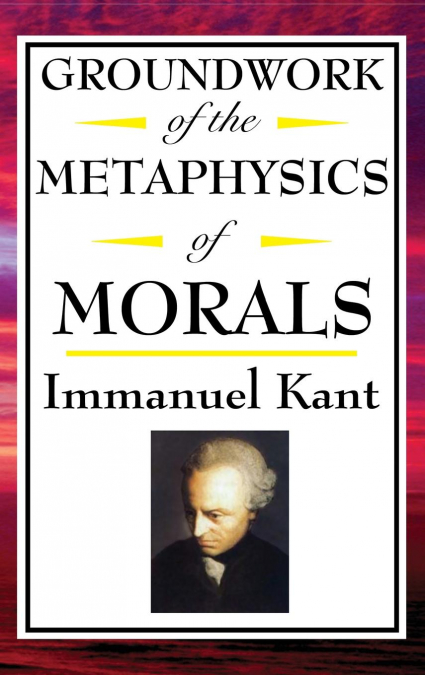
  • Kant
    Immanuel Kant
    Kant’s Groundwork of the Metaphysics of Morals is one of the most important works in modern moral philosophy. It belongs beside Plato, Aristotle, Machiavelli, and Hobbes. Here Kant sets out to articulate and defend the Categorical Imperative - the fundamental principle that underlies moral reasoning - and to lay the foundation for a comprehensive account of justice and human vi...
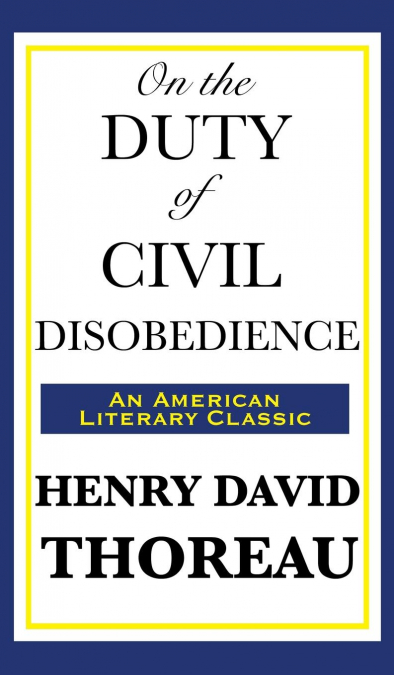
  • On the Duty of Civil Disobedience
    HENRY DAVID THOREAU
    Civil Disobedience argues that citizens should not permit their governments to overrule their consciences, and that they have a duty to avoid allowing their acquiescence to enable the government to make them the agents of injustice. Thoreau was motivated in part by his disgust with slavery and the Mexican-American War, but the sentiments he expresses here are just as pertinent ...
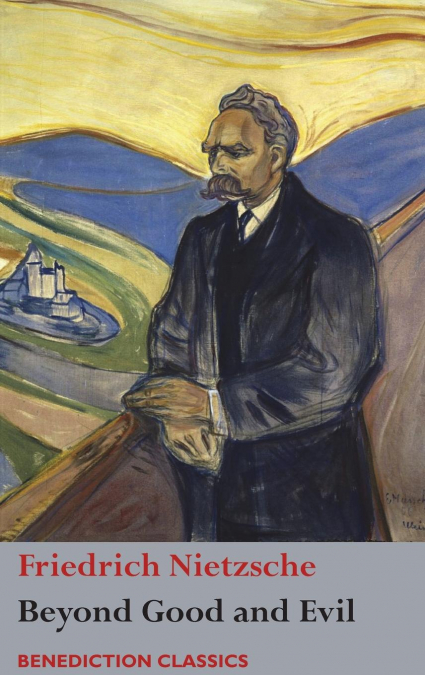
  • Beyond Good and Evil
    Friedrich Nietzsche
    Nietzsche, though primarily a philosopher, wrote widely on art, philology, history, religion, tragedy, culture, and science.  In 1886, at the height of his powers, he published Beyond Good and Evil.  Here he examines much of the best of human thought--dogmatic philosophy, Judeo-Christian morality, science and democracy – and finds it lacking.  Rejecting “slave-morality” he pres...
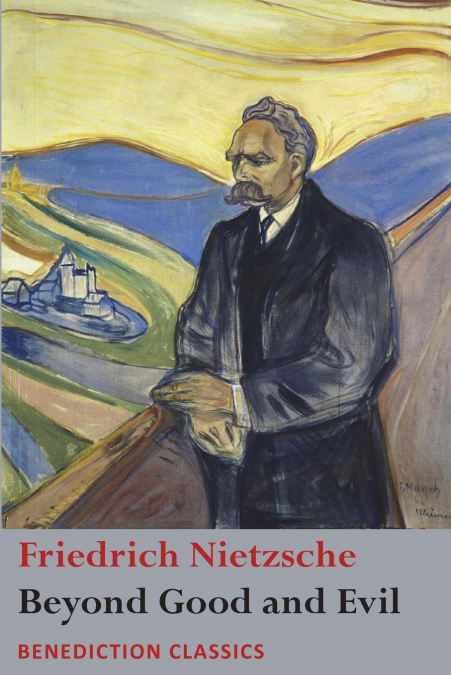
  • Beyond Good and Evil
    Friedrich Nietzsche
    Nietzsche, though primarily a philosopher, wrote widely on art, philology, history, religion, tragedy, culture, and science.  In 1886, at the height of his powers, he published Beyond Good and Evil.  Here he examines much of the best of human thought--dogmatic philosophy, Judeo-Christian morality, science and democracy – and finds it lacking.  Rejecting “slave-morality” he pres...
    Disponible

    10,94 €

Otros libros del autor

  • The Ethics of Aristotle
    Aristotle
    Happiness is more than a passing feeling. What if living well depends on the kind of person we become?In The Ethics of Aristotle, one of ancient Greece’s most influential thinkers examines the relationship between character, reason, and human flourishing. His central concern is eudaimonia: a good life achieved through activity in accordance with virtue, rather than through plea...
  • The Poetics of Aristotle
    Aristotle
    What makes a story more than a sequence of events? Aristotle asks how dramatic action takes shape—and why tragedy can move an audience so deeply.In The Poetics of Aristotle, one of the foundational works of literary criticism, the ancient Greek philosopher examines poetry, tragedy, and epic as forms of imitation. His central concern is the construction of a dramatic action: how...
  • The Poetics of Aristotle: Large Print
    Aristotle
    What makes a story more than a sequence of events? Aristotle asks how dramatic action takes shape—and why tragedy can move an audience so deeply.In The Poetics of Aristotle, one of the foundational works of literary criticism, the ancient Greek philosopher examines poetry, tragedy, and epic as forms of imitation. His central concern is the construction of a dramatic action: how...
  • The Republic
    Aristotle
    ’The Republic’ by Plato is a timeless philosophical masterpiece that delves into the intricate workings of an ideal state and explores fundamental questions about justice, morality, and governance. Written in the form of a dialogue between Socrates and his contemporaries, this influential work presents a compelling vision of a just society.Plato’s ’The Republic’ invites readers...
    Disponible

    42,59 €

  • The Poetics of Aristotle
    Aristotle
    A hush settles over the amphitheatre as the chorus enters, and with it, the foundations of Western literary criticism are quietly laid. At the heart of ancient Greek philosophy, this enduring work examines the origins of drama and the intricate machinery of poetry, tracing the lineage of storytelling from sacred ritual to the grandeur of Greek tragedy. Each page unfolds the pri...
    Disponible

    18,19 €

  • Politics A Treatise on Government
    Aristotle
    Politics: A Treatise on Government by Aristotle is one of the most influential works in the history of political philosophy and a cornerstone of Western political thought. Written in the 4th century BCE, this classical masterpiece examines the nature of the state, the purpose of government, the role of citizenship, and the principles of justice and constitutional rule. Aristotl...
    Disponible

    31,67 €