The Poetics of Aristotle

The Poetics of Aristotle

Aristotle

0,00 €
IVA incluido
Consulta disponibilidad
Editorial:
Muze Publications
Año de edición:
2026
Materia
Estudios literarios: obras de teatro y dramaturgos
ISBN:
9781811132616

Selecciona una librería:

  • Librería Samer Atenea

  • Kálamo Books
  • Librería Elías (Asturias)
  • Librería Kolima (Madrid)
  • Librería Proteo (Málaga)

What makes a story more than a sequence of events? Aristotle asks how dramatic action takes shape—and why tragedy can move an audience so deeply.In The Poetics of Aristotle, one of the foundational works of literary criticism, the ancient Greek philosopher examines poetry, tragedy, and epic as forms of imitation. His central concern is the construction of a dramatic action: how its parts fit together, how events follow through probability or necessity, and how a plot becomes a coherent whole with a beginning, middle, and end.Aristotle gives plot priority over character and considers the roles of thought, language, music, and spectacle. Drawing on Greek drama, he explores reversals of fortune, recognition, and the arousal of pity and fear. His account of catharsis has prompted centuries of debate, while his close attention to structure continues to give readers and writers a vocabulary for discussing what makes a narrative convincing.What readers find inside:The Elements of Tragedy — Six components provide a framework for examining dramatic art.Plot and Unity — A unified action depends on meaningful connections rather than a loose succession of incidents.Recognition and Reversal — Changes in knowledge and fortune help explain the emotional force of complex plots.Pity, Fear, and Catharsis — Tragedy’s effects on its audience raise lasting questions about art and emotion.Imitation and Truth — Poetry concerns not only what has happened, but what could happen according to probability or necessity.For readers of Greek tragedy, students of literature and philosophy, and writers curious about narrative craft, this brief treatise offers ideas worth testing against the stories they know. It rewards both careful study and an inquisitive first encounter.Begin with Aristotle’s questions and discover a lasting conversation about the shape and power of stories. 10
Artículos relacionados

  • Shakespeare’s identities
    James Driscoll
    No dramatist has treated identity in as many ways and in such depth as William Shakespeare. In Shakespeare’s Identities, James P. Driscoll shows how the Bard used history, comedy, tragedy, and romance to develop comprehensive treatments of personal identity.Driscoll’s innovative study examines four aspects of identity: the conscious, social, real, and ideal. Drawing on Jungian ...
    Disponible

    49,06 €

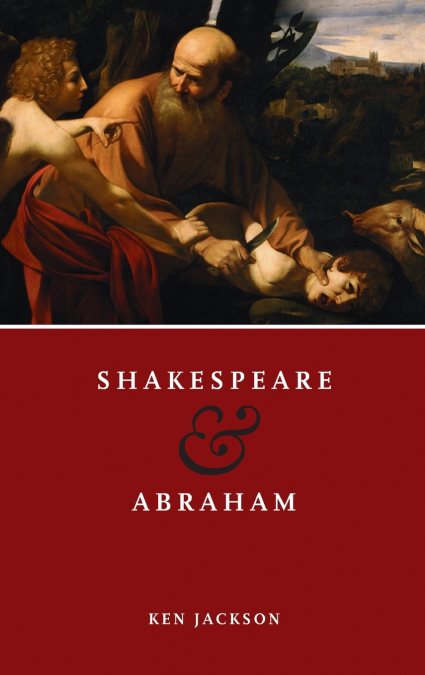
  • Shakespeare and Abraham
    Ken Jackson
    Shakespeare and Abraham shows how Shakespeare’s engagement with the biblical narrative of Abraham’s sacrifice of Isaac manifests in his plays. ...
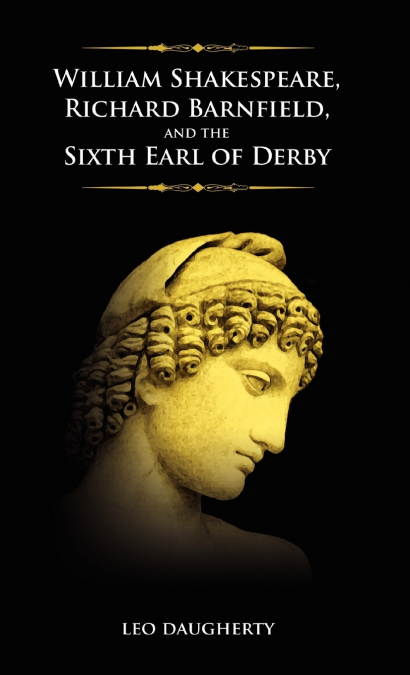
  • William Shakespeare, Richard Barnfield, and the Sixth Earl of Derby
    Leo Daugherty
    This book is the first to argue that the Rival Poet of Shakespeare’s Sonnets is the well-known young Elizabethan writer Richard Barnfield (1574-1620), long suspected to have been one of Shakespeare’s 'private friends' (as they were termed by Francis Meres in 1598), with whom (as Meres also tells us) Shakespeare shared some of his sonnets. This is also the first book to argue th...
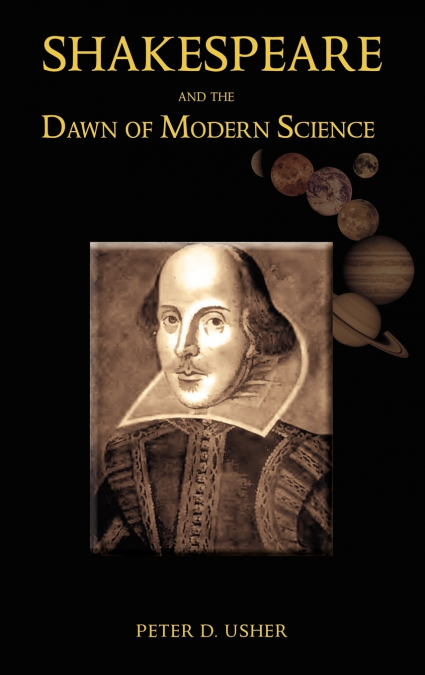
  • Shakespeare and the Dawn of Modern Science
    Peter D. Usher
    In Shakespeare and the Dawn of Modern Science, renowned astronomy expert Peter Usher expands upon his allegorical interpretation of Hamlet and analyzes four more plays, Love’s Labour’s Lost, Cymbeline, The Merchant of Venice, and The Winter’s Tale. With painstaking thoroughness, he dissects the plays and reveals that, contrary to current belief, Shakespeare was well aware of th...
  • The Comic Matrix of Shakespeare’s Tragedies
    Susan Snyder
    Comic elements in Shakespeare’s tragedies have often been noted, but while most critics have tended to concentrate on humorous interludes or on a single play, Susan Snyder seeks a more comprehensive understanding of how Shakespeare used the conventions, structures, and assumptions of comedy in his tragic writing. She argues that Shakespeare’s early mastery of romantic comedy de...
    Disponible

    53,22 €

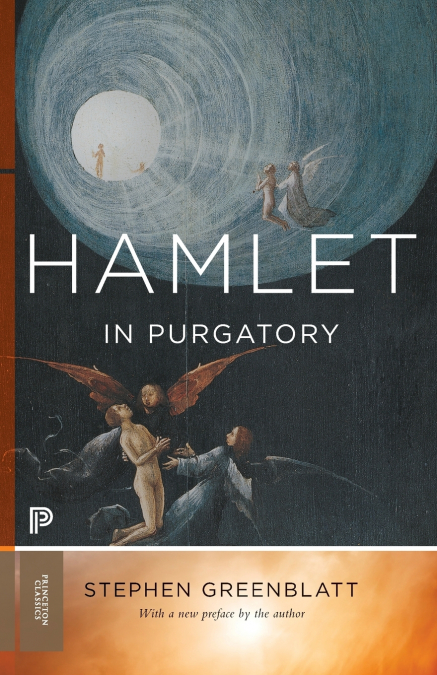
  • Hamlet in Purgatory
    Stephen Greenblatt
    In Hamlet in Purgatory, renowned literary scholar Stephen Greenblatt delves into his longtime fascination with the ghost of Hamlet’s father, and his daring and ultimately gratifying journey takes him through surprising intellectual territory. It yields an extraordinary account of the rise and fall of Purgatory as both a belief and a lucrative institution--as well as a capacious...
    Disponible

    29,73 €

Otros libros del autor

  • The Ethics of Aristotle
    Aristotle
    Happiness is more than a passing feeling. What if living well depends on the kind of person we become?In The Ethics of Aristotle, one of ancient Greece’s most influential thinkers examines the relationship between character, reason, and human flourishing. His central concern is eudaimonia: a good life achieved through activity in accordance with virtue, rather than through plea...
  • The Ethics of Aristotle: Large Print
    Aristotle
    Happiness is more than a passing feeling. What if living well depends on the kind of person we become?In The Ethics of Aristotle, one of ancient Greece’s most influential thinkers examines the relationship between character, reason, and human flourishing. His central concern is eudaimonia: a good life achieved through activity in accordance with virtue, rather than through plea...
  • The Poetics of Aristotle: Large Print
    Aristotle
    What makes a story more than a sequence of events? Aristotle asks how dramatic action takes shape—and why tragedy can move an audience so deeply.In The Poetics of Aristotle, one of the foundational works of literary criticism, the ancient Greek philosopher examines poetry, tragedy, and epic as forms of imitation. His central concern is the construction of a dramatic action: how...
  • The Republic
    Aristotle
    ’The Republic’ by Plato is a timeless philosophical masterpiece that delves into the intricate workings of an ideal state and explores fundamental questions about justice, morality, and governance. Written in the form of a dialogue between Socrates and his contemporaries, this influential work presents a compelling vision of a just society.Plato’s ’The Republic’ invites readers...
    Disponible

    42,59 €

  • The Poetics of Aristotle
    Aristotle
    A hush settles over the amphitheatre as the chorus enters, and with it, the foundations of Western literary criticism are quietly laid. At the heart of ancient Greek philosophy, this enduring work examines the origins of drama and the intricate machinery of poetry, tracing the lineage of storytelling from sacred ritual to the grandeur of Greek tragedy. Each page unfolds the pri...
    Disponible

    18,19 €

  • Politics A Treatise on Government
    Aristotle
    Politics: A Treatise on Government by Aristotle is one of the most influential works in the history of political philosophy and a cornerstone of Western political thought. Written in the 4th century BCE, this classical masterpiece examines the nature of the state, the purpose of government, the role of citizenship, and the principles of justice and constitutional rule. Aristotl...
    Disponible

    31,67 €