Inicio > Humanidades > Historia > Historia general y mundial > Lysenkoism, pseudoscience and repression in the USSR
Lysenkoism, pseudoscience and repression in the USSR

Lysenkoism, pseudoscience and repression in the USSR

Moisés Wagner Franciscon

74,16 €
IVA incluido
Disponible
Editorial:
KS OmniScriptum Publishing
Año de edición:
2024
Materia
Historia general y mundial
ISBN:
9786207673179
74,16 €
IVA incluido
Disponible

Selecciona una librería:

  • Librería Samer Atenea
  • Librería Aciertas (Toledo)
  • Kálamo Books
  • Librería Perelló (Valencia)
  • Librería Elías (Asturias)
  • Donde los libros
  • Librería Kolima (Madrid)
  • Librería Proteo (Málaga)

A little-explored facet of Lysenkoism and its repressive and destructive presence in the Soviet Union is its relationship with the film industry. This pseudo-scientific current, which threatened the historical achievements made by Russian and Soviet scientists, managed to amalgamate with political power in its dispute for power in universities and specialized media. Some of its exponents, such as the Ukrainian agronomist Trofim Lysenko, also became political figures. And they wanted to use the cinema as a weapon to spread their charlatanist theories and thus increase the number of followers in society. Even important directors ended up being enticed, even begrudgingly, like the famous Ukrainian filmmaker Aleksandr Dovjenko, who fought hard to maintain his artistic vision and work in the face of the Lysenkoists’ attempts to control and manipulate it.
Artículos relacionados

  • The life of Sir Richard Fanshawe, 1608 - 1666
    H C Fanshawe
    Sir Richard Fanshawe (1608-1666), was a diplomat, poet and linguist. As Ambassador to Spain and Portugal he negotiated the marriage of Charles II and Catherine of Braganza. He was also acclaimed for his poetry and his translations of Latin and European works such as the Lusiads by Luis de Camoes and Il Pastor Fido (the Faithful Shepherd) by Giovanni Battista Guarini. Sir Richar...
    Disponible

    17,51 €

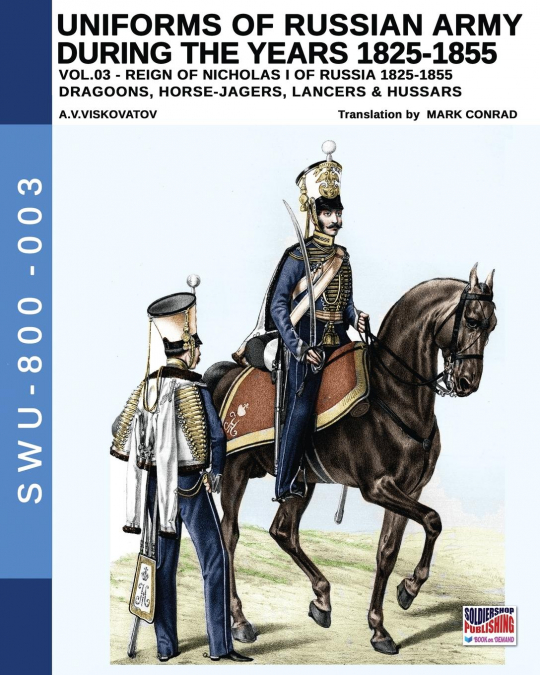
  • Uniforms of Russian Army during the years 1825-1855. Vol. 3
    Aleksandr Vasilevich Viskovatov / Mark Conrad
    This volume is related to the Russian Army during the zar Nicolas Ist era, and are about the uniforms cavalry in use from 1825 to 1855. Compiled at Saint Petersburg during the year from 1837 and 1851, the Historical Description of the Clothing and Arms of the Russian Army has had an enormous impact and great importance for the study on the history of Russian costume and uniform...
    Disponible

    52,04 €

  • Archaeology and Entomology in the Eastern Mediterranean
    Eva Panagiotakopulu
    ...
    Disponible

    74,97 €

  • Luoghi e Architetture della Transizione
    Maria Antonietta Breda
    I sistemi difensivi di confine e la protezione antiaerea nelle città. Storia conservazione riuso / Border defense system and air raid protection in the cities. History conservation reuseThis book collects the papers presented at the Second International Congress on Conoscenza e valorizzazione delle opere militari moderne - Knowledge and development of modern military structures...
    Disponible

    139,91 €

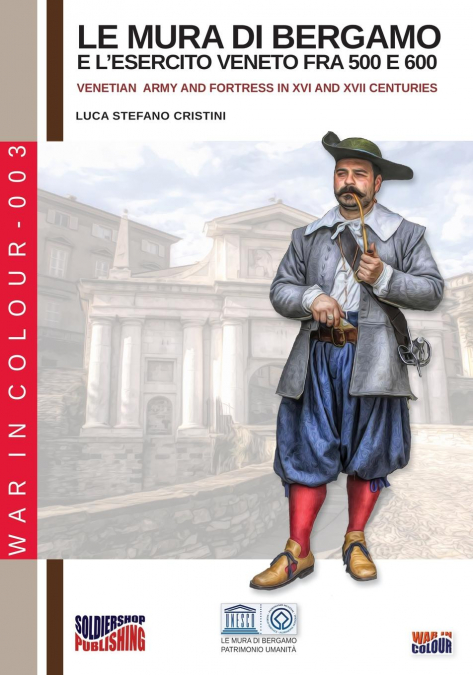
  • Le mura di Bergamo e l’esercito veneto fra 500 e 600
    Luca Stefano Cristini
    Correva l'Anno del Signore 1590. Così scriveva un soddisfatto e pago Alvise Grimani, l'allora comandante veneto della piazza di Bergamo, al termine dei lavori di realizzazione degli oltre cinque chilometri di mura porte e bastioni : 'La città è tutta serrata con baluardi e i suoi membri quasi tutti terrapienati, compite le piazze, i parapetti e le traverse per coprirsi ...
    Disponible

    36,31 €

  • Psychology of Revolution
    Gustave Lebon
    The present age is not merely an epoch of discovery; it is also a period of revision of the various elements of knowledge. Having recognised that there are no phenomena of which the first cause is still accessible, science has resumed the examination of her ancient certitudes, and has proved their fragility. To-day she sees her ancient principles vanishing one by one. ...

Otros libros del autor

  • KINO PÓŹNEGO STALINIZMU, RADZIECKIE GRANICE
    Moisés Wagner Franciscon
    W latach 30. kino ZSRR pomogło zbudować obraz Związku Radzieckiego jako kraju w stanie oblężenia, otoczonego przez wrogów (w czym pomogły korzenie kulturowe i wielowiekowe doświadczenia historyczne). Sytuacja ta zmieniła się w okresie powojennym. Kino pomogło reżimowi podnieść świadomość, uzasadnić i legitymizować nowy poziom potęgi kraju, który z regionalnej potęgi stał się św...
    Disponible

    85,84 €

  • DAS KINO DES SPÄTEN STALINISMUS, DIE GRENZEN DER SOWJETUNION
    Moisés Wagner Franciscon
    In den 1930er Jahren trug das Kino der UdSSR dazu bei, das Bild der Sowjetunion als ein von Feinden umzingeltes Land im Belagerungszustand zu konstruieren (was durch kulturelle Wurzeln und jahrhundertealte historische Erfahrungen unterstützt wurde). Diese Situation änderte sich in der Nachkriegszeit. Das Kino half dem Regime nun, das Bewusstsein zu schärfen und die neue Machtpo...
    Disponible

    85,80 €

  • THE CINEMA OF LATE STALINISM, THE SOVIET FRONTIERS
    Moisés Wagner Franciscon
    During the 1930s, the USSR’s cinema helped to construct the image of the Soviet Union as a country under siege, surrounded by enemies (which was helped by cultural roots and centuries-old historical experiences). This situation changed in the post-war period. The cinema now helped the regime to raise awareness, justify and legitimize the country’s new level of power, raised fro...
    Disponible

    85,84 €

  • IL CINEMA DEL TARDO STALINISMO, LE FRONTIERE SOVIETICHE
    Moisés Wagner Franciscon
    Durante gli anni Trenta, il cinema dell’URSS ha contribuito a costruire l’immagine dell’Unione Sovietica come di un Paese assediato, circondato da nemici (e questo grazie alle radici culturali e alle esperienze storiche secolari). La situazione è cambiata nel dopoguerra. Il cinema aiutava ora il regime a sensibilizzare, giustificare e legittimare il nuovo livello di potere del ...
    Disponible

    85,84 €

  • LE CINÉMA DU STALINISME TARDIF, LES FRONTIÈRES SOVIÉTIQUES
    Moisés Wagner Franciscon
    Dans les années 1930, le cinéma de l’URSS a contribué à construire l’image de l’Union soviétique comme un pays assiégé, entouré d’ennemis (ce qui a été favorisé par des racines culturelles et des expériences historiques séculaires). Cette situation a changé dans l’après-guerre. Le cinéma aide désormais le régime à sensibiliser l’opinion publique, à justifier et à légitimer le n...
    Disponible

    85,81 €

  • A questão polonesa e a URSS durante a Segunda Guerra
    Moisés Wagner Franciscon
    Por décadas a historiografia ocidental permaneceu presa aos relatos e a versão histórica elaborados pelo primeiro-ministro britânico Winston Churchill de que Stalin paralisou seu exército diante de Varsóvia para assistir a destruição do levante patrocinado pelo governo polonês exilado em Londres, aliado do inglês. Churchill inclusive ganharia o Nobel de Literatura com a sua ver...
    Disponible

    101,39 €