
Inicio > Humanidades > Historia > LE CINÉMA DU STALINISME TARDIF, LES FRONTIÈRES SOVIÉTIQUES
LE CINÉMA DU STALINISME TARDIF, LES FRONTIÈRES SOVIÉTIQUES

LE CINÉMA DU STALINISME TARDIF, LES FRONTIÈRES SOVIÉTIQUES

Moisés Wagner Franciscon

85,81 €
IVA incluido
Disponible
Editorial:
KS OmniScriptum Publishing
Año de edición:
2025
Materia
Historia
ISBN:
9786208770556
85,81 €
IVA incluido
Disponible

Selecciona una librería:

  • Librería Samer Atenea
  • Librería Aciertas (Toledo)
  • Kálamo Books
  • Librería Perelló (Valencia)
  • Librería Elías (Asturias)
  • Donde los libros
  • Librería Kolima (Madrid)
  • Librería Proteo (Málaga)

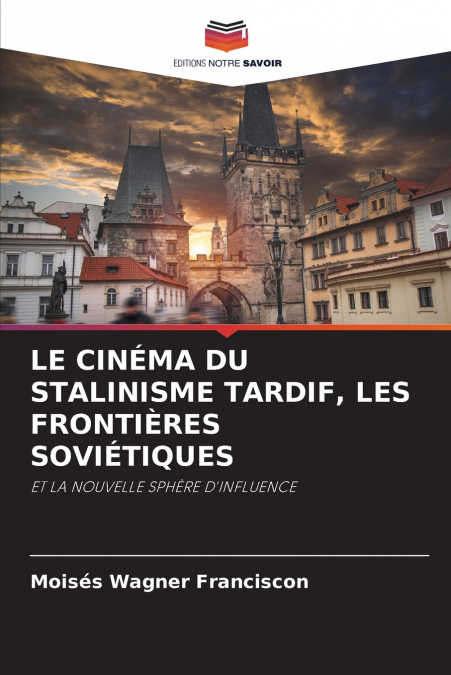
Dans les années 1930, le cinéma de l’URSS a contribué à construire l’image de l’Union soviétique comme un pays assiégé, entouré d’ennemis (ce qui a été favorisé par des racines culturelles et des expériences historiques séculaires). Cette situation a changé dans l’après-guerre. Le cinéma aide désormais le régime à sensibiliser l’opinion publique, à justifier et à légitimer le nouveau niveau de puissance du pays, qui est passé du statut de puissance régionale à celui de superpuissance mondiale. L’URSS a désormais des alliés à l’Ouest et à l’Est. Elle doit sortir de son isolationnisme et s’insérer dans un système économique, social et politique mondial. Elle a des amis et des sujets à protéger, y compris d’elle-même, comme les groupes opposés à la soviétisation. Elle doit défendre ses nouvelles frontières, qui ressemblent de plus en plus à celles de la Russie tsariste. Et elle doit devenir une puissance maritime pour maintenir ce système. Ses dirigeants, même à contrecœur, s’acquittent de cette tâche.
Artículos relacionados

  • Raising Freedom's Banner
    Paul Harris
    World wide history of peaceful street demonstrations from their earliest beginning in eighteenth century England to their use throughout the world in the twenty-first century. Describes why some demonstration movements succeeded and others failed. Contrasts demonstrations within the law with civil disobedience demonstrations. Describes Peterloo, the Chartists, the Suffragettes,...
    Disponible

    23,59 €

  • Waipi’o Valley
    Jeffrey L. Gross
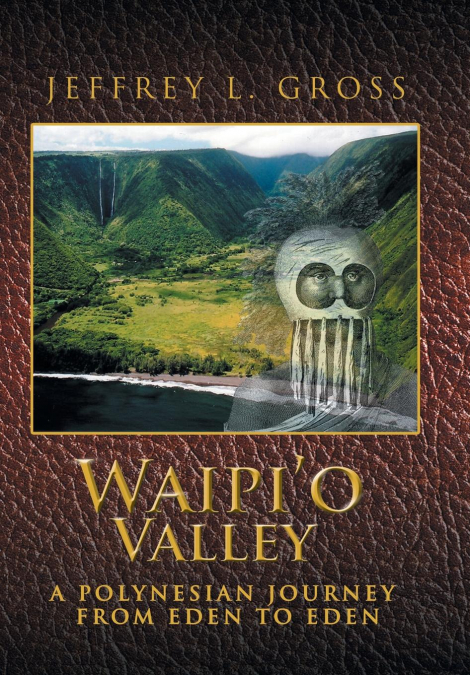
    Waipi’o Valley: A Polynesian Journey from Eden to Eden recounts the remarkable migrations of the Polynesians across a third of the circumference of the earth. Their amazing journey began from Kalana i Hau’ola, the biblical “Garden of Eden” located along the shore of the Persian Gulf, extended to the Indus River Valley of ancient Vedic India, to Egypt where some ancestors of the...
  • Floralia
    June Rainsford Butler
    A century characterized by a growing interest in science, the opportunity for travel, and leisure for gardening furnishes the setting for Butler’s book. The rise of landscape gardening in England is traced, and the origin and history of its most famous gardens are given. The close relation between England and America in the field of horticulture is also discussed.Originally pub...
    Disponible

    61,20 €

  • President Wilson’s Addresses
    Woodrow Wilson
    'These addresses of President Woodrow Wilson are almost entirely concerned with political affairs, and more specifically with defining Americanism. Yet they also show that even as he moved from academia to the heights of politics, Wilson retained something of the teacher’s interest in showing the relation between specific instances and the general forms of thought or action of ...
  • The Story of my Life
    John Albert Macy
    The Story of My Life, is Helen Keller’s autobiography detailing her early life, especially her experiences with Anne Sullivan. The book is dedicated to inventor Alexander Graham Bell. The dedication reads, 'To ALEXANDER GRAHAM BELL Who has taught the deaf to speak and enabled the listening ear to hear speech from the Atlantic to the Rockies, I dedicate this Story of My Life.' ...
  • The Story of My Life Vol. 6 Spanish Passions
    Giacomo Casanova
    Casanova was an Italian adventurer and author from the Republic of Venice. His autobiography, Histoire de ma vie (Story of My Life), is regarded as one of the most authentic sources of the customs and norms of European social life during the 18th century. He has become so famous for his often complicated and elaborate affairs with women that his name is now synonymous with 'wom...

Otros libros del autor

  • KINO PÓŹNEGO STALINIZMU, RADZIECKIE GRANICE
    Moisés Wagner Franciscon
    W latach 30. kino ZSRR pomogło zbudować obraz Związku Radzieckiego jako kraju w stanie oblężenia, otoczonego przez wrogów (w czym pomogły korzenie kulturowe i wielowiekowe doświadczenia historyczne). Sytuacja ta zmieniła się w okresie powojennym. Kino pomogło reżimowi podnieść świadomość, uzasadnić i legitymizować nowy poziom potęgi kraju, który z regionalnej potęgi stał się św...
    Disponible

    85,84 €

  • DAS KINO DES SPÄTEN STALINISMUS, DIE GRENZEN DER SOWJETUNION
    Moisés Wagner Franciscon
    In den 1930er Jahren trug das Kino der UdSSR dazu bei, das Bild der Sowjetunion als ein von Feinden umzingeltes Land im Belagerungszustand zu konstruieren (was durch kulturelle Wurzeln und jahrhundertealte historische Erfahrungen unterstützt wurde). Diese Situation änderte sich in der Nachkriegszeit. Das Kino half dem Regime nun, das Bewusstsein zu schärfen und die neue Machtpo...
    Disponible

    85,80 €

  • THE CINEMA OF LATE STALINISM, THE SOVIET FRONTIERS
    Moisés Wagner Franciscon
    During the 1930s, the USSR’s cinema helped to construct the image of the Soviet Union as a country under siege, surrounded by enemies (which was helped by cultural roots and centuries-old historical experiences). This situation changed in the post-war period. The cinema now helped the regime to raise awareness, justify and legitimize the country’s new level of power, raised fro...
    Disponible

    85,84 €

  • IL CINEMA DEL TARDO STALINISMO, LE FRONTIERE SOVIETICHE
    Moisés Wagner Franciscon
    Durante gli anni Trenta, il cinema dell’URSS ha contribuito a costruire l’immagine dell’Unione Sovietica come di un Paese assediato, circondato da nemici (e questo grazie alle radici culturali e alle esperienze storiche secolari). La situazione è cambiata nel dopoguerra. Il cinema aiutava ora il regime a sensibilizzare, giustificare e legittimare il nuovo livello di potere del ...
    Disponible

    85,84 €

  • A questão polonesa e a URSS durante a Segunda Guerra
    Moisés Wagner Franciscon
    Por décadas a historiografia ocidental permaneceu presa aos relatos e a versão histórica elaborados pelo primeiro-ministro britânico Winston Churchill de que Stalin paralisou seu exército diante de Varsóvia para assistir a destruição do levante patrocinado pelo governo polonês exilado em Londres, aliado do inglês. Churchill inclusive ganharia o Nobel de Literatura com a sua ver...
    Disponible

    101,39 €

  • O cinema do Stalinismo Tardio
    Moisés Wagner Franciscon
    Com o fim da Segunda Guerra Mundial a URSS despontou de potência regional para superpotência mundial. A inimizade com os países capitalistas transformaria-se em rivalidade por zonas de influência. O antigo cordão sanitário formulado pelos vencedores da Primeira Guerra em Versalhes havia sido rompido. Agora o país possuía tropas de Viena a Berlim, na Manchúria e até as fronteira...
    Disponible

    89,72 €